Pink Mold Removal Guide: Safe Steps & Prevention Tips
A practical, expert-led guide to identifying pink mold, understanding health risks, and following a step-by-step removal plan with prevention strategies for bathrooms, kitchens, and damp areas.


Pink mold cleanup is possible with a clear plan. This guide shows you how to identify moisture sources, PPE, and safe cleaning methods to reduce pink mold growth in bathrooms and kitchens. Follow the step-by-step remediation below for non-porous surfaces, and learn prevention strategies to stop recurrence. This answer will help homeowners and renters act quickly to minimize health risks and property damage.
What pink mold is and why it matters
Pink mold is a common household issue that homeowners mistake for true mold. In many cases, what people call pink mold is a bacterial bloom caused by the bacterium Serratia marcescens, an organism that thrives on moisture and soap scum. According to Mold Removal Lab, pink mold appears as pink, orange, or rusty-colored slimy patches on bathroom tiles, shower curtains, sinks, and other damp surfaces. It can spread if moisture remains behind fixtures or in hidden crevices. While pink mold is typically less hazardous than black mold, it can irritate the skin, eyes, and airways, and it signals a moisture problem that may require access to behind-the-wall spaces or under fixtures. Proper identification matters because remediation focuses on moisture control and safe cleaning rather than just masking stains. By understanding what pink mold is and how it forms, you can choose the right tools and cleaners, protect your family, and prevent future growth. This article provides a practical, step-by-step plan to clean pink mold on non-porous surfaces and to reduce humidity and condensation that fuel regrowth.
From a homeowner perspective, early intervention saves time and reduces the risk of repeated staining. Keep in mind that pink mold can appear quickly after a moisture incident—like a shower that’s left damp for several days or a pipe leak that goes unnoticed for a weekend. The Mold Removal Lab team emphasizes that remediation is as much about drying and moisture control as it is about cleaning.
Common locations and how pink mold forms
Pink mold tends to appear in warm, damp settings where moisture collects. Bathrooms are the most common sites, especially on shower shelves, grout lines, corner shelves, and curtain liners. Kitchens can show pink growth around sinks, faucets, and dish-racks where condensation and soap scum accumulate. Laundry rooms, basements with high humidity, and crawl spaces can also harbor pink mold growth, particularly when there is poor ventilation or recurring leaks. Pink mold forms when moisture stays in contact with surfaces rich in organic debris, like soap scum, hard-water residues, and dust, creating a hospitable environment for bacteria to thrive. Over time, these colonies can appear as a pink film or patch that is sometimes mistaken for mildew or a soft fuzzy mold. Effective management means addressing both the visible growth and the hidden moisture source fueling it.
Health, staining, and odor considerations
While pink mold is not always as hazardous as some fungi, it can contribute to unpleasant odors and air quality concerns. People with allergies, asthma, or chronic respiratory conditions may notice irritation in the nose, throat, or lungs when pink mold is present in a living space. Pets, especially birds and small mammals, can be sensitive to airborne contaminants. Skin contact with pink mold can lead to irritation in sensitive individuals or those with open wounds. Visible staining can also affect the perceived cleanliness of a space, reinforcing the need for thorough cleaning and moisture control. The presence of pink mold should prompt a moisture assessment: fix leaks, improve ventilation, and use routine cleaning schedules to prevent regrowth.
Safety and PPE for cleanup
Before beginning any cleanup, equip yourself with proper PPE to minimize exposure. Wear nitrile gloves, eye protection, and a well-fitted mask such as an N95 respirator. Ensure good ventilation by opening windows or running a bathroom fan. If the area is large or heavily infested, consider temporary containment to stop spread to adjacent spaces. Never mix cleaning agents; this can release harmful gases. Do not attempt to clean porous materials like fabric, cardboard, or unsealed wood unless you replace them afterward. Keep children and pets away from the work area until it is dry and odor-free.
Step-by-step remediation plan for pink mold on non-porous surfaces
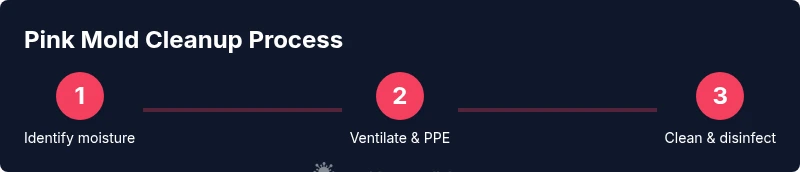
This section provides a practical, step-by-step approach focused on non-porous surfaces such as ceramic tile, glass, metal, and sealed countertops. Start by stopping the moisture source and enabling airflow. Clean surfaces with detergent to remove soap scum, then disinfect using an appropriate solution. Allow surfaces to dry completely and monitor for signs of regrowth. If pink mold recurs, re-evaluate moisture sources and consider professional assessment for hidden leaks or wall flooding.
Prevention and long-term moisture control
Prevention relies on moisture management and routine cleaning. Consider installing or repairing ventilation fans, dehumidifiers, and sump pumps where needed. Address leaks promptly—don’t wait for visible staining to escalate. Use mold-resistant sealants in bathrooms and kitchens, and replace porous materials that accrue moisture or show staining. Maintain indoor humidity under 60 percent to discourage growth. Regular cleaning of damp zones, especially after showers and laundry loads, reduces nutrient availability for bacteria. Finally, document remediation steps and monitor for reappearance over the next few weeks.
Tools & Materials
- Nitrile gloves(Powder-free, over-the-cuff for wrist protection)
- Safety goggles(Protect eyes from splashes)
- N95 respirator(Ensure proper fit for inhalation safety)
- Soap and water(Detergent for initial cleaning)
- White vinegar(Acidic cleaner for mild disinfection)
- Hydrogen peroxide 3%(Alternative disinfectant for non-porous surfaces)
- Bleach (unscented, 5–6%)(Disinfection on non-porous surfaces; dilute 1:10)
- Spray bottle(For diluted cleaners and disinfectants)
- Bucket and scrub brush(Non-abrasive brush for hard residues)
- Hair dryer or dehumidifier(Used to speed up drying)
- Trash bags(Seal and remove contaminated materials)
- Mold-safe cleaning towels(Single-use or washed separately)
Steps
Estimated time: 2-6 hours
- 1
Identify moisture source and isolate area
Locate the moisture source (leak, condensation, high humidity) and lock down the space to prevent spread. This is essential because cleaning without moisture control will yield quick regrowth.
Tip: Mark boundaries with tape and set up a temporary containment barrier. - 2
Put on PPE and ventilate
Don PPE: N95 mask, eye protection, and nitrile gloves. Open windows or use a fan to improve airflow and reduce inhalation of contaminants.
Tip: Do not skip PPE; pink mold can irritate mucous membranes. - 3
Clean loose debris and dry the area
Use a dry cloth to remove loose growth and dampness. If wet, towel dry and use a dehumidifier to bring humidity down.
Tip: Avoid scrubbing too aggressively on delicate surfaces to prevent damage. - 4
Clean with detergent
Scrub non-porous surfaces with warm water and mild detergent. Rinse thoroughly to remove residues that can nourish regrowth.
Tip: Rinse well to prevent detergent film that can trap moisture. - 5
Disinfect non-porous surfaces
Apply a disinfectant suitable for non-porous materials. Use bleach at 1:10 dilution or hydrogen peroxide 3%; avoid mixing agents.
Tip: Never combine cleaners; if you’re unsure, use a single approved product only. - 6
Dry completely and monitor
Completely dry the area within 24–48 hours. Recheck within 1–2 weeks for reappearance and adjust moisture controls as needed.
Tip: Keep humidity below 60% to deter recurrence.
FAQ
What exactly is pink mold?
Pink mold is a common term for a bacteria bloom, often Serratia marcescens, that grows on damp surfaces. It is not technically a mold, but it produces pink discoloration that homeowners notice. Cleanup involves addressing moisture and cleaning with appropriate agents.
Pink mold is a bacteria bloom on damp surfaces. Clean it by addressing moisture and using safe cleaners.
Is pink mold dangerous?
Pink mold can irritate the skin, eyes, and airways, especially for sensitive individuals. It is not typically as hazardous as black mold, but it should be cleaned promptly to prevent spread and staining.
It can irritate airways and skin; clean promptly and ensure area dries fully.
Can I use vinegar or hydrogen peroxide to clean pink mold?
Vinegar and hydrogen peroxide can help remove pink mold on non-porous surfaces, but they are not always sufficient alone. Use soap and water first, then follow with an approved disinfectant if needed.
Vinegar or hydrogen peroxide can help on hard surfaces, but you may need a disinfectant for thorough cleaning.
Should I replace porous materials after pink mold exposure?
Yes. Porous materials like fabric, cardboard, and some wood can harbor bacteria and may require disposal and replacement to prevent recurrence.
Porous items often hold the growth; replace them to prevent regrowth.
Is pink mold the same as black mold?
No. Pink mold refers to bacteria blooms, while black mold indicates specific toxic fungi. Both require cleanup, but handling differs by type and risk.
It's not the same as black mold; treat according to the type and risk.
Watch Video
The Essentials
- Identify the moisture source first and stop spread.
- Wear proper PPE and ventilate during cleanup.
- Use non-porous cleaners on hard surfaces; discard porous materials.
- Dry space thoroughly within 24-48 hours.
- Address ongoing moisture to prevent recurrence.