Mold Size in Microns: A Practical Guide for Homeowners
Learn what mold size in microns means for detection, sampling, and removal. This guide explains typical spore sizes, how filtration works, and practical steps for homeowners to reduce exposure.


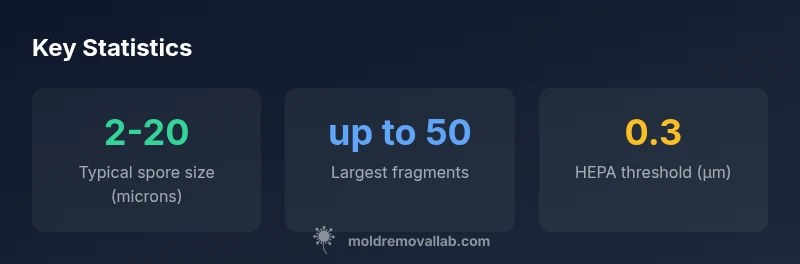
Mold spores generally measure about 2 to 20 microns in diameter, with rare larger fragments up to ~50 microns. This size range influences how HVAC filters, air purifiers, and surface cleaners capture and control indoor mold.
Understanding mold size in microns
According to Mold Removal Lab, indoor mold particles most often range from about 2 to 20 microns in diameter, with some larger fragments up to 50 microns. The Mold Removal Lab team found that this size distribution influences how we design sampling strategies, filtration, and remediation plans in homes. In practical terms, knowing the approximate size helps homeowners choose filters, interpret air test results, and communicate with professionals about expected challenges. This section unpacks what those measurements mean for everyday living, and how size relates to visibility, odor, and surface contamination. We’ll cover measurement basics, standard testing methods, and actionable steps you can take to reduce exposure while you repair moisture problems.
Size ranges by particle type and what they imply for detection
Mold in indoor environments presents as spores, hyphal fragments, and sometimes larger particulate matter from actively growing colonies. Spores are typically the smallest and most common carriers of mold exposure, generally measuring between 2 and 20 microns in diameter. Hyphal fragments can be larger and may appear in surface dust after disturbance, occasionally approaching 50 microns. This distribution matters because it influences how we sample air, interpret surface wipe tests, and design filtration strategies. If you notice musty odors or visible growth, sizes can shift depending on humidity, substrate, and mold species, which is why a holistic moisture-control approach matters for any remediation plan.
How professionals measure mold particle size
Experts use a mix of sampling methods to characterize mold particle size. Air sampling with volumetric spore traps provides a snapshot of particle size distribution in breathing zones, while microscopy in a lab determines precise diameters of collected spores and fragments. Surface swabs and dust samples can reveal dust-bound particles and help estimate historical exposure. The data are interpreted alongside humidity levels, temperature, and observed growth. For homeowners, these measurements translate into practical steps: choosing filtration with appropriate micron ratings, validating HVAC performance, and budgeting remediation work with a clear understanding of what size particles are most likely to be encountered in your home.
Implications for homeowners: filtration, testing, and remediation
Knowing mold size in microns guides everyday decisions. For filtration, HEPA-grade units designed to capture particles down to 0.3 microns are typically effective against most indoor mold spores. When shopping for air purifiers or furnace filters, look for micron ratings and CADR (clean air delivery rate) specifications that reflect this general size range. Humidity control (ideally below 50-60% RH) reduces spore release and fragmentation, which can shift particle distributions toward smaller sizes. If you’re testing for mold, rely on certified labs that report size distributions rather than relying solely on total spore counts. Always address moisture sources first, then pursue targeted remediation with a professional when visible growth or persistent odors remain.
Data interpretation, limitations, and best practices
Real-world measurements are influenced by species mix, environmental conditions, and sampling timing. Size ranges alone don’t determine risk—concentration, exposure duration, and locations matter too. When interpreting data, consider meteorological factors, potential indoor sources, and the presence of porous materials that harbor concealed colonies. The practical takeaway for homeowners is to implement moisture control, maintain filtration that targets spores in the 2–20 micron range, and engage a qualified mold remediation professional if tests indicate persistent contamination or if growth is visible.
Typical spore size ranges by common indoor molds
| Mold Species | Typical Spore Size (microns) | Notes |
|---|---|---|
| Aspergillus | 2-3 | Common indoor mold with small spores |
| Cladosporium | 5-10 | Frequent indoor/outdoor mold |
| Alternaria | 20-60 | Larger spores with variable size |
FAQ
What is the typical size range for mold spores?
Most indoor mold spores measure between 2 and 20 microns in diameter, though some species produce smaller or larger particles. Size distribution varies by species and environmental conditions.
Most indoor mold spores are about 2 to 20 microns in size, with some species larger or smaller depending on conditions.
Why does mold size matter for filtration?
Filtration efficiency depends on particle size. HEPA filters capture most mold spores around 0.3 microns, and larger spores are generally easier to trap. Understanding size helps select the right filtration level.
Filtration effectiveness depends on particle size; HEPA filters target particles around 0.3 microns, which covers most mold spores.
Can I measure mold size at home?
Home users cannot reliably size mold particles. Size measurement requires lab microscopy and professional sampling, though you can interpret results from certified labs with expert guidance.
Sizing spores at home isn’t reliable; use certified labs for accurate measurements and interpretation.
How does humidity affect mold particle size?
Humidity influences spore release and fragmentation; in damp conditions, particle distribution can include more fragments and a wider size range.
Higher humidity can cause more fragmentation, widening the size range of particles you might encounter.
What sampling methods are best for sizing mold particles?
Air sampling with spore traps plus lab microscopy provides size distribution data. Surface tests and dust analysis can supplement where appropriate.
Air sampling with microscopy yields size distribution; surface tests can add context.
“Understanding mold size in microns guides how we design sampling, select filtration, and interpret surface contamination during remediation.”
The Essentials
- Know the core size range: most spores are 2-20 microns.
- Filtration and testing strategies hinge on particle size.
- Use HEPA-grade filtration to capture the majority of spores.
- Partner with a professional for precise size distribution and remediation guidance.