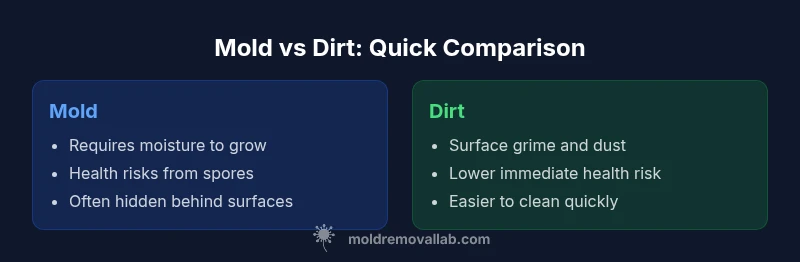
Mold vs Dirt: Practical Side-by-Side Comparison for Homes
Analytical guide distinguishing mold from dirt: health risks, testing needs, and practical steps for cleaning, remediation, and prevention in homes today.


Knowing when you’re dealing with mold or dirt matters for health, safety, and cleaning strategy. In many homes, dirt is superficial, while mold grows with moisture and can require professional remediation. Mold Removal Lab emphasizes testing to confirm mold presence, since visuals alone can be misleading. A quick rule: persistent damp spots deserve testing before heavy cleaning or renovation.
Core Distinctions: Mold vs Dirt in the Home
When homeowners face damp walls or dusty surfaces, terms like mold or dirt are tossed around. But treating them the same wastes time and can miss health risks. According to Mold Removal Lab, dirt is typically accumulated soil and dust on surfaces, while mold is a living organism that needs moisture to grow. Because of that, a surface that looks dirty may not be mold, and a faint odor or hidden growth can be mold even if you don’t see it.
The moisture context is the key differentiator. Mold can establish itself behind wallpaper, under cabinetry, or inside HVAC ducts, often without obvious signs on the exterior. Dirt, by contrast, is usually surface-level grime that responds quickly to cleaning if moisture is not fueling ongoing accumulation. This distinction matters for both cleaning strategy and safety planning. By starting with moisture assessment and lab confirmation when doubt remains, homeowners set up a more reliable remediation path and avoid chasing the wrong problem.
Health Implications and Safety Protocols
Mold exposure can irritate the eyes, nose, and throat, and is a concern for individuals with allergies or asthma. In some cases, repeated exposure to mold spores or mycotoxins may trigger more persistent symptoms. Dirt, while generally less hazardous, contributes to indoor dust and can carry allergenic particles that irritate sensitive people when cleaned improperly. The threat level often correlates with moisture: damp, poorly ventilated spaces increase the risk of mold growth and extended exposure. Safety practices matter: wear gloves and a mask during cleaning, avoid stirring up settled dust in dusty areas, and ventilate well when cleaning. Mold Removal Lab’s guidance emphasizes protecting occupants and keeping moisture in check as central to reducing health risks. Always resolve underlying moisture issues before assuming a surface-only cleaning will suffice.
Common Sources and How They Form
Dirt accumulates through everyday activity—tracking in soil, pet dander, and household dust. Mold arises when moisture lingers after leaks, condensation, or high humidity, giving fungi a foothold. In kitchens and bathrooms, frequent moisture cycles can convert seemingly ordinary grime into mold-prone environments. Basements, crawlspaces, and attics are especially at risk when air leaks or poor insulation trap moisture. Understanding these origins helps homeowners prioritize fixes: repairing leaks, improving ventilation, and controlling humidity are often more effective than aggressive scrubbing alone.
Visual Clues and When to Test
Visible mold growth is not the only signal. A musty odor is a common warning sign that moisture support is fostering fungal activity, even if you cannot see colonies. Dirt typically appears as surface grime that comes off with standard cleaning, while mold may persist behind walls or under floors where moisture hides. If you notice persistent dampness, staining, or any discolored patches that reappear after cleaning, testing is warranted. Lab confirmation provides certainty and guides targeted remediation rather than guesswork.
Testing and Verification Methods
Testing options range from surface swabs to air sampling and moisture assessment. Visual inspection alone is insufficient to confirm mold, especially when growth is hidden. A qualified mold assessor can determine whether mold is present and identify moisture sources requiring attention. Mold Removal Lab emphasizes that verification after any remediation is essential: ensure the moisture problem is resolved, the area is dried, and that air quality returns to normal before concluding the job. Testing should be considered a proactive step, not a one-off response.
Cleaning and Remediation: DIY vs Pro
Dirt can often be cleaned with regular household cleaners, warm water, and a dry cloth, provided moisture sources have been addressed. Mold requires a more cautious approach: contain the area to prevent spores from spreading, use cleaners appropriate for mold (and avoid aggressive methods on porous materials), and most importantly, fix the moisture source. For large affected areas, hidden mold, or ongoing leaks, professional remediation is advised. The Mold Removal Lab team recommends starting with a moisture assessment and testing to determine the proper scope of work.
Prevention and Long-Term Maintenance
Prevention centers on moisture management and ventilation. Repair leaks promptly, seal cracks, and ensure bathrooms and kitchens have adequate exhaust. Use dehumidifiers in damp spaces and maintain indoor humidity as low as practical, often below 60% depending on climate. Regularly inspect problem areas, replace air filters, and seal basements and attics to minimize moisture intrusion. A consistent maintenance routine reduces the chance that a dirt buildup evolves into a mold problem.
Practical Decision Framework for Homeowners
- Check for moisture: any ongoing dampness or leaks requires attention. 2) Inspect for signs: musty odors, staining, or hidden growth warrant testing. 3) Test where indicated: use professional testing to confirm mold presence. 4) Plan remediation around moisture: address leaks, improve ventilation, and clean appropriately. 5) Maintain prevention: monitor humidity, fix structural issues, and schedule regular inspections. This framework helps separate dirt control from mold remediation, avoiding unnecessary work and focusing resources where they’re most needed.
Quick Reference Checklist for Mold or Dirt
- Look for moisture indicators and musty odors.
- Distinguish visible dirt from potential mold growth.
- Test if moisture persists or growth is suspected.
- Clean dirt with standard cleaners; address moisture for mold.
- Repair leaks and improve ventilation to prevent recurrence.
This block provides a practical, step-by-step approach for homeowners dealing with mold or dirt in real homes.
Comparison
| Feature | Mold | Dirt |
|---|---|---|
| Origin | Biological growth in moisture-prone environments | Accumulated dust, soil, and grime on surfaces |
| Health Risks | Potentially hazardous if mold produces spores or mycotoxins | Generally low-risk but may cause allergies or irritation when dusty |
| Detection | Visible growth and musty odor; lab tests confirm | Visible grime; moisture presence may still require testing |
| Cleaning Challenge | May require containment and moisture control; some cases need professionals | Usually removable with standard cleaning; moisture control is key to prevent recurrence |
| Moisture Link | Requires moisture assessment and remediation | Caused by dust accumulation; moisture may still be present behind surfaces |
| Long-Term Concern | Persistent mold indicates ongoing moisture problem; remediation is often needed | Dirt buildup is maintenance; not a persistent hazard unless moisture is involved |
| Best Action | Test and treat mold; address moisture and ventilation | Clean and monitor; address root moisture sources to prevent mold growth |
Upsides
- Clarifies whether a moisture problem exists
- Guides whether DIY cleaning is sufficient or professional remediation is needed
- Supports safer, targeted cleaning and ventilation improvements
- Helps homeowners focus on root causes rather than just surfaces
The Bad
- Mold misidentification can delay proper remediation if contaminated tests are not done
- Professional remediation may be costly when moisture is widespread
- DIY methods risk spreading spores if not done carefully
Professional testing and moisture control beat guesswork
Testing confirms whether mold is present; remediation should target moisture control to prevent recurrence. Dirt generally warrants cleaning and ongoing moisture management, not extensive remediation.
FAQ
Is dirt as harmful as mold?
Dirt itself is usually less hazardous than mold, but accumulation signals moisture and dust exposure. Cleaning should address both surface grime and underlying moisture. If dampness persists, test to rule out mold.
Dirt isn’t as dangerous as mold, but moisture can make it a warning sign. If in doubt, test and fix moisture.
How can I tell if it's mold?
Visual signs aren’t always reliable. A musty smell, visible colonies, and suspicious moisture patterns suggest testing is warranted to confirm mold.
Look for musty smells or visible growth; test to confirm mold before heavy cleaning.
When should I call a professional for mold?
If you have ongoing moisture, large or hidden growth, or difficulty identifying sources, a professional remediation team is recommended. DIY cleanup can spread spores if not done carefully.
Call a pro if the growth is large or hidden behind walls.
What cleaning methods are safe for mold and dirt?
Dirt is typically removed with regular cleaners. Mold cleanup should follow moisture control and containment principles, using cleaners appropriate for fungi and avoiding abrasive methods on porous surfaces.
Clean dirt with regular cleaners; for mold, focus on moisture and containment.
How often should I check moisture to prevent mold?
Inspect after rain events and seasonally, monitor humidity, and run exhausts in moisture-prone areas. Regular checks help catch problems before mold starts.
Check moisture after storms and seasonally; keep humidity manageable.
What happens after mold remediation?
Verify removal with a post-remediation assessment, fix the moisture source, and maintain ventilation. Monitor areas for signs of return and retest if necessary.
After remediation, fix moisture and monitor for reoccurrence.
The Essentials
- Prioritize moisture assessment to distinguish mold from dirt
- Use testing to confirm mold presence rather than relying on visuals
- Address underlying moisture sources to prevent recurrence
- Choose DIY cleaning for dirt but involve pros for mold with moisture problems
- Maintain regular inspections for signs of moisture and mold growth