Is It Mold or Dust? A Practical Homeowner Guide
Learn how to distinguish mold from dust, why moisture matters, and when to test or hire a pro. Mold Removal Lab provides actionable steps for safe assessment and remediation.


Is it mold or dust? Musty odors, visible growth, or moisture on walls strongly suggest mold rather than ordinary dust. For a reliable verdict, don't rely on appearance alone—examine moisture sources and test if needed. According to Mold Removal Lab, moisture control is the first defense, and remediation should follow if mold is confirmed.
Understanding the question: is it mold or dust?
When homeowners first notice an odd substance on walls, shelves, or fabrics, the pressing question is often whether it is mold or dust. The two can appear similar at a glance, particularly on textured surfaces or porous materials. Mold is a fungus that requires moisture to thrive and reproduce. Dust, by contrast, consists of tiny particles like skin cells, fibers, pollen, and outdoor debris that accumulate from air movement and cleaning. The distinction matters because mold growth carries health and structural implications and requires a different remediation approach. According to Mold Removal Lab, moisture is the core driver of mold, and a damp environment can turn ordinary dust into a mold-prone setting if allowed to persist. Start with a moisture audit: check for leaks in plumbing, roof, or windows; inspect areas with condensation or high humidity; and assess whether the material was recently wet or damaged. If you observe growth with defined edges and a textured surface, document it, test if needed, and prioritize remediation to protect indoor air quality.
Visual cues: distinguishing growth patterns
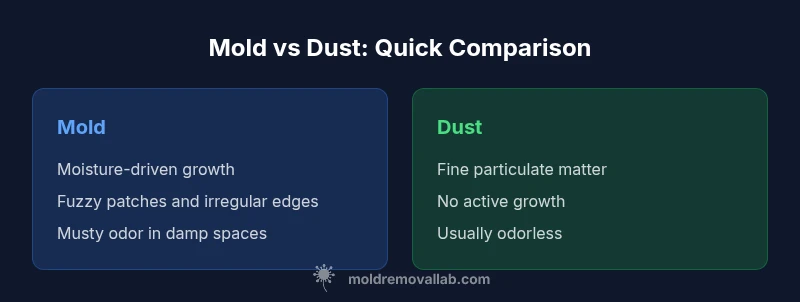
Visual cues are helpful but not definitive. Mold often forms irregular patches with fuzzy, cottony, or leathery textures; colors vary (green, black, white, or gray) and edges are uneven. Mold colonies may appear on walls, ceilings, under sinks, or behind appliances where moisture lingers. Dust tends to form thin, uniform layers or speckles on horizontal surfaces and may accumulate along ledges, vents, or shelves. If you rub a patch and it smears with color, you might be dealing with surface contamination, but the right test is moisture + growth check. Be cautious: mold can grow behind wallpaper or inside porous materials where you cannot see it. A persistent musty odor is a strong signal of mold activity, especially in damp environments. Take photos and note dates to track progression and support any future remediation plan.
Moisture as the critical driver of mold
Moisture is the controlling factor for mold development. In homes with water intrusion, high humidity, or repeated condensation, spores that are always present in the environment can begin to colonize. Even small areas of dampness—around a leaky pipe, under a sink, or behind a bathroom tile—provide a foothold for growth. Dust particles may accumulate normally, but without moisture, they remain inert; mold, by contrast, can become problematic if moisture persists. Based on Mold Removal Lab Analysis, 2026, addressing moisture sources early reduces the likelihood of mold expansion and helps preserve indoor air quality. Practical steps include repairing leaks, improving ventilation, using dehumidifiers in damp rooms, and sealing drafts around windows and doors. It's also important to monitor relative humidity; many homes maintain levels that are comfortable but still support mold growth in micro-environments. In addition to moisture control, you should identify the material's porosity: porous surfaces (drywall, wood, fabric) are more susceptible than sealed surfaces. If you can't fully dry or dry-out a space promptly after a moisture event, the risk of mold increases. A proactive moisture management plan is your first defense against mold, even when you cannot confirm mold presence immediately.
When dust becomes a concern: beyond superficial cleaning
Dust is a normal part of indoor air; it contains minerals, skin cells, and fibers and is carried by HVAC systems and human activity. In some cases, dust can accumulate heavily in places with poor filtration, but this does not automatically indicate mold growth. A high dust load may irritate allergies or asthma, particularly if the dust contains pollen or pet dander. However, dust alone does not explain rapid changes in appearance or persistent musty odors. If you notice dust that seems to transform after a moisture event (for example, heavy dust piles after a leak) or if dust appears in close proximity to damp areas, consider the possibility of mold growth behind or within the surface. Practically, start with a moisture check and visual survey; run a dehumidifier, fix leaks, and clean with microfiber cloths and a HEPA-filter vacuum. If patches reappear after cleaning and you still detect odor, you should escalate to testing or professional inspection. Dust control is part of routine housekeeping, but persistent odors, dampness, or new growth require a deeper assessment to determine if mold remediation is needed.
Testing and verification options: when to test for mold
Testing can provide objective confirmation when visual signs are inconclusive. There are different testing approaches: surface swab tests, air sampling, and bulk samples. Surface swabs may help identify contamination on accessible materials; air sampling examines spore counts in indoor air. However, tests have limitations: they may not distinguish live mold from dead spores, and some tests can produce false positives or negatives depending on sampling technique and lab analysis. For homeowners, a pragmatic approach is to start with moisture-based investigation and remediation of water problems; if mold growth is suspected or visible, seize the opportunity to test before and after cleanup to document results. If you choose do-it-yourself kits, ensure you follow the manufacturer instructions carefully and compare results to a professional assessment. Mold Removal Lab emphasizes documentation and moisture control alignment: test results should inform the remediation plan and help you verify that the area is returning to normal moisture levels after treatment. When exposure or symptoms are present, especially in children, older adults, or people with asthma or immune issues, a professional mold assessment is advisable.
Cleaning and containment: safe steps to take now
Before cleaning, protect yourself with gloves, eye protection, and a mask rated for mold spores (at minimum an N95). Isolate the area if possible to prevent the spread of spores to other parts of the home. Use damp cleaning methods rather than dry sweeping; dry brushing can release spores into the air. Clean non-porous surfaces with detergent and water; use a mild disinfectant only if recommended by a mold remediation professional. Porous materials (drywall, insulation, carpet) may require removal and disposal if contaminated; sealing and containment help limit cross-contamination. After cleanup, dry the area thoroughly, repair moisture sources, and consider using a dehumidifier or improved ventilation. Avoid bleach as a universal solution; it may be appropriate for some surfaces but not all types of mold or porous materials; consult a professional for guidance. Always follow local codes and regulations. Mold Removal Lab’s guidance underscores that effective mold remediation combines containment, thorough cleaning, and moisture control to prevent recurrence.
DIY vs professional remediation: choosing the right path
DIY cleaning can manage small, non-porous surfaces when moisture is controlled and the area is small (less than ten square feet). For larger areas or porous materials, or when mold covers more than a few square feet, professional remediation is usually required. Assess the complexity: is there water damage, structural concerns, or hidden growth behind walls? If so, a licensed mold remediation contractor will use containment barriers, specialized equipment, and air filtration to prevent cross-contamination. The cost difference can be significant, but the risk of improper remediation in a moist environment can be higher. If you have pre-existing health conditions or suspect exposure, a professional evaluation can help protect sensitive occupants and provide documentation for insurance. Mold Removal Lab emphasizes that the best approach is to address moisture first, then evaluate the scope of mold growth before deciding on DIY vs professional remediation. Documentation of moisture issues and remediation steps helps you track the performance of the cleaning, which is valuable for future prevention.
Health implications: who is at risk
Mold exposure affects individuals differently. People with allergies, asthma, or compromised immune systems are more susceptible to reactions such as coughing, wheezing, nasal congestion, and eye irritation. Children and older adults may experience more pronounced symptoms. Chronic exposure to mold has been associated with respiratory issues in some cases, though effects vary by species and exposure level. It's not just about visible growth; hidden mold in walls or behind fixtures can still irritate occupants. If you notice persistent symptoms that coincide with damp areas or after cleaning attempts, consider testing and seeking professional advice. In addition to respiratory health, mold exposure can affect skin and eye comfort in some people. The Mold Removal Lab team recommends proactive moisture management and timely remediation to minimize long-term health risks. If someone in the home has persistent symptoms, consult a healthcare professional and consider a mold inspection to identify environmental contributors to health concerns.
Decision flow for homeowners: a quick-reference guide
To decide whether you are dealing with mold or dust, follow a simple decision flow: Step 1: Look for moisture sources; are you dealing with a leak, condensation, or high humidity in the area? Step 2: Check for growth; are there fluffy patches with irregular edges? Step 3: Smell the space; is there a musty odor? Step 4: Consider testing or professional help if in doubt or if growth is present. Step 5: Initiate moisture-control measures and cleaning; if growth recurs, escalate to professional remediation and documentation. The decision flow helps homeowners prioritize actions and avoid unnecessary remediation. If you cannot rapidly dry the space or if moisture returns after cleanup, it is a strong signal to seek professional guidance. Mold Removal Lab endorses a moisture-first approach: stop the source, then test, then remediate, and finally verify that conditions are returned to safe moisture levels.
Prevention and ongoing maintenance
Even after remediation, prevention is essential to minimize mold recurrence. Keep indoor humidity between roughly 30-50% where possible, fix leaks promptly, ensure proper ventilation in bathrooms and kitchens, and use exhaust fans during moisture-generating activities. Regularly inspect areas prone to moisture: basements, roofs, and around plumbing fixtures. Clean surfaces with appropriate cleaners and maintain filtration in your HVAC system to reduce the introduction of spores. Use mold-proof paints or sealants on susceptible surfaces after remediation to create a barrier to future growth. For renters, document moisture problems, communicate with landlords, and request timely repairs to prevent growth. For homeowners, schedule annual inspections if you live in moisture-prone environments. Mold Removal Lab emphasizes that ongoing maintenance—through moisture control and proactive cleaning—is the frontline defense against mold reoccurrence and a healthier indoor environment. Keep records of moisture events and remediation steps to facilitate future insurance claims or renovations.
Comparison
| Feature | Mold | Dust |
|---|---|---|
| Visual cues | Growth, fuzzy patches, irregular edges | Fine particulate residue; no active growth |
| Odor | Musty, earthy odor common in damp spaces | Usually odorless or neutral |
| Moisture association | Strongly moisture-related; appears after leaks/condensation | Not driven by moisture; accumulates through air exposure |
| Health risk | Allergen exposure and potential toxins; higher health risk | Lower direct health risk; mainly irritation from dust |
| Remediation approach | Containment, moisture control, antifungal strategies as indicated | Dust control with cleaning and filtration; humidity management |
| Typical locations | Bathrooms, basements, areas with leaks or dampness | General indoor surfaces, shelves, electronics in dry spaces |
Upsides
- Clarifies risk and guides remediation
- Prioritizes moisture control to prevent recurrence
- Supports documentation for insurance and tenants
- Promotes safer, targeted cleaning
The Bad
- Testing can be costly and inconclusive if misused
- DIY tests may yield misleading results
- Professional remediation can be disruptive and expensive
- Over-diagnosis may lead to unnecessary work
Prioritize a moisture-focused mold assessment; address mold promptly and escalate to professional remediation when growth is observed.
Mold presence and moisture are tightly linked. A moisture-first assessment helps you determine whether cleaning suffices or a professional remediation is necessary, reducing health risks and future recurrence.
FAQ
Is dust the same as mold?
No. Dust comprises inert particles, while mold is a living fungus that requires moisture to grow. Visuals and odor can help, but verification often needs moisture assessment or testing.
Dust is not mold; mold grows with moisture and can require testing to confirm.
Can you tell by sight alone whether it's mold?
Not reliably. Mold can hide behind surfaces; growth and odor together are more telling than color alone. If moisture is present, testing or professional evaluation is wise.
You can't be sure just by looking; moisture and odor matter.
Should I test for mold?
Testing helps confirm mold presence when growth or moisture is suspected, especially in occupied homes. Use professional testing for accuracy and to guide remediation planning.
Testing helps confirm mold when you’re unsure.
What cleaning methods remove mold safely?
Wear PPE, isolate the area, clean non-porous surfaces with detergent and water, and dry thoroughly. Porous materials may need removal; avoid improper chemical use and follow professional guidance.
Contain, clean with care, and dry completely.
When should I call a professional?
If the mold covers a large area, there is ongoing moisture or structural damage, or occupants have health issues, professional remediation is recommended.
Call a pro for large areas or ongoing moisture.
Can mold exposure cause long-term health issues?
For some individuals, especially those with allergies or respiratory conditions, exposure can worsen symptoms. Seek medical advice if symptoms persist and consider mold remediation to reduce exposure.
Mold exposure can affect health, especially for sensitive people.
The Essentials
- Assess moisture sources before cleaning
- Look for musty odor and fuzzy growth to indicate mold
- Dust and mold require different remediation approaches
- Testing helps confirm mold presence when unclear
- Call a pro for large areas or structural concerns