Mold Facts for Science Projects: Safe, Accurate Guidance
A practical guide to mold facts for science projects—covering safe sampling, basic mold biology, ethical data handling, and clear result presentation.


mold facts for science projects offer practical, safe guidelines for collecting, observing, and documenting mold samples. They cover basic mold biology, common household species, safe handling with PPE, disposal, and ethical data-sharing practices. Emphasize safety, proper labeling, and adherence to local regulations to protect people and pets. This quick guide helps students and homeowners stay compliant while learning.
What mold is and why it matters in science projects
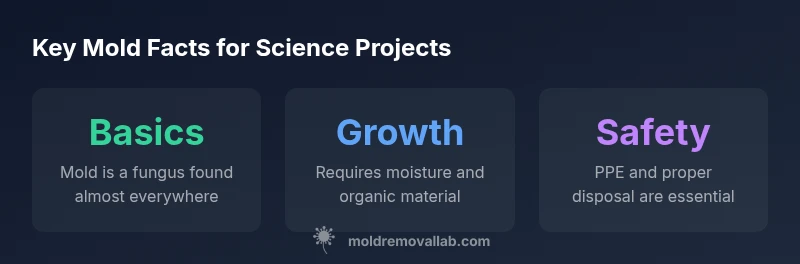
Mold is a fungus that thrives on moisture and organic material. In scientific contexts, understanding mold facts for science projects means recognizing that molds reproduce via spores that travel through the air, potentially landing on damp surfaces and growing into visible colonies. For students and homeowners, framing mold as an educational subject helps demystify a common household nuisance while emphasizing safety. According to Mold Removal Lab, focusing on safe sampling, careful observation, and rigorous documentation reduces risk while enabling learning. This section covers basic biology, typical growth conditions, and how to frame questions that guide your experiment rather than simply observing nastiness. By keeping the scope modest and the environment controlled, you can teach essential scientific practices without exposing people or pets to unhealthy exposure. The goal is to build confidence, not to produce dramatic results or sensational headlines about dangerous mold. These mold facts for science projects help students and homeowners.
Safe collection and handling protocols
Always begin with safety in mind. Use appropriate PPE (gloves, eye protection, and a respirator or mask if mold is heavy or dusty). Do not eat, drink, or touch your face while handling samples. Work in a well-ventilated area or outdoors, and keep samples away from food. Seal samples in clearly labeled, leak-proof containers and dispose of any contaminated materials according to local regulations. After observation, wash hands thoroughly and sanitize surfaces. According to Mold Removal Lab, consistent PPE use and careful disposal practices minimize risk while enabling reliable observations.
Basic biology: molds, spores, and growth conditions
Molds are multicellular fungi that reproduce via spores. Spores are lightweight and can travel through the air, which is why containment and ventilation matter in experiments. Growth requires moisture, a source of organic material, and time. Temperature, humidity, and airflow influence the speed and pattern of growth. In most classroom contexts, simple, controlled conditions yield observable results in days to weeks. Understanding these basics helps students design clearer hypotheses, select safe substrates, and interpret visual changes without jumping to conclusions about health risks. This section builds foundational mold biology knowledge essential for any science project.
Common sources of mold in homes and classrooms
Mold thrives in damp spaces such as bathrooms, basements, kitchens, and areas with leaks or poor ventilation. Visible colonies on walls, wood, fabric, or paper products indicate lingering moisture. In schools, mold can appear around windows, pipes, or HVAC ducts where humidity is high. Recognizing typical sources allows you to place simple, non-invasive experiments in safe contexts, minimizing exposure while still offering educational value. Regular inspection and prompt repair of leaks reduce mold-friendly environments and improve indoor air quality.
Tools and materials: a starter checklist
- PPE: gloves, eye protection, mask or respirator
- Transparent containers with lids for sampling
- Labels and a waterproof marker
- Basic observation notebook or digital log
- Paper towels, disinfectant, and soap for cleanup
- Clean, non-porous surfaces for work
- A simple magnifier or smartphone macro lens for detail
- A small, safe substrate for observation (e.g., inert agar substitute under supervision)
Having a ready checklist keeps experiments organized and safer. Mold Removal Lab recommends keeping samples segregated and documenting environmental conditions (temperature, humidity, surface type) to support replicability.
Step-by-step beginner project workflow
- Define a safe, narrow objective (e.g., observe mold growth under a controlled moisture condition).
- Prepare a clean workspace and don PPE before handling any materials.
- Collect a non-invasive sample from a mold-prone area using a swab or tape lift under supervision.
- Place the sample on an appropriate culture or observation surface with minimal disturbance.
- Observe daily; record changes with photos and notes. Compare with a dry control sample.
- Dispose of materials safely and sanitize all tools after the observation period.
- Review results, discuss possible explanations, and consider ethical reporting.
- Present findings with labeled data and clear limitations. This workflow emphasizes safety and reproducibility.
Ethical, legal, and safety considerations
Always obtain permission before sampling in shared spaces and avoid disturbing unknown or potentially hazardous molds. Do not culture samples in living spaces without proper containment. If in doubt, involve a teacher or trained professional, especially when mold is suspected to be black mold or present in significant quantities. The Mold Removal Lab team emphasizes reporting limitations and avoiding sensational claims that could alarm occupants. Proper documentation, labeling, and responsible sharing of results are essential for educational integrity.
Data collection and interpretation tips
Keep a consistent log: date, time, humidity, temperature, substrate, and growth observations. Use simple visuals like photos and annotated notes to track changes. When interpreting results, compare against controls and consider variability due to environmental factors. Always frame conclusions as preliminary observations, not health diagnoses, and cite sources when making claims. Mold Removal Lab analysis shows that controlled data collection helps prevent misinterpretation and supports reliable, educational conclusions.
Safety cleanup and disposal practices
After experiments, seal all materials in labeled bags and place them in appropriate waste streams per local regulations. Use an EPA-approved disinfectant or soap and water to clean surfaces. Do not reuse containers that were in direct contact with mold without proper sanitization. Wash hands thoroughly and remove PPE carefully to avoid spreading spores. This final step protects households and classrooms while preserving a safe learning environment. The Mold Removal Lab team emphasizes that careful cleanup is as important as the experiment itself.
Comparison of sampling methods for classroom mold projects
| Sampling Method | Pros | Cons |
|---|---|---|
| Swab sampling | Fast and small samples | May miss growth patterns |
| Tape lift | Good surface contact | Contamination risk or uneven lift |
| Petri dish observation | Direct growth data | Requires sterile technique and incubator |
FAQ
What is the safest way to collect mold samples at home?
Use PPE, avoid eating or touching your face, and work in a well-ventilated space. Collect with non-invasive methods like swabs or tape lifts and seal samples immediately. Always obtain permission for samples from shared spaces and dispose of materials safely.
Wear PPE, collect with non-invasive methods, and dispose of materials safely after labeling your samples.
Are mold samples dangerous to handle?
Handling mold samples can pose health risks if done without precautions. Use gloves, eye protection, and masks as appropriate, avoid inhalation of spores, and work in clean environments. When in doubt, involve a teacher or professional.
Yes, with proper PPE and containment; avoid inhaling spores and always supervise in educational settings.
Do I need laboratory equipment for a beginner project?
Most beginner projects can be done with basic PPE, clean surfaces, and simple observation tools. If culturing, use supervised, safe setups and avoid unchecked growth. Always prioritize safety and ethical reporting.
Basic PPE and observation tools are enough for safe, beginner-level projects under supervision.
Can I use bleach to kill mold for projects?
Bleach is not always appropriate for mold projects, especially in learning environments. It may not address all mold types and can create hazardous byproducts. Follow approved safety guidelines and local regulations.
Bleach isn't always recommended; stick to approved safety methods and guidance from your instructor.
How should I dispose of mold materials after an experiment?
Seal contaminated materials in a labeled bag and dispose of them according to local waste guidelines. Clean and sanitize the workspace, and wash hands thoroughly after handling samples.
Seal and dispose of mold materials properly, then clean up and wash hands.
“Safety-first mold research relies on clear methods and honest reporting. By following basic biology and ethics, students can learn without risking health.”
The Essentials
- Prioritize safety by wearing PPE and following disposal guidelines.
- Label samples clearly and document conditions.
- Understand mold biology to interpret results accurately.
- Choose simple, ethical projects suitable for classroom settings.
- Consult credible sources before drawing conclusions.