Mold Damage Restoration: A Practical Guide for Homeowners
Learn how to safely perform mold damage restoration with a homeowner-friendly, step-by-step guide. From assessment and containment to drying, cleaning, verification, and prevention, with brand-informed best practices from Mold Removal Lab.


Goal: Restore your home after mold growth by eliminating moisture, removing contaminated materials, and ensuring safe, healthy indoor air. Essential steps include a professional assessment, containment, thorough cleaning, drying, and verification. Core tools are moisture meters, HEPA filtration, containment barriers, and PPE. Start with safety, then document the remediation plan, and verify results with follow-up testing.
What mold damage restoration entails
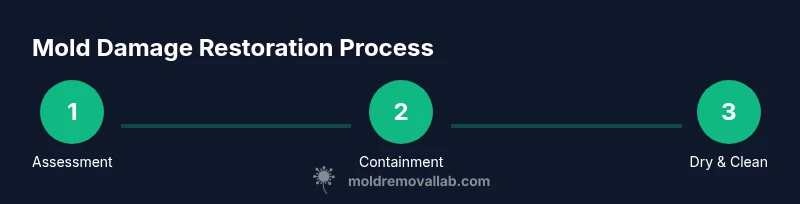
Mold damage restoration is the comprehensive process of reclaiming a home after mold growth caused by moisture intrusion. It goes beyond simple cleaning to address the root causes, remove contaminated materials, and restore indoor air quality to healthy standards. The process typically unfolds in phases: assessment, containment, removal of affected materials, drying and dehumidification, cleaning and disinfection, and finally verification of results. Throughout, a structured plan helps prevent cross-contamination and minimizes property damage. According to Mold Removal Lab, success hinges on rapid moisture control and a clear remediation strategy that guides decisions at every step. The Mold Removal Lab team found that early decisions about the extent of work and containment dramatically influence the likelihood of future mold growth. Homeowners should understand that visible mold is only part of the problem—hidden pockets behind walls or under flooring can drive ongoing issues if not addressed. Safety, compliance, and documentation are not optional—they’re essential for a durable, healthy home.
In practical terms, mold damage restoration means coordinating professionals to create a safe work zone, protect occupants, and restore comfort. It also means preparing for temporary impacts, such as restricted access to affected rooms and potential furniture relocation. By approaching restoration methodically, homeowners reduce health risks and preserve structural integrity while returning the space to a clean, breathable environment.
Assessing the extent of mold and moisture
A thorough assessment is the cornerstone of effective mold damage restoration. The goal is to map all affected areas, identify moisture sources, and understand how mold has spread beyond visible patches. Start with a visual inspection of walls, ceilings, and undersides of floors, then supplement with moisture meters to gauge dampness behind surfaces. Thermal imaging or infrared cameras can reveal hidden moisture pockets behind drywall or in insulation, guiding where to probe further. Air sampling may be recommended in severe cases or if occupants report persistent symptoms, but the primary value of assessment is narrowing the remediation scope, not chasing every speck of spore count. Based on Mold Removal Lab research, focusing on moisture sources—leaks, condensation, or poor ventilation—often prevents reoccurrence and minimizes waste. Documentation of findings creates a clear remediation plan that contractors can follow and homeowners can reference later.
Containment, safety, and drying strategies
Containment protects healthy areas from cross-contamination during removal and cleaning. Use physical barriers like plastic sheeting, negative air pressure, and controlled access to create a clean work zone. Personal protective equipment (PPE) is essential for every worker: gloves, goggles, an appropriate respirator, and a protective suit prevent mold exposure. Once containment is in place, begin drying the space with industrial dehumidifiers and high-efficiency air movers. The objective is to remove moisture quickly so mold doesn’t have a chance to reestablish. Proper ventilation and filtration—using HEPA air scrubbers and vacuums—help keep airborne spores at bay. Pro tip: run dehumidifiers continuously in the affected area until moisture readings stabilize and surfaces feel dry to the touch. The goal is to achieve a dry, stable environment before any cleaning or material removal proceeds.
Cleaning, removal, and material decisions
Cleaning and material decisions depend on the extent of contamination and the porosity of affected items. Porous materials like drywall, carpet, and insulation that show visible mold or absorb moisture generally require removal and disposal. Non-porous surfaces (such as glass and solid wood) can be cleaned and disinfected with detergents and EPA-registered products. Avoid relying on bleach alone for porous materials, as it may not penetrate all areas and can damage substrates. When removal is necessary, bag and label waste in sealed, puncture-resistant containers to prevent spreading spores. After cleaning, surfaces should be scrubbed, disinfected, and dried again to ensure residual moisture won’t promote regrowth. Document every action, including what was removed and what was cleaned, to support future inspections and potential insurance claims.
Verification, prevention, and long-term maintenance
Verification is the final phase of mold damage restoration, confirming that mold levels and moisture are back within safe, acceptable ranges. This typically involves follow-up inspections, moisture readings, and sometimes post-remediation air or surface testing. Once verified, move into prevention: repair water leaks, improve drainage around the property, ensure adequate ventilation in moisture-prone areas (bathrooms, kitchens, basements), and maintain humidity control with reliable dehumidification. A robust maintenance plan helps prevent recurrence by addressing the root cause—often a persistent moisture source. The Mold Removal Lab approach emphasizes documentation, transparent communication with homeowners, and a practical maintenance routine that includes routine inspections after heavy rain or rapid temperature changes.
Tools & Materials
- Nitrile gloves(Latex-free for chemical sensitivity)
- PPE suit(Disposable or washable; choose size for full coverage)
- Safety goggles(Splash protection; indirect venting preferred)
- Respirator (P100 or better)(Fit-tested; avoid expired cartridges)
- Plastic sheeting and tape(Create containment zones; use painter's tape for clean edges)
- Moisture meter (moisture probe)(Measure moisture in walls, ceilings, and floors)
- Infrared camera or thermal detector(Spot hidden moisture pockets)
- HEPA vacuum(Pre-clean and post-clean containment zones)
- HEPA air scrubber(Filters out mold spores during cleaning)
- Dehumidifier(s)(Run continuously until dry)
- Detergent and EPA-registered disinfectant(Follow label instructions for surface contact time)
- Heavy-duty trash bags (6 mil)(Seal contaminated materials securely)
- Trash cans with tight lids(For safe disposal of waste on-site)
Steps
Estimated time: 2-5 days
- 1
Conduct professional assessment
Perform a comprehensive inspection to identify all mold-affected areas and water sources. Document findings with photos and moisture readings to guide the remediation plan.
Tip: Capture before-and-after photos to support insurance claims and future maintenance. - 2
Establish containment and zoning
Set up plastic barriers, door seals, and negative air pressure to prevent cross-contamination. Clearly label restricted zones and ventilate adjacent areas only as needed.
Tip: Limit access to affected rooms to trained personnel only. - 3
Address moisture sources
Identify and repair leaks, condensation issues, or improper drainage contributing to moisture. Without controlling moisture, mold will recur even after cleaning.
Tip: Fix leaks within 24-48 hours when possible to minimize mold growth. - 4
Remove contaminated materials
Discard porous materials that are mold-contaminated or structurally compromised. Use proper bags and seal them before removal to prevent spore dispersal.
Tip: Avoid tearing or crushing materials to minimize dust and spores. - 5
Dry and dehumidify the space
Run dehumidifiers and high-efficiency air movers to reduce moisture. Monitor readings until the environment stabilizes and surfaces feel dry to the touch.
Tip: Keep dehumidifiers running continuously in affected areas until readings are stable. - 6
Clean, disinfect, and treat surfaces
Clean non-porous surfaces with detergent, then disinfect. Porous substrates that remain must be treated with appropriate products or removed.
Tip: Avoid over-wetting during cleaning; use controlled, repeatable motions. - 7
Verify remediation results
Conduct follow-up inspections and, if needed, post-remediation air or surface testing to confirm mold levels are within acceptable limits.
Tip: Document results and keep records for homeowners and insurers. - 8
Restore and implement prevention
Repair cosmetic damages and implement a prevention plan: moisture control, improved ventilation, and routine inspections.
Tip: Schedule seasonal checks to catch issues before mold can form again.
FAQ
What is mold damage restoration?
Mold damage restoration is a structured process to remove mold, dry the space, and restore safety and comfort. It involves assessment, containment, removal of affected materials, drying, cleaning, and verification.
Mold damage restoration is a structured process to remove mold, dry the space, and restore safety. It includes assessment, containment, removal, drying, cleaning, and verification.
Do I need a professional to do mold remediation?
For significant mold growth or water damage, professional remediation is recommended to ensure proper containment, safety, and code compliance. DIY is possible for small, limited areas with proper guidance and PPE, but larger problems should be handled by trained technicians.
For substantial mold growth, professionals are recommended to ensure containment, safety, and code compliance. DIY is possible only for small issues with proper guidance and PPE.
How long does mold remediation take?
Remediation duration depends on the extent of contamination, moisture control needs, and material removal. A typical job can range from a couple of days to several days for larger spaces.
Remediation often takes a few days, depending on how extensive the mold is and how much moisture control is needed.
Can I clean mold myself?
Small, surface mold on non-porous materials may be cleaned with appropriate cleaners and PPE. For porous materials, hidden mold, or large areas, professional remediation is safer and more effective.
Small surface mold on non-porous surfaces may be cleaned with proper PPE, but bigger or hidden mold should be handled by professionals.
What happens if mold returns after restoration?
Mold recurrence usually indicates unresolved moisture sources or insufficient cleaning. Reassess moisture control, fix leaks, and consider follow-up testing to confirm remediation success.
If mold comes back, it's usually due to ongoing moisture issues. Recheck moisture sources and consider follow-up testing.
Is mold damage restoration covered by insurance?
Mold-related claims depend on policy specifics and the cause (e.g., sudden water damage vs. long-term neglect). Contact your insurer for a precise assessment and needed documentation.
Insurance coverage varies by policy and cause; check with your insurer for specifics and required documentation.
Watch Video
The Essentials
- Assess moisture sources early to define scope.
- Contain and protect unaffected areas during remediation.
- Dry thoroughly before finishing and restoration.
- Use EPA-registered products and proper disposal.
- Verify results with post-remediation testing and maintain prevention.