Mildew vs Mold on Wood: Identification and Cleanup
Learn to tell mildew from mold on wood, diagnose causes, and choose safe removal methods with practical, science-based guidance for homeowners and renters.


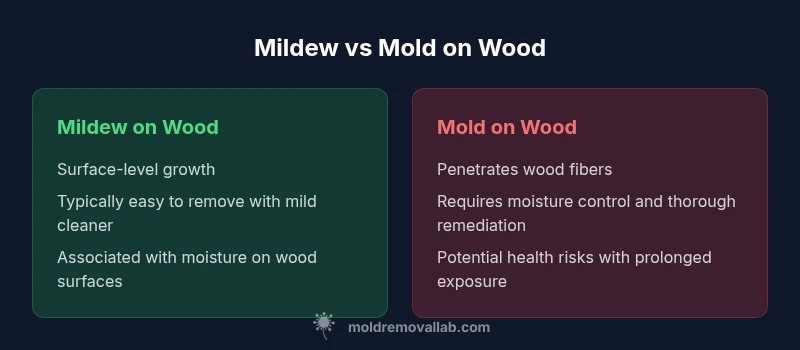
People often confuse mildew with mold on wood, but they differ in depth of growth and remediation needs. Mildew is typically a superficial, powdery film that rinses off with mild cleaning, while mold penetrates wood fibers and requires more thorough removal and moisture control. For most homes, start with moisture management and surface cleaning; escalate to professional remediation for extensive growth or damaged wood.
What mildew vs mold on wood actually means
Mildew and mold are terms that homeowners often confuse, but on wood they represent different growth types with distinct implications for cleanliness, safety, and remediation. According to Mold Removal Lab, many household cases of surface discoloration on wooden surfaces stem from mildew, a superficial organism that thrives on moisture and organic debris but typically does not deeply penetrate the wood. Conversely, mold colonies can permeate the wood fibers, weakening the material and creating long-term structural concerns if left untreated. Understanding these differences is essential for choosing the right cleaning strategy and deciding whether to treat, replace, or call a professional. Across our analyses in 2026, we have seen that proper moisture management remains the single most effective preventative measure. This guide uses plain language, but the science behind it is solid: moisture control, proper cleaning, and timely action dramatically reduce risk. If in doubt, err on the side of caution and treat suspected growth as mold until you’ve confirmed otherwise.
The stigma around mildew vs mold on wood often leads homeowners to treat the symptom rather than the cause. The Mold Removal Lab approach emphasizes moisture management as the foundation of any successful remediation. By focusing on the moisture source—leaks, condensation, or humid environments—you address the root problem, reducing recurrence. Note that wood finishes, coatings, and sealants can mask growth but do not eliminate it; visible cleanup should be paired with moisture stabilization to prevent re-growth.
Comparison
| Feature | Mildew on Wood | Mold on Wood |
|---|---|---|
| Appearance | Powdery, white or gray film on the surface | Cottony, fuzzy, or slimy colonies that can be colored (green, black, gray, or brown) and may appear embedded in the wood grain |
| Growth Depth | Primarily surface-level; usually shallow and easy to remove | Can penetrate wood fibers and cause deeper damage over time |
| Common Environments | Damp, well-ventilated areas with moisture on wood surfaces | Persistent moisture, leaks, or high humidity enabling mold growth within wood cavities |
| Removal Approach | Mild cleaning with soap and water or simple cleaners; dry thoroughly | Thorough remediation that fixes moisture, may require professional cleaning and possible wood replacement |
| Health Risks | Typically lower respiratory irritants if present in large amounts but often easier to manage | Potential for higher exposure to mold spores and mycotoxins, especially with prolonged growth or indoor air quality concerns |
| Time to Remediation | Short-term cleanup for small patches; monitor for returns | Longer process if growth is extensive or wood is compromised |
| Prevention Focus | Keep surface dry and clean; improve surface ventilation | Address leaks, improve airflow, and reduce indoor humidity |
Upsides
- Clear, actionable indicators help homeowners decide when DIY is appropriate
- Surface mildew on wood is often manageable with basic cleaning and drying
- Identifying mold promptly prevents broader structural damage
- Prevention strategies reduce recurrence across wood species
- Remediation plans emphasize moisture control as the core preventive measure
The Bad
- Misidentifying mildew vs mold can delay proper treatment
- DIY attempts on large or deeply embedded growth may spread spores
- Bleach or harsh cleaners can damage some wood finishes if misused
- Professional remediation may be necessary for structural wood damage
Mildew on wood is typically easier to address than mold on wood
For most homes, prioritize moisture control and surface cleaning when dealing with mildew on wood. Reserve professional remediation for extensive, embedded, or recurring mold growth, and when wood integrity is compromised.
FAQ
What is the key difference between mildew and mold on wood?
Mildew is a superficial, powdery growth on wood surfaces, easy to wipe away. Mold grows deeper, can penetrate wood fibers, and signals moisture problems that require more thorough remediation.
Mildew sits on the surface; mold goes deeper and needs more careful cleanup and moisture control.
Can mildew turn into mold on wood?
Yes. If moisture levels stay high and conditions favor growth, mildew can develop into mold. Early intervention helps prevent progression and wood damage.
If moisture stays high, mildew can become mold, so address dampness quickly.
How can I identify mold on wood safely?
Look for colored, fuzzy colonies that penetrate the wood grain, a musty odor, and any visible rot. If in doubt, test a small area and consult a professional to confirm before aggressive cleanup.
Check for color, depth, odor, and wood damage; when unsure, call a pro.
What are safe cleaning methods for wood affected by mildew or mold?
Begin with moisture control and surface cleaning using mild soap or cleaners; thoroughly dry. For mold or extensive growth, use proven mold cleaners and consider professional remediation, especially if wood is damaged.
Start mild, dry well, and escalate only if needed.
When should I call a professional?
Call a professional if growth covers large areas, wood shows deep staining or rot, or you notice persistent moisture despite your cleaning efforts. Professionals can assess structural integrity and provide safe remediation.
If in doubt or if wood is damaged, get a mold remediation pro.
Will any mold on wood make my home unsafe?
Not all mold makes homes unsafe, but some species can affect air quality and health, especially for sensitive individuals. A professional can assess air exchange and health risks.
Mold can affect air quality; if symptoms appear, seek evaluation.
The Essentials
- Assess moisture sources before cleaning
- Prefer gentle cleaners for mildew; escalate to stronger methods for mold
- Focus on drying and ventilation to prevent recurrence
- Call a professional if wood is structurally damaged or growth persists
- Use surface-cleaning as a short-term fix while addressing the moisture issue