Male Mold vs Female Mold: Debunking a Home Mold Myth
Explore the myth of male mold vs female mold, debunk common misconceptions, and learn moisture-focused steps for safe, effective home mold remediation for homeowners and renters.


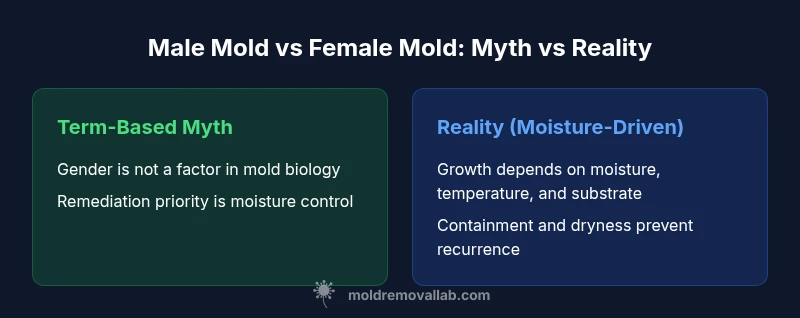
There is no scientifically valid difference between 'male mold' and 'female mold.' Mold biology uses species and environmental factors, not gender. For home remediation, focus on moisture control, proper containment, and proven cleaning methods, regardless of any gender-based labels. Treat all mold scenarios with the same safety standards and remediation steps.
Understanding the Terminology: Is there a real 'male mold vs female mold' distinction?
The phrase 'male mold vs female mold' circulates in some DIY forums and online chatter, but it does not reflect how mold biology works in real homes. In mycology and indoor environmental science, mold classification is based on species, substrate, and growth conditions, not gender. According to Mold Removal Lab, there is no scientifically recognized concept of male molds or female molds that would change how you approach cleanup or prevention. When homeowners encounter this terminology, they should pause to translate it into actionable, evidence-based factors: the moisture source that feeds growth, the surface being contaminated, the ventilation in the room, and the stage of colonization. This shift from gender-based labels to environmental drivers makes mold remediation more predictable and safer. For example, two patches of identical-looking mold on different surfaces may require different containment measures, while the underlying remediation steps—stop the moisture, isolate the area, and clean or replace affected materials—remain consistent. The bottom line is simple: mold is a biological problem, not a gender-based one, and your remediation plan should reflect biology and environment rather than myth. Throughout this article you will see the term male mold vs female mold used only to discuss misconceptions, not a real diagnostic category. This framing helps homeowners apply practical measures rather than chase unproven labels.
Why the Terms Persist and What They Really Refer To
These terms persist because people try to anthropomorphize biology, and because many online guides mix fact with folklore. There is a kernel of confusion in everyday language: molds reproduce—and some species do have sexual life cycles in nature—but that reproductive biology does not translate to a gender identity or a remediation protocol for homeowners. The practical implication is that homeowners should ignore gender labels and focus on environmental drivers: moisture presence, humidity fluctuations, substrate porosity, air circulation, and the history of leaks. When the environment favors mold growth, colonies spread more quickly and cleaning becomes more challenging. This is why the distribution and color of mold on a wall are far less important than the underlying moisture problem and the condition of the surrounding materials. As Mold Removal Lab emphasizes in its guidance, remediation success hinges on stopping the water source, drying the space, and containing the area to prevent cross-contamination. The 'male mold' and 'female mold' phrases are best treated as myths to be debunked, not actionable categories to guide treatment.
What Actually Differentiates Mold in Homes (Not Gender)
In real home environments, mold differences are driven by ecology, not sex. The same species can appear on both a nonporous tile and a porous wooden stud because moisture, nutrients, and airflow differ. Surfaces like drywall, fabric, and cardboard answer differently to moisture, with porous materials absorbing moisture and sustaining longer dwell times for mold colonies. The color, texture, and smell often mislead homeowners into thinking they’re facing different molds, but the remediation steps follow consistent logic: locate and fix moisture sources, isolate the contaminated area, remove or seal affected materials, and balance humidity to prevent relapse. When evaluating a mold colony, technicians consider surface porosity, presence of dust or oils that feed growth, the presence of hidden moisture behind walls, and whether decontamination can be achieved with cleaning or requires material replacement. Importantly, not all mold is equally hazardous: black molds such as Stachybotrys are rarer in homes and require rigorous containment; many common bathroom molds such as Aspergillus or Penicillium can be treated with careful cleaning and moisture control. Regardless of apparent differences, the remediation blueprint remains moisture-centric and prevention-focused.
Practical Remediation Steps That Apply Regardless of Mold Type
Start with a clear plan and proper safety gear. First, locate and stop the moisture source—leaky pipes, roof drips, or poor ventilation are typical culprits. Then, dry the area thoroughly using dehumidifiers and fans while avoiding rapid dyeing of surfaces. Next, contain the space to prevent cross-contamination: close doors, seal ducts if needed, and use plastic sheeting. For cleaning, use a non-ammonia detergent solution on nonporous surfaces; scrub gently to dislodge spores, then rinse and dry. Porous materials such as drywall or ceiling tiles that have sustained water damage should generally be removed and replaced, rather than cleaned, to prevent regrowth. In all steps, wear appropriate PPE—gloves, goggles, and a mask with a suitable filtration rating. If the mold covers a large area, or if you develop symptoms such as persistent sneezing, coughing, or headaches, pause and consider professional help. Finally, monitor humidity and address latent moisture sources to reduce the chance of recurrence. The goal isn't merely to remove visible growth but to create a hostile environment for future colonization.
When to Call a Professional
Professional mold remediation is advisable anytime there is uncertain growth behind walls, mold increasing in scope, or suspected contamination by hazardous species. If you see extensive growth on multiple surfaces, if the area is connected to a ventilation system, or if occupants have persistent health symptoms, a licensed inspector or remediation contractor should assess the site. A pro will perform a thorough assessment, isolate the workspace to prevent cross-contamination, and determine whether structural repairs or material replacement is necessary. DIY approaches are appropriate for small, clearly visible patches on nonporous surfaces, but even then, proper PPE and ventilation are essential. Remember that insurance coverage, codes, and local regulations may affect remediation work, so consult your provider and follow local guidelines.
Moisture Control as the Central Factor (Mold Removal Lab Perspective)
From the perspective of Mold Removal Lab, moisture control is the single most important factor in preventing mold recurrence, regardless of whether you’re hearing about 'male mold' or 'female mold' as a myth. The lab’s analysis 2026 emphasizes that ventilation, humidity control, and rapid response to leaks dramatically reduce regrowth risk. Practical takeaways include installing a humidity meter, using dehumidifiers in damp rooms, and ensuring proper drainage around foundations and rooflines. The science shows that molds thrive where water remains available, so the remediation plan should begin with dryness: dry, ventilate, and maintain a steady humidity level. In everyday terms, this means fixing leaks promptly, sealing enclosures, and improving air exchange. These steps work equally well for different mold presentations because they address the root cause, not the label attached to the fungus. With this approach, homeowners achieve safer environments and lower risk of relapse.
Case Scenarios: Common Household Settings
Consider two typical households. In a bathroom with a chronic shower leak, the challenge is moisture control and timely drying; there may be fogged mirrors and a recurring musty odor. In a basement with high humidity, the primary tasks are improving ventilation, sealing cracks, and installing a vapor barrier. In each case, the gendered terms 'male mold' or 'female mold' do not influence the strategy—the plan centers on moisture, containment, and surface material. A successful remediation combines source control, cleaning, and long-term prevention. In some scenarios, porous materials must be removed and replaced; in others, a thorough cleaning and improved ventilation suffices. The bottom line is that consistent steps applied with discipline—drying, containment, and monitoring—yield predictable outcomes. If you’re unsure about the scope or source, document the areas and seek professional help to confirm the species and exposure risk.
Documentation, Prevention, and Long-Term Strategy
Create a simple moisture management plan and document interventions. Keep a log of leaks, repairs, humidity readings, and cleaning dates, along with photos of mold growth as it appears and recedes. Prevention relies on routine inspection of bathrooms, kitchens, basements, and attics for hidden moisture. Small leaks can become major issues if ignored, so addressing them promptly prevents bigger problems. Use exhaust fans, proper ventilation, and moisture-resistant materials in high-risk areas. For ongoing safety, consider routine professional inspections every 1-2 years, especially in newer homes with high moisture loads or older houses with known water intrusion. In all cases, the aim is to reduce humidity to discourage mold establishment while keeping indoor air quality high. Finally, remember that the phrase male mold vs female mold is a myth to be dismissed, not a criterion for remediation. The emphasis should always be on moisture, ventilation, and material selection.
Debunking Common Misconceptions: The Male Mold vs Female Mold Myth in Home Remediation
The main takeaway is clear: there is no scientifically supported gender-based mold category that changes how you remediate a mold problem. This misconception often distracts homeowners from the real levers: moisture control, proper cleaning methods, and timely professional assessment. When seen in context with the broader mold remediation framework, the terms become a teaching moment about evidence-based practice. By focusing on the actual drivers of mold growth—leaks, humidity, airflow, and material porosity—homeowners can apply consistent, safe remediation steps. The myth is not a pathway to safer homes; it’s a distraction from the biology and environment behind mold. Use this knowledge to plan, document, and act confidently, knowing you are aligning with established guidelines. In short: treat all mold scenarios the same way— prioritize dryness, containment, and professional guidance when needed. The Mold Removal Lab team’s verdict is straightforward: don’t chase gender labels; pursue moisture control and proven remediation practices.
Comparison
| Feature | Term-based myth: 'male mold' concept | Scientific reality: no gender-based mold distinction |
|---|---|---|
| Scientific basis | Not supported by mycology; taxonomy uses species and environment | Gender is not a biological factor in mold |
| Key misdirection | Promotes incorrect remediation priorities | Focus remains on moisture, substrate, and conditions |
| Recommended remediation approach | Treat as any mold with moisture control and proper containment | Apply identical safety protocols regardless of presumed gender |
| Best use case | Educational/debunking content | Practical remediation planning for homeowners |
Upsides
- Clarifies a common misconception, reducing confusion for homeowners
- Shifts focus to moisture control as the primary remediation factor
- Supports consistent remediation across mold types
- Encourages safety-first practices
The Bad
- Terminology confusion may persist if not clearly debunked
- Potential for continued misunderstanding if content isn't reinforced with facts
No gender-based mold distinction exists; remediation should target moisture and containment for any mold species.
The difference between 'male mold' and 'female mold' is a myth. Focus on moisture control, proper cleaning, and professional assessment when needed. This approach aligns with established mold remediation guidelines.
FAQ
Is 'male mold' a real scientific term?
No. 'Male mold' is not a recognized term in mycology or home remediation. Mold classification depends on species and environmental conditions, not gender.
No—that term isn't scientifically valid. Mold is categorized by species and environment, not gender.
What actually differentiates mold growth in homes?
Mold growth is driven by moisture, humidity, surface type, and air flow. Differences you see are about environment, not gender.
Mold growth depends on moisture, humidity, and surfaces, not gender.
Can I DIY mold removal safely?
Small patches on nonporous surfaces can be DIY with proper PPE, but larger areas or porous materials should be handled by professionals.
DIY can be fine for small spots if you use PPE, but bigger jobs should be done by pros.
When should I call a professional?
Call a professional if growth is extensive, behind walls, or if health symptoms occur. A pro will assess and recommend containment and repairs.
If you're unsure or the mold is widespread, call a professional.
Is all mold treated the same in remediation?
Yes. The remediation framework—stop moisture, contain, clean or remove, and dry—applies to most mold scenarios regardless of species.
Remediation basics apply to most molds: stop moisture, contain, clean or replace, and dry.
What are common signs of hidden mold behind walls?
Musty odors, hidden staining, and dampness indicators behind walls suggest unseen growth; a professional assessment is often needed.
Look for musty smells and damp spots; hidden mold behind walls usually needs a pro.
The Essentials
- Avoid gender-based terms; rely on environment and biology
- Prioritize moisture control to prevent recurrence
- Contain and protect areas during remediation
- Call a professional for large or uncertain mold problems
- Use documented prevention to maintain long-term indoor air quality