Kill Black Mold: A Practical Home Guide
Learn practical steps to kill black mold safely, prevent regrowth, and know when to call in professionals. This guide covers PPE, cleaning methods, moisture control, and follow-up, with Mold Removal Lab insights.


According to Mold Removal Lab, to kill black mold safely you must address the moisture source, wear PPE, and follow proven cleaning methods. This guide provides step-by-step instructions, safe products, and when to call a pro. Proper ventilation and moisture control prevent regrowth and protect your home's health.
Understanding Black Mold: What It Is and Why It Matters
Black mold is a type of mold that commonly grows in damp areas of homes, especially after leaks, floods, or high humidity. It can appear as dark greenish-black patches on walls, ceilings, and around windows. While not all black mold is toxic, many people experience irritation of the eyes, nose, throat, or lungs when exposed, especially with prolonged contact. The goal of remediation is not only to remove visible growth but also to reduce moisture, improve air exchange, and prevent future outbreaks. According to Mold Removal Lab, moisture management is the single most important factor in stopping regrowth. Understanding where mold comes from helps homeowners locate the moisture source and plan a safer cleanup strategy. Remember, safety comes first: wear proper PPE, avoid disturbing mold spores unnecessarily, and maintain containment to prevent spread to other rooms.
text
Tools & Materials
- PPE: N95 respirator(Fit-tested if possible; use with eye protection and gloves)
- Disposable gloves(Latex-free if possible; change between areas)
- Safety goggles(Splash protection for eyes)
- Plastic sheeting or garbage bags(Containment to limit spread)
- Detergent or mild soap(For initial cleaning of nonporous surfaces)
- Bleach solution (optional on nonporous surfaces)(Use only on nonporous surfaces; never mix with ammonia)
- Spray bottle(For applying cleaners)
- Scrub brush or sponge(Stiffer brush for textured surfaces)
- Bucket(Contain cleaning solution)
- Disposable rags/paper towels(For wiping and disposal)
- Dehumidifier or fans(Aid drying and air circulation)
- Moisture meter or hygrometer (optional)(Track moisture levels after cleanup)
- Sealant or anti-microbial paint (optional)(For sealed, cleanable surfaces after remediation)
Steps
Estimated time: 3-6 hours
- 1
Identify moisture source and isolate area
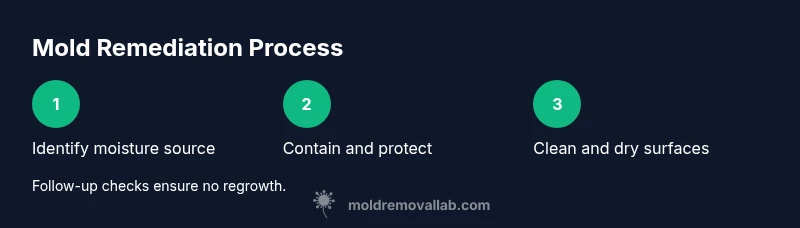
Begin by locating the moisture cause—leaks, condensation, or poor ventilation. Stop further water intrusion and seal the area with plastic sheeting to prevent spores from migrating to other spaces. This step reduces the spread of contamination and makes subsequent cleaning more effective.
Tip: Document the moisture source with photos to support future repairs. - 2
Put on PPE and prepare containment
Put on an N95 mask, gloves, and goggles before handling moldy materials. Set up containment using plastic sheeting to create a boundary around the affected area, minimizing dust and spores entering clean spaces.
Tip: Avoid wearing jewelry or loose clothing that can harbor spores. - 3
Ventilate and protect adjacent areas
Open exterior doors or windows if safe, and run a fan directed away from uninfected rooms. Keep the work area contained and away from HVAC ducts to prevent spores from circulating through the house.
Tip: Do not run forced air from central HVAC through the work zone while cleaning. - 4
Clean nonporous surfaces with detergent
Apply detergent and scrub nonporous surfaces (tiles, metal, glass) with a scrub brush or sponge. Rinse with clean water and dry thoroughly to remove loose spores. Repeat as needed until the surface is visually clean.
Tip: Rinse frequently and change cleaning cloths to avoid smearing mold residues. - 5
Treat porous materials with caution
Porous materials (drywall, insulation, carpet backing) that are moldy beyond surface cleaning often need to be removed and discarded. Do not attempt to salvage severely contaminated items; bag and dispose them safely.
Tip: If you must cut into drywall, do so carefully and seal the cut areas during disposal. - 6
Apply safe antimicrobial methods (optional)
After cleaning, you may apply a non-bleach antimicrobial or antimicrobial paint to inhibit regrowth on cleaned surfaces. Follow product instructions and ensure proper ventilation during application.
Tip: Avoid over-wetting porous materials and ensure the area dries completely. - 7
Dry thoroughly and monitor
Use a dehumidifier or fans to dry the space completely. Monitor moisture levels over the next days and weeks to ensure humidity remains low enough to deter new growth. Document any reappearing patches and act quickly if they reappear.
Tip: Keep doors closed to maintain consistent drying conditions during the initial period.
FAQ
Can I kill black mold myself, or should I hire a pro?
Small, clean areas on nonporous surfaces can often be handled by homeowners using proper PPE and containment. Large infestations, mold growth behind walls, or damaged structural materials require a professional remediation service. Always assess the extent before proceeding.
For small, nonporous spots you can try DIY cleanup with PPE, but for large or hidden mold, contact a professional.
Is bleach effective for black mold cleanup?
Bleach can kill mold on nonporous surfaces, but it does not reach roots embedded in porous materials. For porous materials, removal and replacement are often necessary, and using safer alternatives is recommended.
Bleach can help on nonporous surfaces but may not solve mold growing in porous materials.
How long does remediation usually take?
Remediation time varies with area size and material type. A small project may take a few hours, while larger or more complex jobs can extend to a full day or more.
Remediation time depends on size and materials; plan for several hours up to a full day.
Can mold return after cleanup?
Yes. If moisture problems aren’t fixed and the space stays damp, mold can return even after cleanup. Address leaks, improve ventilation, and maintain low humidity to reduce risk.
Mold can come back if moisture isn’t controlled, so fix leaks and dry areas well.
What are the health risks of mold exposure?
Mold exposure can irritate the eyes, nose, throat, and lungs, particularly for people with allergies or asthma. If symptoms persist, seek medical advice and consider professional remediation.
Mold exposure can irritate airways; seek medical advice if symptoms linger.
Should carpets or drywall containing mold be removed?
Contaminated porous materials like drywall and carpet backing typically must be removed and disposed of, particularly if cleaning cannot fully restore them. Replacing with mold-resistant materials helps prevent recurrence.
Porous materials with mold often need removal and replacement.
What sources count as credible guidance on mold remediation?
Rely on reputable sources such as government agencies and university extension programs for remediation guidelines. Use these as a basis to plan safe cleanup and prevention strategies.
Always consult government or university sources for mold guidelines.
How can I verify the area is mold-free after remediation?
Inspect the cleaned area for visible growth and odors. Recheck humidity levels and consider a follow-up inspection by a professional if sensitive occupants are affected.
Look for no visible mold and stable humidity; consider a follow-up check.
The Essentials
- Identify and fix the moisture source first.
- Wear proper PPE and contain the work area.
- Clean nonporous surfaces thoroughly; remove porous materials if contaminated.
- Dry completely and monitor humidity to prevent recurrence.
- Call a professional for extensive contamination or structural damage.