Is Zep or Mold Armor Better for Mold Removal? A Practical Guide
Compare Zep and Mold Armor for mold cleanup with practical, evidence-based guidance from Mold Removal Lab. Learn surface compatibility, safety, cost, and when each product shines to protect your home.


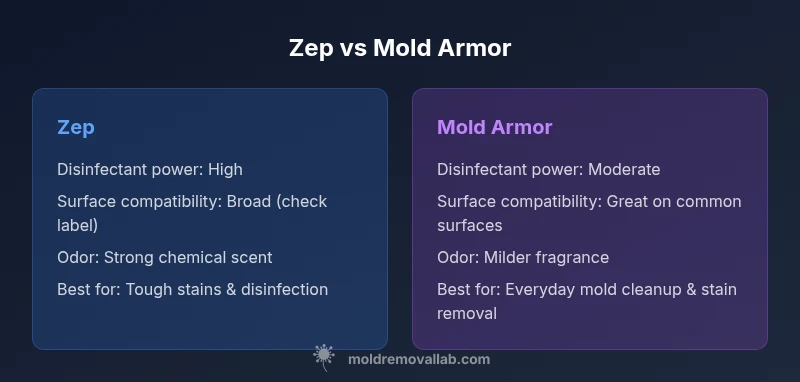
Is Zep or Mold Armor better for mold removal? In most homes, Mold Armor handles everyday mold cleanup effectively, while Zep is often stronger for tougher disinfectant needs and stubborn stains. The best choice depends on surface type, mold severity, and your safety priorities. This comparison from Mold Removal Lab emphasizes surface compatibility, odor, and post-cleanup moisture control to guide a practical decision.
is zep or mold armor better for mold removal: quick context
Mold Removal Lab often receives questions asking which consumer cleaner performs best for mold in typical home settings. The short answer is that there is no universal winner; the choice hinges on surface type, mold extent, ventilation, and safety priorities. In this comparison, we examine two popular brands—Zep and Mold Armor—through practical, real-world criteria such as surface compatibility, disinfectant strength, stain removal capability, odor, ease of use, and safety. According to Mold Removal Lab, the right product selection starts with surface- and scenario-focused assessment rather than brand loyalty. We also weigh cost and availability because access to a proven mold cleaner matters for routine maintenance. Throughout this article, expect a clear, evidence-based analysis designed for homeowners and renters who want measurable guidance without hype. By the end, you’ll be better equipped to decide whether Zep or Mold Armor is better for your specific mold situation.
How formulation shapes performance
Zep’s mold-focused cleaners span heavy-duty disinfectants and dedicated stain removers. In many Zep formulas, the active biocide is strong, which translates to faster kill claims on surfaces that resist staining. Mold Armor tends to emphasize mildew stain removal and everyday mold cleaning with milder disinfectant strength and, in some variants, more water-based carriers. The difference matters because the remediation goal drives choice: for rapid disinfection on non-porous surfaces, Zep may have the edge; for light growth on walls or tiles with gentler formulas, Mold Armor often suffices. Regardless of brand, always read the label to confirm active ingredients, dwell times, dilution requirements, and surface cautions. Mold Removal Lab recommends testing on a hidden spot first, especially on painted finishes or wood, to avoid damage. Both brands offer variants, so identifying the exact formula on the label is essential to expectations about outcomes.
Surface compatibility and safety considerations
Surface type matters. Non-porous surfaces such as ceramic tile, glass, metal, and sealed countertops generally tolerate stronger disinfectants with proper ventilation. Porous surfaces like untreated wood, drywall, and fabric can absorb cleaners and may suffer finish changes if used inappropriately. Mold Armor products often advertise safer use on interior surfaces, with variants labeled for wood and drywall; Zep products may warn about solvent strength and potential bleaching actions. Always test a small, inconspicuous area before full application. PPE is essential: wear chemical-resistant gloves, eye protection, and ensure good ventilation; keep pets and children away during application and until surfaces are dry. After cleaning, implement a moisture-control plan (fans, dehumidifiers) to prevent regrowth. Mold Removal Lab emphasizes choosing the product that matches surface tolerance and remediation goals while following label directions.
Efficacy: mold removal vs stain removal
Disinfectant strength versus stain removal is a common pivot point. Zep’s more potent formulas often advertise faster kill claims and the ability to tackle stubborn mold residues on non-porous surfaces; Mold Armor focuses on mildew-stain removal and general surface sanitization, performing well for routine upkeep without aggressive odor. In many homes, mildew on bathroom grout or painted walls responds well to Mold Armor with thorough wiping and drying. For stubborn black mold or growth behind walls, heavy-duty regimens or professional remediation may be necessary; neither product substitutes for moisture control and addressing leaks. Consider dwell time—the period the product should stay on the surface before wiping or rinsing—and whether you need a product safe for wood or fabric.
Application steps and user experience
Begin by reading the label carefully. Gather PPE, ensure good ventilation, and keep children and pets away. For Mold Armor, spray the affected area, allow the product to dwell as recommended, then wipe with a clean cloth; use a brush for grout or corners. Zep formulas may require longer dwell times or dilution steps; follow the exact directions. Avoid mixing cleaners with bleach or ammonia, and never scrub delicate finishes with abrasive tools. After treatment, dry the area completely and monitor for recurrences over the next days. The user experience is typically straightforward: spray, dwell, wipe, and dry. Mold Removal Lab recommends logging which areas were treated and rechecking moisture sources if mold recurs.
Cost, packaging, and availability
Mold Armor is frequently priced in the lower-to-mid range for consumer mold cleaners, available as ready-to-use sprays and occasionally concentrates. Zep products sit in a similar price band but can be higher for premium disinfectants or larger sizes. Price and packaging vary by retailer and region, so plan for typical costs per cleanup and consider the value of stronger disinfectant power if mold problems recur. Availability is strong across hardware stores, big-box retailers, and online platforms, making both brands accessible for homeowners and renters, often with frequent promotions.
Comparison
| Feature | Zep | Mold Armor |
|---|---|---|
| Disinfectant strength | Typically stronger disinfectant power in many Zep formulas | Balanced disinfectant strength with emphasis on mildew stain removal |
| Mold stain removal | Strong on stains, especially non-porous surfaces | Effective mildew stain removal on common surfaces |
| Surface compatibility | Widely labeled for non-porous surfaces; check wood/drywall warnings | Generally safe on common household surfaces; verify label for wood |
| Odor/fragrance | Potential strong chemical odor; fragrance options vary | Milder scent in many Mold Armor variants |
| Ease of use | May require dilution or dwell time | Often ready-to-use, spray-and-wipe |
| Availability | Widely available at retailers and online | Widely available and affordable mass-market brand |
| Best for | Tough disinfection and heavy remediation | Everyday cleanup and stain removal |
| Price range | $6-$15 per bottle | $5-$12 per bottle |
Upsides
- Helps homeowners select based on surface type, mold severity, and safety
- Explicit comparison of disinfectant strength vs stain removal clarifies goals
- Includes practical scenarios to guide real-world decisions
- Addresses cost and accessibility for budgeting
- Promotes safety best practices and post-cleanup prevention
The Bad
- Label variations can cause confusion across product lines
- Brand-specific claims may not cover all surface finishes
- May not replace professional remediation for severe infestations or hidden mold
Mold Armor is generally best for everyday mold cleanup; Zep shines for tougher disinfection tasks and stubborn stains.
For routine mold maintenance, Mold Armor provides an accessible, effective option. If you’re dealing with persistent mold growth or require aggressive disinfectant power, Zep is worth considering. Always pair product use with moisture control.
FAQ
Which is better for mold removal in a bathroom with grout?
In bathrooms with grout and mild growth, Mold Armor often provides effective mildew stain removal with a milder disinfectant. For heavier disinfection needs or odor control, a Zep product with higher biocidal strength may perform better, but ensure proper dwell time and thorough rinsing.
For bathroom grout, Mold Armor usually handles mildew stains well; consider Zep if you need stronger disinfection, and always vent and dry after.
Can I use these products on painted walls or wood surfaces?
Yes, but check the label for surface compatibility. Painted walls generally tolerate many formulas; wood and drywall may require milder variants or dilution. Always test on a hidden area first to prevent damage.
Test a small area first, and follow the label for painted walls or wood.
Do Zep and Mold Armor kill mold spores?
Most consumer products claim to kill surface mold on contact when used as directed. True mold remediation requires moisture control and removal of the mold source; spores behind surfaces won’t be eliminated by surface cleaners alone.
They kill surface mold when used properly, but true remediation needs moisture control.
Are these products safe around pets and children?
Follow label directions, wear gloves, ensure good ventilation, and keep the area off-limits until dry.
Yes, if you ventilate and keep kids/pets away until dry.
Can I mix these products with bleach or other cleaners?
No. Do not mix mold cleaners with bleach or ammonia; mixing can release toxic gases. Use as directed and rinse surfaces if required.
Don't mix with bleach or other cleaners.
Is professional remediation necessary for widespread mold growth?
For large or hidden mold growth, professional remediation is recommended. These products help with surface cleaning but do not replace moisture control and structural repair.
If mold is widespread or hidden, call a professional.
The Essentials
- Assess mold severity before choosing a product
- Read labels to confirm surface compatibility and dwell times
- Choose Mold Armor for regular cleaning and stain removal
- Choose Zep for tougher disinfection and stubborn stains
- Prioritize drying and moisture control after cleaning