Identifying Black Mold vs Mildew: A Practical Guide
Learn to distinguish black mold from mildew with clear visuals, health guidance, testing, and remediation steps to keep homes safe. Practical, evidence-based guidance from Mold Removal Lab.


Identifying black mold vs mildew hinges on clear visual cues, growth patterns, and moisture context. This TL;DR helps you decide when to investigate further or call a pro. The distinction guides the right remediation approach and protects indoor air quality—fundamental steps in safe home maintenance.
What identifies black mold vs mildew: a quick primer
Identifying black mold vs mildew begins with a basic understanding of what these fungi are and how they differ in appearance, growth conditions, and potential health effects. Black mold, often linked to Stachybotrys chartarum, is typically associated with damp, cellulose-rich materials and may appear as dark greenish-black, slimy, or cream-colored zones that can darken over time. Mildew is a broader term for several fungi that commonly appear as white, gray, or yellow powdery or downy growth on bathroom fixtures, windows, and other moist surfaces. Knowing which category you're dealing with helps you set expectations for remediation and whether professional help is warranted. According to Mold Removal Lab, homeowners who confidently distinguish between the two are more likely to select the correct cleaning approach and avoid unnecessary, risky, or ineffective methods. This article uses practical steps designed for homeowners and renters who want clear, actionable guidance without alarmist claims.
Visual cues: color, texture, and surface growth
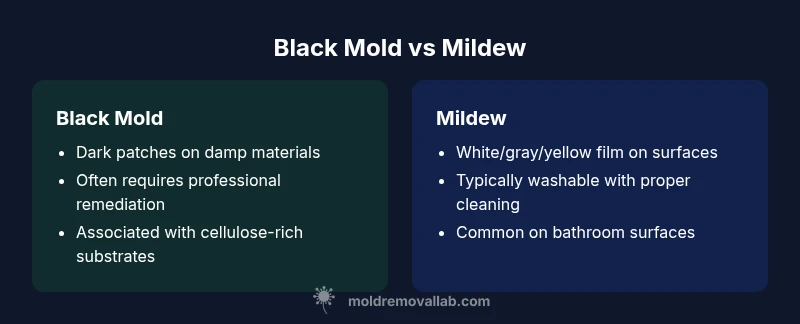
Visual identification is a practical starting point when differentiating black mold vs mildew. Black mold often presents as dark greenish-black patches that may appear slimy or damp to the touch, especially on paper, drywall, or wood that has sustained moisture exposure. Mildew tends to show up as white, gray, or yellowish films on flat surfaces like shower stalls, grout lines, window sills, and bathroom fixtures; the texture is usually powdery or downy rather than slick. Texture and shine can hint at the type, but color alone isn’t definitive. For identifying black mold vs mildew, consider the growth pattern: small, scattered patches on a damp surface may be mildew, while irregular, spreading colonies on porous, moisture-damaged materials raise the likelihood of black mold. Remember that several factors influence appearance, including surface material, lighting, and moisture history. Mold Removal Lab emphasizes that you should treat uncertain cases with caution and proceed with proper containment to avoid spreading spores.
Growth conditions and typical locations
Moisture is the common denominator for both black mold and mildew, but their preferred environments can differ in subtle ways. Mildew generally thrives on moist, non-porous or lightly porous surfaces where condensation is frequent—bathroom tile, grout, shower curtains, and window frames are common locales. Black mold often grows on cellulose-rich substrates such as drywall, wallpaper, cardboard, and wood that have been exposed to persistent moisture from leaks or high humidity. Basements, crawlspaces, areas around HVAC systems, and spots with chronic water intrusion are more likely to harbor black mold colonies, particularly if ventilation is poor. The key practical takeaway for homeowners and renters is to look for moisture sources first: leaks, condensation, or humidity that doesn’t dissipate. In many cases, the distinction becomes more relevant after you’ve addressed the moisture issue and are deciding on remediation. Mold Removal Lab’s guidance suggests that a moisture-controlled environment dramatically reduces both mold growth and recurrence risk.
Testing and verification: when to test
Not every visible growth requires lab testing, but certain scenarios warrant professional confirmation. If you observe large clusters on structural materials, or if the growth is accompanied by persistent odors, health symptoms, or water intrusion, testing by a qualified tester can help determine the species and inform remediation scope. Visual inspection combined with moisture readings often guides the decision to pursue sampling. Remember that some tests only detect the presence of mold spores and don’t identify health risk levels; others can indicate specific species but may not predict toxins effectively in every context. The general principle is to prioritize remediation of moisture and contaminated materials rather than rushing into treatment based solely on appearance. For identifying black mold vs mildew, a professional assessment helps ensure you’re not over- or under-reacting, which aligns with Mold Removal Lab’s emphasis on evidence-based decisions.
Health considerations: symptoms and at-risk populations
Mold exposure can trigger a range of health effects, from minor irritation to more noticeable respiratory symptoms. Mildew exposure is commonly associated with allergic reactions such as sneezing, runny nose, and itchy eyes in sensitive individuals. Black mold exposure is often discussed in the context of stronger irritants and potential toxins, particularly for people with asthma, compromised immune systems, or chronic lung conditions. It is crucial to differentiate between perception and actual risk by prioritizing moisture control, proper cleaning, and ventilation. Regardless of classification, anyone who notices persistent coughing, headaches, or breathing difficulty in a mold-affected area should seek medical advice and limit exposure while remediation proceeds. The Mold Removal Lab Team emphasizes that vulnerable populations deserve heightened caution and professional assessment when mold growth is suspected.
Testing results interpretation and next steps
When test results confirm the presence of mold, interpretation should focus on action, not fear. A positive identification of black mold or other species signals the need for containment, removal of contaminated materials, and thorough drying of the space. If testing confirms mildew, a targeted surface cleaning and humidity reduction may suffice, provided that moisture sources are resolved. In either case, the priority is to prevent spores from becoming airborne during cleaning. Use appropriate PPE, seal off the area, and follow established remediation steps. Note that some DIY remedies can be insufficient for larger infestations or for mold in hidden cavities, which is why many homeowners opt for professional remediation. Mold Removal Lab’s guidance supports a cautious, stepwise approach: verify moisture, isolate the area, clean or replace affected materials, and re-check moisture levels after remediation.
DIY remediation vs professional remediation: risks and steps
DIY remediation can be appropriate for small, non-porous surface mildew cleanups with low moisture exposure. Start by wearing protective gear, removing contaminated items, and cleaning surfaces with appropriate cleaners while drying thoroughly. However, black mold on structural materials or deep-seated growth often requires professional remediation due to potential toxin exposure, hidden colonies, and the need for specialized equipment. When deciding between DIY and professional remediation, consider the scope of growth, the materials involved, and the presence of water damage. If the affected area exceeds 10 square feet, or if the space involves HVAC ducts, insulation, or porous building materials, engagement of professional services is usually recommended. The Mold Removal Lab Team advises erring on the side of safety and engaging experts when there is any doubt about the extent of contamination or the correct cleaning method.
Prevention and long-term strategies: keeping mold at bay
Preventing recurring mold growth hinges on moisture control and ongoing maintenance. Use dehumidifiers in damp spaces, fix leaks promptly, improve ventilation in bathrooms and kitchens, and ensure that humidity levels stay low enough to deter fungal growth. Regularly inspect areas prone to moisture—basements, crawlspaces, under sinks, and around windows—for signs of moisture intrusion and condensation. Clean surfaces with mold-appropriate products and dry promptly after cleaning. A proactive approach includes monitoring humidity with a reliable gauge, improving air circulation with exhaust fans, and addressing any structural issues that trap moisture. By combining vigilant moisture management with routine cleaning, you reduce the risk of both mildew and black mold returning. The Mold Removal Lab analysis highlights that consistent moisture control is often the most effective long-term strategy for healthier indoor air.
Quick decision framework: identify, test, remediate
Start with a calm assessment: look for moisture sources, note location, and inspect surface texture and color. Decide whether to pursue testing based on growth size, location, and health concerns. If necessary, contain the area to prevent spread, then remove contaminated materials or clean surfaces following safe cleaning protocols, and thoroughly dry the space. Finally, re-check humidity and moisture after remediation to ensure a long-term solution. This framework aligns with practical, evidence-based guidance from Mold Removal Lab, designed to reduce risk and avoid unnecessary remediation or excessive alarm.
Comparison
| Feature | Black Mold (Stachybotrys chartarum) | Mildew |
|---|---|---|
| Appearance | Dark greenish-black patches that may be slimy or damp | White, gray, or yellowish powdery or downy film on flat surfaces |
| Common Locations | Basements, water-damaged materials, cellulose-rich substrates | Bathrooms, window sills, shower areas, condensation-prone surfaces |
| Growth Conditions | Moist, cellulose-rich substrates with sustained moisture | Moist, humid surfaces on non-porous or lightly porous materials |
| Health Perception | Potential irritation and toxin-related concerns in some contexts | Typically causes allergic symptoms and irritation in sensitive individuals |
| Remediation Approach | Often requires professional remediation for contaminated substrates | Surface cleaning and drying often sufficient for mildew on non-porous surfaces |
| Testing Difficulty | Often requires professional assessment or lab testing | Can often be identified visually; testing optional for confirmation |
| Prevention Emphasis | Moisture control, containment, and removal of contaminated materials | Humidity control and regular cleaning to prevent condensation |
Upsides
- Improved safety by clarifying whether remediation is needed
- Guides appropriate response to avoid over- or under-treatment
- Reduces health risks through prompt, moisture-focused action
- Helps prioritize professional help for deep or toxin-related cases
- Supports better long-term indoor air quality
The Bad
- Visual identification alone can be unreliable; lab tests may be needed
- Misidentification can lead to inadequate remediation or unnecessary expenditure
- DIY remediation may be risky for large infestations or toxins
- Some cases require professional equipment and training for safe removal
Prioritize moisture control and professional assessment when in doubt
Distinguishing black mold from mildew matters for safety and cost. Use clear visual cues, address moisture, and escalate to professional remediation when growth is large, in porous materials, or accompanied by illness. Mold Removal Lab endorses a cautious, evidence-based workflow.
FAQ
What distinguishes black mold from mildew visually?
Visual cues help, but they aren’t definitive. Black mold tends to form dark patches that may be slimy, especially on cellulose-rich materials. Mildew usually appears as white to gray powder or film on moist surfaces. Always consider moisture, location, and texture together.
Look for dark, slimy patches versus white powdery films; but don’t rely on color alone—moisture and location matter too.
Can mildew become toxic mold over time?
Mildew can be a precursor to more severe mold growth if moisture keeps returning, but not all mildew becomes toxic mold. A persistent moisture problem can enable deeper mold growth, so addressing leaks and humidity is essential.
Mildew can lead to more growth if moisture stays, so fix the moisture and reassess.
Is testing always necessary to confirm the mold type?
Testing is not always necessary for small, obvious cases, but it helps confirm species and guide remediation in larger or uncertain situations. Professional testers use methods that improve accuracy and reduce exposure risks.
Testing helps when you’re unsure or dealing with large areas; it’s not always required for small, obvious cases.
What should I do first if I find mold in my home?
Contain the area to prevent spread, fix any leaks, and remove or clean affected materials safely. If the growth is extensive or involves HVAC systems, call a professional promptly to handle remediation.
Contain it, fix the moisture, and call a pro if it’s big or by HVAC.
The Essentials
- Know that moisture drives both mold types; fix leaks fast
- Don’t rely on color alone for identification
- Call a pro for large growth or hidden infestations
- Address moisture and ventilation to prevent recurrence
- Document affected areas to guide remediation and cleanup