How to Get Mold Off Shoes: Step-by-Step Guide
Learn practical, material-specific steps to remove mold from leather, canvas, and sneakers. This comprehensive guide from Mold Removal Lab covers cleaning, disinfection, drying, and prevention to keep footwear safe and odor-free.


By following these steps, you can safely remove mold from most shoes without damaging the material. Start outdoors to minimize spores, then choose a method based on the shoe type (leather, canvas, or synthetic). Use mild cleaners, gentle scrubbing, and thorough drying, and store shoes in a dry, ventilated area. For persistent mold or sensitive materials, seek professional guidance.
Understanding mold on shoes: risks and why you should act
Mold on footwear is more common than many homeowners realize, especially in damp closets, entryways, or gear bags that stay damp. If you’re wondering how to get mold off shoes, the answer starts with understanding what you’re dealing with: surface spores or deeper growth inside fibers. Mold exposure can irritate the eyes, nose, throat, and lungs, particularly for people with allergies or asthma. Even when the visible growth looks small, the invisible spores can spread when you handle the shoes or wear them indoors. In this Mold Removal Lab guide, you’ll learn practical, material-specific strategies to remove mold safely, minimize health risks, and prevent a recurrence. The goal is not just to clean the surface but to dry the shoes completely and store them in a dry, ventilated space to break the mold life cycle. This approach helps answer the core question: how to get mold off shoes effectively and safely.
Tools, materials, and safety precautions
Before you start, assemble a small kit of tools and cleaners, and protect yourself. Always wear gloves and a mask when handling mold to reduce exposure. A soft-bristled brush, microfiber cloths, and a mild cleaner are enough for most shoes. For disinfection and deodorizing, white vinegar, baking soda, and a small amount of hydrogen peroxide (only on colorfast, white materials) are useful. A spray bottle helps apply liquids evenly, and a sealable bag or bucket keeps mold spores contained while you work. Finally, ensure you have a dry, sunny or well-ventilated space to finish the job and a shoe tree or rolled newspaper to help maintain shape during drying. Mold Removal Lab recommends testing cleaners on a small, inconspicuous area if you’re unsure about colorfastness.
Step 1: Remove loose mold and begin drying
Take shoes outside or to a well-ventilated area. Gently brush away loose mold spores with a dry, soft brush, keeping strokes light to avoid grinding spores deeper into fibers. After brushing, wipe the exterior with a damp microfiber cloth, then pat dry with a clean towel. Place shoes on a rack or hang them in a warm, dry spot. If possible, place a fan nearby to increase air circulation and speed up drying. This initial step reduces surface contamination and makes the subsequent cleaning more effective. Time engaged: about 10-15 minutes; total drying may take several hours depending on material and humidity.
Leather shoes — mild cleaning method
Leather requires gentle care. Mix a small amount of mild liquid detergent with lukewarm water, or use a 1:1 white vinegar solution if the leather is colorfast. Dampen a microfiber cloth and wipe the entire surface in circular motions, focusing on mold-prone seams. Do not saturate leather; moisture can seep inside and worsen mold growth. When you finish, wipe away any soap residue with a clean, damp cloth and pat dry. Apply a leather conditioner after drying to restore suppleness. If your leather shows staining or color loss, proceed with caution and test any cleaner in an inconspicuous area first. This step protects the leather’s finish while removing mold.
Canvas and synthetic shoes — thorough cleaning
Canvas and synthetic uppers tolerate more soaking than leather, but you should still avoid excessive moisture. For canvas, mix a mild detergent with warm water and gently scrub with a soft brush. You can also use a baking soda paste on stubborn spots. After scrubbing, rinse with a clean cloth dampened with water to remove soap residue. For fabric sneakers that are machine washable, place them in a mesh laundry bag and run a cold gentle cycle with a small amount of detergent, then air-dry completely. Always follow the manufacturer’s care label. Drying is essential because mold thrives in moisture; never store damp shoes.
Step 4: Disinfect and deodorize without damage
To reduce odors and kill remaining mold spores, spray a light mist of white vinegar solution (1 part vinegar to 2 parts water) on the exterior. Do not apply vinegar to leather without testing first. For white or colorfast materials, a dilute hydrogen peroxide solution (3%) can be used as a spot treatment. Let it fizz briefly, then wipe away. Avoid mixing cleaners like bleach with ammonia or vinegar, as dangerous fumes can form. After disinfection, sprinkle a small amount of baking soda inside the shoes and let it sit overnight to absorb moisture and odor.
Step 5: Drying thoroughly and smart storage
Drying can take 24–48 hours depending on material and climate. Position shoes in a warm, dry area away from direct heat sources, and insert shoe trees or rolled paper to help maintain shape and airflow. If possible, place moisture absorbers near the drying area to reduce humidity. Once fully dry, store shoes in a breathable bag or box with ventilation to prevent new mold growth. Returning items to a damp closet or gym bag will undo your work.
Step 6: Prevention and routine maintenance to keep mold away
Preventing mold is easier than removing it. After wear, let shoes dry completely before returning them to storage. Use moisture controls in closets, such as dehumidifiers or desiccants, and avoid storing shoes in damp basements or cars. Rotate footwear so damp pairs aren’t kept in contact with each other. Periodically wipe with a mild cleaner and apply a leather conditioner for leather; for fabric shoes, treat with a gentle fabric spray to discourage fungal growth. If you’re in a humid climate, consider antimicrobial sprays labeled safe for your shoe materials.
Special considerations and safety notes
If mold covers a large area, if you have respiratory issues, or if your shoes are heavily porous like suede or untreated leather, seek professional help. Mold can be stubborn and hidden in seams, sole grips, or inner linings. Always test cleaners on a hidden patch first to avoid discoloration. Never mix bleach with ammonia or vinegar; do not use high heat to dry shoes, as heat can warp materials. The goal is thorough dryness and material-safe cleaning that minimizes health risks.
Tools & Materials
- Nitrile gloves(Protect hands from mold and cleaners)
- Face mask (N95 or equivalent)(Minimize inhalation of spores)
- Soft-bristled brush(Light strokes to remove spores)
- Microfiber cloths(Dampen for cleaning and drying)
- Mild liquid detergent(For canvas and synthetic shoes)
- White vinegar(Disinfectant and deodorizer)
- Baking soda(Absorbs moisture and odor)
- Hydrogen peroxide 3%(Spot treatment for colorfast fabrics only)
- Spray bottle(Apply liquids evenly)
- Shoe trees or rolled newspaper(Maintain shape during drying)
Steps
Estimated time: 90-120 minutes
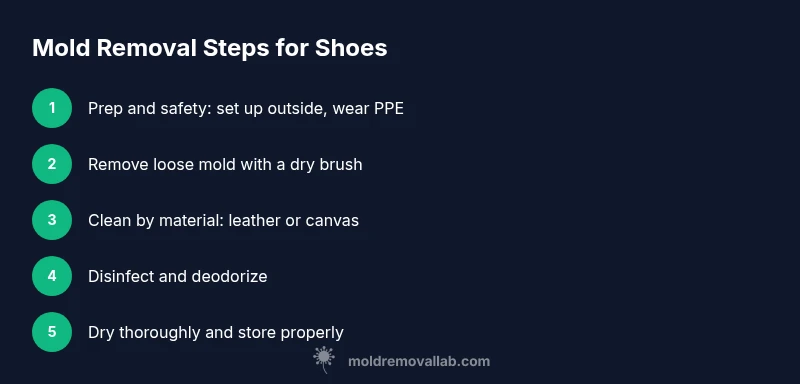
- 1
Prep and safety
Put on gloves and a mask, set up outside or in a well-ventilated area, and gather your materials. This prevents spores from spreading indoors and keeps you safe during cleaning.
Tip: Ventilate and minimize indoor exposure by working near an open door or window. - 2
Remove loose mold outdoors
Gently brush away loose spores with a dry brush, holding the shoe away from your body to prevent contamination of other surfaces.
Tip: Use short, light strokes and direct debris into a bag that you can seal afterward. - 3
Leather cleaning method
Mix a small amount of mild detergent with water or use a 1:1 vinegar solution on colorfast leather. Wipe with a damp cloth, avoid soaking, and dry promptly.
Tip: Always test cleaners on a hidden area before full application. - 4
Canvas and synthetic cleaning
Scrub canvas with mild detergent and warm water or use a baking soda paste on stubborn spots. For machine-washable shoes, place in a mesh bag and wash cold, then air dry.
Tip: Follow manufacturer care labels; do not over-wet fabric. - 5
Disinfect and deodorize
Apply a vinegar solution or, if safe for colorfast fabric, a 3% hydrogen peroxide spot treatment. Wipe away and finish with baking soda inside the toe box.
Tip: Never mix bleach with ammonia or vinegar in the same container. - 6
Drying and storage
Dry shoes in a warm, dry area with airflow. Use shoe trees or rolled paper and consider moisture absorbers. Store in a breathable container to prevent future mold.
Tip: Avoid direct heat, which can warp materials and cause cracking.
FAQ
Is mold on shoes dangerous to touch or inhale?
Mold exposure can irritate the skin, eyes, nose, and lungs. Use gloves and a mask, and perform cleaning outdoors when possible. If you have allergies or asthma, take extra precautions.
Mold on shoes can irritate skin and airways. Wear gloves and a mask, and clean outdoors if you can.
Can I machine wash all shoes to remove mold?
Not all shoes tolerate machine washing. Canvas and some synthetics often do on cold, gentle cycles, but leather and suede usually require hand cleaning and conditioning after cleaning.
Machine washing works for some fabrics, but not all. Check the care label first.
Will mold come back after cleaning?
Mold can return if moisture remains or storage is damp. Improve drying, ventilation, and storage to reduce recurrence.
Mold can come back if moisture is left behind; ensure thorough drying and dry storage.
Should I use bleach to remove mold from shoes?
Bleach is harsh and can damage many shoe materials. Prefer vinegar or hydrogen peroxide on appropriate fabrics, and always test first.
Bleach can damage materials; use gentler alternatives and test first.
How long does it take for cleaned shoes to dry?
Drying times vary by material and climate, but most cases require 24 to 48 hours. Ensure complete dryness before storage.
Expect a day or two for thorough drying, depending on materials and humidity.
Can mold be removed from suede shoes?
Suede requires careful handling; use light brushing and consider professional cleaning for heavy mold to avoid material damage.
Suede mold is tricky; use gentle cleaning and seek help if needed.
Watch Video
The Essentials
- Inspect and remove surface mold before deep cleaning
- Choose material-specific cleaning methods
- Dry shoes completely to prevent recurrence
- Use ventilation and protective gear during cleaning
- Prevent mold with proactive storage and moisture control