How to Dry Out Mold: Safe, Practical Remediation Guide
Learn how to dry out mold safely and effectively. Identify moisture sources, reduce humidity, clean surfaces, and prevent recurrence with practical steps for homeowners and renters.


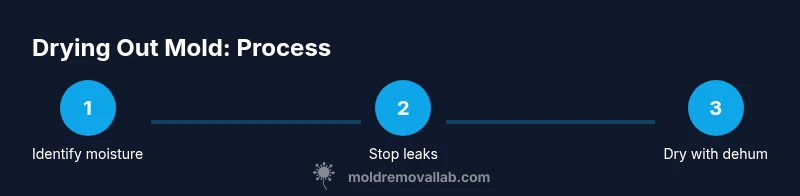
Drying out mold means removing moisture, reducing humidity, and cleaning surfaces to stop regrowth. Start by locating and fixing moisture sources, then use dehumidifiers and fans to reach low humidity, followed by cleaning and monitoring to prevent recurrence.
Understanding how drying out mold helps indoor health
Drying out mold is about removing the moisture that mold needs to grow and survive. When a space is damp, mold produces spores that can affect air quality and trigger allergies or asthma. Drying out mold does not fix all problems by itself, but it reduces the conditions that allow mold to spread. In practical terms, the goal is to lower surface moisture and ambient humidity to levels that do not sustain growth, then clean affected areas thoroughly. A well-executed drying plan protects occupants, reduces the risk of regrowth, and buys time for repairs. In this guide, we follow Mold Removal Lab guidelines to offer actionable steps homeowners and renters can implement safely and effectively.
Identify moisture sources and assess scope
Mold thrives where water is present, so the first priority is to find and stop leaks or water intrusion. Inspect roofing, plumbing, windows, and HVAC lines, and check for condensation in kitchens, bathrooms, basements, and laundry rooms. Document findings with photos, and prioritize repairs before continuing with the drying process. If moisture remains, even in small amounts, mold may rebound after cleaning. Containment measures—such as plastic sheeting and tape—can prevent cross-contamination while you work. Always ensure electrical safety before turning on fans or dehumidifiers in damp spaces.
Equipment and safety basics for drying mold
A safe, effective drying project relies on the right gear and personal protection. Use a dehumidifier to lower humidity and air movers to improve evaporation, concentrating airflow on damp walls and surfaces. Wear proper PPE: an N95 respirator (or higher), gloves, eye protection, and disposable coveralls to reduce exposure to mold spores. Keep pets and children away from the work area. Make sure power cords and equipment are kept dry and away from standing water, and never operate electrical devices in wet areas. Prepare a cleanup plan that includes disposable bags and a secure waste area for moldy materials.
Implementing a drying plan: airflow and humidity control
Begin by creating a dry environment with steady dehumidification and consistent air movement. Position dehumidifiers in the center of the space and place air movers to promote cross-ventilation without blowing directly at anyone. Run equipment for the required duration until humidity stabilizes below the target range for the space (commonly around 30-50% RH, depending on climate and space). For porous materials such as drywall or insulation, evaluate whether moisture content has dropped enough to prevent mold growth before reintroducing them; damaged materials may need replacement. Record humidity readings at several points to verify uniform drying across walls and ceilings.
Post-drying cleaning and material considerations
Drying alone does not remove mold spores on porous surfaces. After surfaces are dry, clean nonporous surfaces with detergent and water, and disinfect if necessary according to material type. Porous materials that remain damp or moldy—such as drywall, insulation, or ceiling tiles—should be considered for removal and replacement, as cleaning may not fully remove embedded spores. Vacuum with a HEPA-filtered unit after wiping surfaces, and dispose of contaminated debris in sealed bags. If you notice persistent musty odors or visible growth after cleaning, reassess moisture control and consider retesting for mold.
Safety considerations and when to involve professionals
Mold remediation can be hazardous, especially with large areas or hidden growth. If mold covers more than a few square feet, or if it recurs after a drying attempt, a professional remediation service may be warranted. Hidden mold behind walls or under flooring requires specialized equipment and containment to prevent spread. Always prioritize electrical/safety checks before beginning any remediation. When in doubt, consult a Mold Removal Lab guide or contact a certified specialist to avoid long-term health risks.
Prevention and maintenance to reduce future mold
Prevention hinges on controlling moisture long-term. Fix leaks promptly, address condensation, and ensure bathrooms and kitchens are vented properly. Maintain indoor humidity between roughly 30-50% using ventilation and dehumidification as needed. Regularly inspect susceptible areas such as basements, crawl spaces, bathrooms, and laundry rooms for water stains or musty odors. Clean up spills promptly and dry wet materials within 24-48 hours. A proactive approach minimizes the chance of mold returning and helps protect occupants.
Quick recap: moisture control, airflow, and monitoring
The core steps to successfully dry out mold are moisture control, adequate airflow, and humidity monitoring. Start with a moisture source fix, set up dehumidifiers and fans, measure RH, clean affected areas, and replace damaged materials when necessary. Consistent moisture management and periodic checks are essential to long-term mold prevention and healthier indoor air.
Tools & Materials
- dehumidifier(Choose a unit appropriate for the room size and moisture load)
- air movers / fans(Set to promote cross-ventilation without causing drafts on occupants)
- moisture meter / RH hygrometer(Track humidity in air and within materials)
- plastic sheeting and tape(Contain the work area to minimize cross-contamination)
- PPE (N95 respirator or higher, gloves, eye protection, disposable coveralls)(Reduce exposure to mold spores during handling and cleaning)
- bucket, scrub brushes, sponges, rags(For cleaning and applying cleaners on surfaces)
- detergent or mild cleaning solutions(Use appropriate cleaners; avoid strong acids on delicate surfaces)
- vacuum with HEPA filter(For debris collection and dry cleaning of moldy dust)
- sealed waste bags(Dispose contaminated materials safely)
Steps
Estimated time: Total time: 24-72 hours, plus any needed repairs
- 1
Identify moisture source
Inspect for leaks, roof faults, plumbing issues, or condensation hotspots. Document findings with photos and prepare to fix the source before or alongside drying. This reduces ongoing water supply to mold growth.
Tip: Take baseline moisture readings in multiple spots to guide repairs. - 2
Stop the moisture
Repair leaks and control water intrusion. If immediate repair isn’t possible, isolate the area with containment to prevent mold from spreading while you dry.
Tip: Turn off affected water lines and avoid using the area until repairs begin. - 3
Set up airflow
Arrange air movers to push air across walls and surfaces, creating a cross-breeze pattern. Avoid blowing air directly at people; never block egress or safety paths.
Tip: Place a fan near a high-moisture spot to accelerate evaporation. - 4
Run dehumidification
Operate a dehumidifier to bring RH toward 30-50% in most spaces. If humidity remains high, run longer and adjust the dehumidifier location for better coverage.
Tip: Check the tank or drain regularly and empty as needed. - 5
Measure moisture
Use a moisture meter to verify that walls and materials are drying evenly. Reassess after 12-24 hours to determine if more drying time is needed.
Tip: Document readings to compare against post-cleaning results. - 6
Clean and dry surfaces
Wipe nonporous surfaces with detergent and water; optionally disinfect if materials allow. Porous materials should be removed or replaced if still damp or moldy after drying.
Tip: Avoid mixing cleaners that can produce harmful fumes. - 7
Inspect and decide on restoration
Check for remaining mold growth or moisture pockets. Decide whether to repair, seal, or replace materials based on damage and regrowth risk.
Tip: If in doubt, consult a professional for testing or remediation advice. - 8
Monitor and prevent recurrence
Keep humidity under control, fix leaks promptly, and schedule periodic inspections in vulnerable areas. Maintain a drying protocol for future incidents.
Tip: Set reminders to recheck humidity after heavy rain or plumbing events.
FAQ
Is it safe to DIY mold drying?
DIY drying can be safe for small, non-porous areas when you control moisture and wear PPE. For larger areas or porous materials, consider professional help to avoid health risks and incomplete remediation.
DIY drying is okay for small non-porous spots, but larger or porous areas should be handled by a pro.
What humidity level should I aim for after drying?
Aim for roughly 30-50% relative humidity in living spaces, adjusting for climate and room use. Use a hygrometer to monitor and maintain levels stable over time.
Keep humidity around 30 to 50 percent and monitor regularly.
How long does it take to dry out mold?
Drying time depends on space size, moisture level, materials involved, and ventilation. In many cases, you should plan for 24-72 hours of active drying, possibly longer in damp basements.
It varies, but expect days rather than hours in larger or damp spaces.
Should I use bleach to clean mold?
Bleach can help on nonporous surfaces, but it is not effective for porous materials. Clean with detergent and water, and avoid mixing cleaners to prevent harmful fumes.
Bleach isn’t a universal fix; use detergents for porous materials.
What about mold behind walls?
Hidden mold requires careful assessment, moisture testing, and sometimes professional remediation. Do not assume visible cleaning fixes the problem if growth is internal.
Hidden mold needs careful testing and sometimes pro remediation.
When should I call a professional?
If mold covers a large area, recurs after drying, or air quality concerns arise, seek professional remediation and testing. Early consultation can prevent long-term damage.
Call a professional if the problem is large or persistent.
Watch Video
The Essentials
- Stop moisture before drying to prevent regrowth.
- Use humidity control and airflow for effective drying.
- Clean thoroughly after drying and assess material replacement needs.
- Call a professional for large areas or persistent mold.
- Prevent recurrence with ongoing moisture management.