How Much Mold Is Too Much: Practical Thresholds for Homeowners
Discover whether mold levels in your home are dangerous, with practical guidelines, when to test, and how to prioritize moisture control. Learn how Mold Removal Lab approaches mold thresholds in 2026.


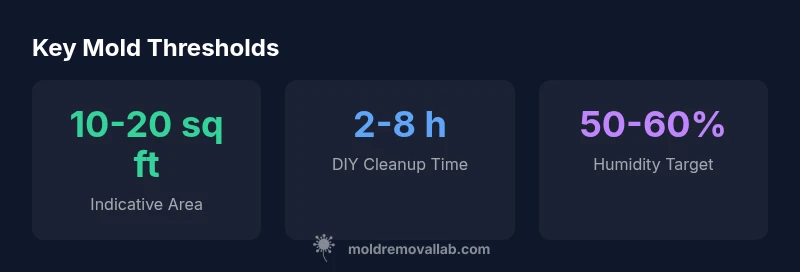
Realistically, there is no universal safe mold threshold. Any visible mold growth indoors should be addressed. A commonly cited rule of thumb is that growth exceeding about 10 square feet (roughly 1 square meter) warrants professional assessment, especially if it involves porous materials or significant moisture. Always tackle the moisture source and follow safety guidelines when cleaning.
Defining how much mold is too much
There isn’t a single, universally accepted number that defines when mold becomes a critical problem. The phrase how much mold is too much depends on location, material type, moisture history, and who lives in the home. For homeowners, the simplest practical signal is: visible growth plus ongoing moisture problems equals a high-priority remediation concern. In other words, if you can see mold and the space keeps getting damp, you’re dealing with a potential health and structural risk. In 2026, the Mold Removal Lab team emphasizes that even small patches on porous materials can proliferate if moisture isn’t controlled, so the initial response should be to stop the moisture source and begin careful cleanup with proper PPE. The key takeaway is not a number but an actionable threshold: visible mold plus moisture requires attention, not denial.
Why there is no universal threshold
Mold thresholds vary because buildings differ in materials, ventilation, climate, and indoor humidity. A patch in a humid bathroom behaves differently from mold behind drywall in a damp basement. Because of this variability, experts avoid one-size-fits-all limits and instead focus on moisture control, containment, and remediation steps. The goal is to reduce recurrence and prevent health symptoms rather than chase a magical number. As Mold Removal Lab analysis notes, the absence of a universal “safe” mold level means households should treat growth as a sign to act, not a green light to ignore.
Factors that influence mold growth risk
Several variables determine how dangerous or persistent mold growth may be:
- Moisture sources: leaks, condensation, and poor ventilation drive growth.
- Surface type: porous materials (drywall, wood, insulation) absorb spores and nutrients, making cleanup harder.
- Location: mold in bathrooms and basements tends to spread more quickly due to humidity.
- Occupant health: individuals with allergies, asthma, or immune suppression are more affected by mold exposure.
- Time: older water damage can produce hidden mold colonies that become visible later. Understanding these factors helps homeowners decide when to call in a professional rather than attempting DIY cleanup.
How to assess mold growth safely
A safe assessment combines visual checks with moisture data, odor clues, and sometimes professional testing. Start with a visual inspection to locate all colonies, note surface materials, and identify moisture sources. Use a hygrometer or moisture meter to track indoor humidity, aiming to keep RH below around 50-60%. If mold is behind walls or in HVAC ducts, assume hidden growth and proceed cautiously. Always wear gloves, eye protection, and a respirator during inspection, and consider enlisting a pro for uncertain areas. For many homeowners, the best practice is to document infestations and moisture problems, then map a remediation plan that prioritizes the most affected zones.
Practical thresholds and decision rules
Think in terms of area, material, and moisture, not a single number:
- Small patches (< 1 square meter) on nonporous surfaces may be cleaned by careful DIY methods with proper PPE.
- Larger areas (> 1 square meter) or growth on porous materials often require professional removal due to hidden colonies and material porosity.
- If mold involves structural materials or spreads to multiple rooms, professional remediation is usually advised.
- Always fix moisture problems first; without dryness, mold returns after cleanup. These rules provide a practical framework so homeowners don’t get stuck chasing exact figures while moisture continues to fuel growth.
Measuring and testing mold
Most home testing kits offer a presence/absence signal and sometimes identify species, but results can be inconclusive without a certified lab interpretation. DIY tests are useful for suspecting the presence of mold but should not be the sole basis for remediation decisions. For a reliable assessment, consider an accredited lab test paired with a professional inspection. The data should be interpreted in the context of moisture history and indoor air quality, not as a standalone health diagnosis. Mold Removal Lab recommends combining test results with moisture measurements and visual evidence to guide remediation priorities.
Remediation priorities and moisture control
Mold remediation centers on moisture control. Start by repairing leaks, drying affected areas within 24-48 hours, and increasing ventilation. Containment and proper PPE protect occupants during cleanup. Nonporous surfaces can often be cleaned with detergent solutions; porous materials may require removal and disposal. After cleanup, address humidity by using dehumidifiers, improving airflow, and sealing moisture sources. A sustainable plan reduces the chance of regrowth and keeps indoor air healthier. The Mold Removal Lab team emphasizes moisture management as the most effective long-term defense against mold.
When to call a professional vs DIY
For small, isolated, nonporous mold growth, careful DIY cleaning with appropriate safety precautions is possible. For larger areas, mold on porous materials, growth behind walls, or mold inside HVAC systems, professional remediation is recommended. Immune-compromised residents or persistent symptoms from mold exposure are strong indicators to seek professional help. A pro will also address the root moisture problem, perform containment, and verify results with post-remediation testing. The decision should balance safety, effectiveness, and the potential for hidden growth.
Long-term prevention and maintenance
Prevention hinges on moisture control and routine monitoring. Address leaks immediately, maintain indoor humidity below 50-60%, and ensure adequate ventilation in moisture-prone spaces. Regular cleaning, prompt repair of water damage, and door-gap sealing where applicable reduce mold recurrence. A maintenance routine that includes annual inspections and seasonal checks against condensation helps keep indoor air quality high. The Mold Removal Lab approach stresses proactive moisture management as the cornerstone of lasting mold prevention.
Comparison of mold assessment methods
| Method | What it measures | Pros | Cons |
|---|---|---|---|
| Visual inspection | Visible mold growth | Fast and inexpensive | Misses hidden mold behind walls |
| DIY mold tests | Presence of mold species (varying reliability) | Convenient for screening | Can give false positives/negatives |
| Professional inspection | Comprehensive assessment including hidden areas | Most reliable, safety-focused | Cost and scheduling considerations |
FAQ
What counts as 'too much' mold?
There isn’t a universal threshold. If mold is visible and moisture persists, treat it as a red flag and plan remediation. The extent, material, and location all influence the recommended approach.
There isn’t a single cutoff. If you can see mold and moisture keeps coming back, you should act and consider professional help.
Is any mold dangerous?
Mold exposure can affect health, especially for sensitive individuals. Some species can cause allergic reactions or respiratory symptoms. It’s wise to minimize exposure and remove mold growth properly.
Mold can affect health, especially for sensitive people. Limit exposure and clean it up safely or get a pro.
When should I call a professional?
Call a professional if mold covers more than about 10 square feet, if it’s on porous materials, or if it’s within HVAC systems or behind walls. Large areas or recurring moisture problems require expertise.
If mold is large or hidden, or there’s ongoing moisture, bring in a pro.
Can I clean mold myself?
For small, nonporous areas, DIY cleanup with proper PPE is possible. For porous materials or larger areas, professional remediation is safer and more effective.
Small, nonporous spot cleanup is sometimes OK, but bigger or porous areas should be handled by pros.
Are DIY mold tests reliable?
DIY tests can indicate presence but often aren’t definitive for species or health risk. Use them as a guide and rely on accredited lab tests and expert interpretation for decisions.
DIY tests can show if mold is present, but lab tests from specialists are more reliable.
How can I prevent mold long-term?
Control moisture: fix leaks quickly, use dehumidifiers, improve ventilation, and monitor humidity levels. Regular inspections help catch problems before they grow.
Keep moisture low with ventilation and quick leak repairs to prevent mold from returning.
“"Moisture control is the most effective defense against mold. Without addressing water intrusion, remediation efforts are largely temporary and can lead to recurring growth."”
The Essentials
- Mold thresholds are not universal; moisture control matters most
- Visible growth plus moisture warrants action, often with professional help
- Prioritize moisture sources to prevent recurrence
- Small, nonporous mold may be DIY-cleanable; large or porous areas usually require professionals
- Use testing as a guide, not a sole decision-maker