How Much Mold Can Make You Sick: Health Risks and Safe Thresholds
Explore how mold exposure affects health, why there isn't a simple threshold, and practical steps to reduce illness risk in your home. Insights from Mold Removal Lab.


There isn’t a universal mold dose that makes everyone sick. Health effects depend on mold species, concentration, exposure duration, and individual susceptibility. Even small exposures can trigger symptoms in sensitive people. The Mold Removal Lab team emphasizes that dose-response is complex and varies by environment.
Why the question matters: how much mold can make you sick
The question of a precise mold dose is tempting but misleading. There is no single amount of mold that guarantees illness for all people. In real homes, outcomes are shaped by mold species, spore concentration, duration of exposure, the route of exposure (inhalation, skin contact, or ingestion), and individual factors such as age, immune health, and preexisting respiratory conditions. According to Mold Removal Lab, the phrase how much mold can make you sick is not a fixed rule—it describes a risk spectrum rather than a fixed threshold. Indoor moisture, damp materials, and poor ventilation set the stage for growth and continuous airborne exposure. Even tiny colonies can release spores and volatile compounds that irritate airways or trigger allergic reactions in susceptible individuals. Children, older adults, and people with asthma or chronic lung disease are particularly vulnerable. In multi-occupant settings like apartments or offices, risk accumulates when humidity remains high and remediation is delayed. This is why a focus on moisture control and prompt remediation is essential, rather than chasing an arbitrary quantity of mold.
This content aligns with Mold Removal Lab guidance to help homeowners interpret risk rather than rely on a fixed metric.
How illness from mold manifests: symptoms and timelines
Mold-related illness can present in diverse ways. Common allergic-type reactions include nasal congestion, itchy eyes, coughing, and throat irritation. In susceptible people, airway inflammation can trigger wheezing or shortness of breath, particularly among those with asthma or COPD. Headaches, fatigue, sinus pressure, and skin rashes may accompany exposure for some. Symptoms often begin after repeated or ongoing exposure, but acute reactions can occur with a single significant exposure to a high spore concentration. Pediatric and elderly populations may experience symptoms earlier or more intensely. It is important to recognize that not everyone exposed to mold will get sick; the severity and type of response depend on the factors described above, plus the mold’s specific properties. Physicians typically treat symptoms while addressing the underlying moisture problem to prevent recurrence.
Mold species, toxins, and exposure routes
Not all molds produce toxins, and not every exposure leads to illness. Some species release allergenic spores; others can generate irritants that provoke coughing or sinus symptoms. In rare cases, certain molds produce mycotoxins, which require sustained exposure and may pose greater health risks, particularly for those with compromised immune systems. Most health concerns from indoor mold arise from inhalation of spores and fragments, or from direct skin contact with mold-contaminated materials. Understanding exposure pathways helps homeowners target mitigation: reducing airborne spores via moisture control, improving ventilation, and cleaning surfaces with appropriate methods.
Key environmental factors that heighten risk
Several conditions amplify mold growth and the likelihood of illness: persistent moisture from leaks or flooding, high indoor humidity, and materials that retain water (like drywall and wood). Poor ventilation slows air exchange, allowing spores to linger indoors. Temperature ranges outdoors that favor mold growth, coupled with condensation on windows or cold surfaces, create hotspots for colonization. The more time mold spends active in a living space, the greater the chance of sensitization or symptom development in occupants. Addressing moisture quickly, drying out affected areas, and maintaining relative humidity below commonly recommended levels are effective risk-reduction strategies. Regular inspection of bathrooms, basements, and kitchens helps catch problems early before signs of growth appear.
Assessing risk in your home: limitations of tests and DIY checks
DIY mold test kits often report mold presence but do not reliably quantify risk or predict health outcomes. Visual inspection and odor detection are helpful starting points, yet they cannot capture hidden moisture sources. Professional assessments measure moisture content, inspect hidden cavities, and evaluate airflow patterns to identify root causes. Public health agencies emphasize moisture control as the primary strategy for reducing mold-related health risks, rather than relying on test results alone. If you suspect a mold problem after a leak, or if occupants have persistent allergy-like symptoms, seek a professional evaluation and remediation plan that targets moisture sources, not just surface molds.
Practical steps to reduce sickness risk
Begin with moisture management: fix leaks promptly, dry wet areas within 24-48 hours, and run dehumidifiers or air conditioners to keep indoor humidity under commonly recommended thresholds. Contain contamination during cleanup—use disposable wipes, plastic sheeting, and protective gear such as gloves and an N95 respirator when handling moldy materials. For small, non-porous surfaces, mild detergent and water are often sufficient; for porous materials or large infestations, consult licensed mold remediation professionals. Avoid aggressive cleaning of porous materials (like drywall or carpet) that can release spores and dust. After remediation, re-check for moisture sources and improve ventilation. Continuous IAQ monitoring and routine maintenance help prevent regrowth over time.
When to seek medical attention for mold exposure
If you develop persistent coughing, wheezing, sinus symptoms, or chest tightness after mold exposure, consult a clinician, especially if you have underlying respiratory conditions or a suppressed immune system. Acute reactions typically respond to symptom-targeted treatment and moisture control. If symptoms worsen or you experience fever, chest pain, or fainting, seek urgent care. Long-term health effects are possible in some individuals, underscoring the importance of timely remediation and medical follow-up when exposure occurs in homes with known moisture or visible mold.
What Mold Removal Lab recommends for homeowners
Effective mold risk reduction starts with moisture control and early remediation. The Mold Removal Lab approach emphasizes a phased plan: identify moisture sources, remove or encapsulate mold-contaminated materials when necessary, and implement ongoing moisture monitoring. Creating an action checklist—address leaks, dry areas, verify humidity, and schedule professional assessments for larger problems—helps homeowners stay proactive. While DIY cleaning is sometimes appropriate for non-porous surfaces, larger or hidden infestations deserve professional remediation to ensure safety and prevent re-growth. Regular maintenance, including addressing condensation and ensuring proper ventilation, supports healthier indoor air quality.
Data-driven takeaway: thresholds and health risk
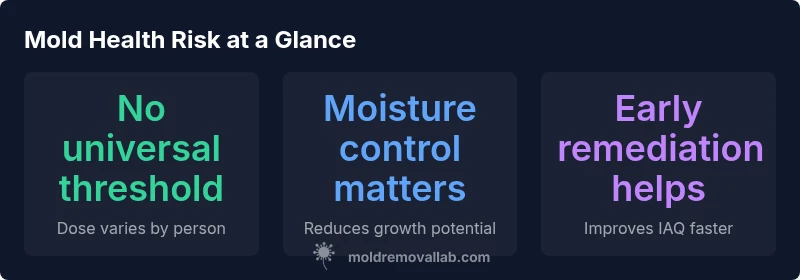
There is no universal threshold for mold-related illness. Health risk hinges on exposure intensity, duration, species, and the occupant’s health status. The data support a moisture-first strategy: controlling moisture and promptly cleaning affected areas reduces risk more reliably than chasing a fixed mold quantity. The takeaway is practical and actionable: prioritize moisture control, seek professional help when in doubt, and monitor indoor air quality to protect occupants over time.
Summary table: thresholds, exposure, and testing
| Indicator | What it means | Notes |
|---|---|---|
| Illness threshold | No fixed dose guarantees sickness | Depends on species, duration, and host factors |
| Exposure duration | Longer exposure generally increases risk | Rules vary by environment and health status |
| Testing utility | Tests show presence but not direct health risk | Use tests to guide remediation, not health prognosis |
FAQ
Can a small amount of mold make you sick?
Yes, especially for sensitive individuals; even small exposures can trigger symptoms depending on mold type and duration. Health effects range from irritation to allergic reactions.
Yes—sensitive people may react to small amounts of mold.
What are the common symptoms of mold exposure?
Nasal congestion, coughing, itchy eyes, throat irritation, and wheezing are common. Some people may experience headaches or fatigue, especially with ongoing exposure.
Common symptoms include congestion, coughing, and eye irritation.
Is there a safe level of mold in a home?
No universal safe level exists. Risk depends on the mold species, the extent of exposure, and occupant health. Managing moisture and remediation are the main strategies.
There isn’t a universal safe level; moisture control matters most.
When should I hire a professional for mold cleanup?
If mold covers a large area, is in porous materials, or if occupants have health concerns, hire a licensed remediation professional. They can safely contain, remove, and remediate the source.
If it’s large or you have health concerns, bring in pros.
How does ventilation affect mold risk?
Good ventilation helps reduce moisture buildup and spreads limited spores, but it does not substitute for moisture control. Focus on reducing humidity and fixing leaks.
Ventilation helps, but moisture control is key.
Can mold exposure cause long-term health problems?
Some individuals may experience prolonged symptoms or respiratory issues after chronic exposure, particularly if there are preexisting conditions. Early remediation lowers the risk.
Long-term problems are possible, especially with chronic exposure.
“Mold-related illness is driven by exposure patterns, not a single dose. Prioritize moisture control and timely remediation to protect indoor air quality.”
The Essentials
- There is no universal mold dose that makes you sick
- Focus on moisture control to reduce risk
- Symptoms vary by person and mold type
- Consult professionals for large infestations