How Much Mold Is Bad? A Practical Home Mold Guide
Explore how much mold is bad in homes, why visible growth matters, and practical steps to assess risk, test, and remediate safely. Mold Removal Lab provides data-backed guidance.


There isn’t a universal number that defines safety for every home. The Mold Removal Lab Team emphasizes that risk is driven by three factors: visible growth, moisture history, and occupant susceptibility. In practice, a small, isolated patch in a corner may be addressed with targeted cleaning and moisture control, while larger patches usually indicate an underlying moisture problem that warrants more thorough remediation. The core idea behind the question how much mold is bad is to minimize exposure, prevent spread, and restore a healthy indoor environment. Because molds vary by species and contamination context, homeowners should start with a cautious approach: treat any new growth as a remediation signal and investigate moisture sources immediately. When you’re unsure, a professional evaluation is the safest next step to prevent long-term damage and keep indoor air quality high.
How much mold is bad: framing the question
There isn’t a universal number that defines safety for every home. The Mold Removal Lab Team emphasizes that risk is driven by three factors: visible growth, moisture history, and occupant susceptibility. In practice, a small, isolated patch in a corner may be addressed with targeted cleaning and moisture control, while larger patches usually indicate an underlying moisture problem that warrants more thorough remediation. The core idea behind the question how much mold is bad is to minimize exposure, prevent spread, and restore a healthy indoor environment. Because molds vary by species and contamination context, homeowners should start with a cautious approach: treat any new growth as a remediation signal and investigate moisture sources immediately. When you’re unsure, a professional evaluation is the safest next step to prevent long-term damage and keep indoor air quality high.
Visible mold growth signals a remediation priority
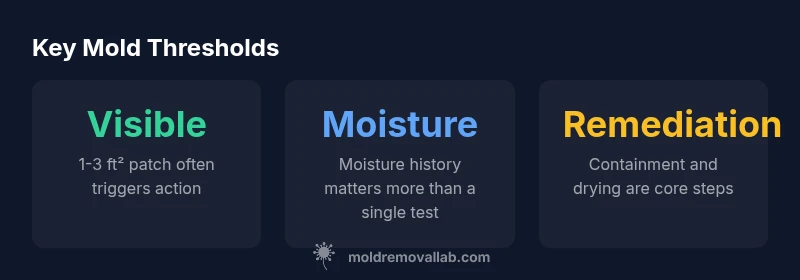
Visible growth is the most obvious cue that something is wrong, but it’s not the only signal. A patch larger than a few square feet is typically harder to clean safely without professional equipment, and repeated regrowth after cleaning suggests ongoing moisture intrusion. Even tiny patches can be dangerous in damp basements, bathrooms with poor ventilation, or homes with vulnerable occupants such as children, pregnant people, or those with asthma. The Mold Removal Lab analysis shows that addressing the moisture source is as important as removing the mold itself: dry the area, fix leaks, and control indoor humidity to prevent recurrence. Look for damp spots on walls, ceilings, or window frames and track any musty odor as a secondary sign that unseen mold may be present.
Hidden mold and moisture: looking beyond the surface
Many homes hide mold behind walls, under floors, or inside HVAC ducts. Without destructive inspection, hidden colonies can continue to release spores and VOCs, degrading air quality. Moisture meters and infrared cameras help detect dampness even when surfaces look clean. The limits of visible inspection mean that homeowners should consider testing or professional evaluations if you notice musty odors, condensation on windows, or repeated dampness after rain. Early detection reduces long-term damage and costly repairs. If you’re not sure how to interpret a given test result, rely on a trained inspector who can distinguish benign dampness from actionable mold growth.
Health implications: who is most at risk
Exposure to mold can trigger allergic reactions, asthma symptoms, or respiratory irritation, particularly in sensitive individuals such as children, older adults, and people with compromised immune systems. The risk level depends on duration of exposure, species (whether you’re dealing with common indoor molds like cladosporium or more problematic varieties), and personal health status. For most healthy adults, brief exposure is unlikely to cause lasting harm, but chronic exposure can worsen symptoms and lead to medical visits. The aim is to lower indoor spore load and moisture, especially in bedrooms and living areas where people rest. Reducing humidity to comfortable levels and improving ventilation are practical steps that can lessen health-related concerns.
How professionals assess mold levels: testing and evaluation
Experts combine visual inspection with moisture assessment, air and surface sampling, and context about recent water events. There is no single test that tells you precisely how bad mold is; instead, results must be interpreted against the history of moisture, building envelope integrity, and occupant health. Tests help identify species and concentration ranges, but remediation decisions rely on moisture control, containment, and thorough cleaning. When done correctly, professional assessment pinpoints problem areas, helps prioritize repairs, and reduces the chance of regrowth. Mold Removal Lab’s data-driven approach emphasizes moisture control as the foundation of effective remediation.
Practical steps for homeowners: from inspection to remediation
Start with a moisture audit: fix leaks, improve ventilation, and reduce humidity below 50-60 percent where feasible. Clean small patches with soap and water, or use an appropriate fungicidal solution following label directions. Wear protective gear, seal off the work area, and ventilate well during cleanup to minimize exposure. For larger patches, or patches that keep returning, contact a licensed mold remediation professional who can establish containment and a verified drying protocol. Documentation of remediation, post-work checks, and a follow-up plan help prevent recurrence and give homeowners confidence that the job was done right.
When to escalate: thresholds for professionals
Consider escalation when patches exceed 10 square feet, when moisture recurs after cleanup, or when occupants experience persistent irritation or respiratory symptoms. In such cases, a licensed remediator will set up containment, perform controlled demolition if needed, and implement moisture control measures to prevent future growth. Early professional involvement can prevent extensive structural damage and expensive repairs. If mold has affected insulation or porous building materials, replacement rather than cleaning may be required to restore a safe environment.
Prevention: maintenance to keep mold at bay
Preventing mold starts with moisture management and regular inspections. Fix roof and plumbing leaks promptly, use exhaust fans in bathrooms and kitchens, and monitor humidity with a hygrometer or smart sensor. Keep areas dry after spills, and clean regularly to prevent biofilm buildup. Establish routine checks for moisture, ventilation, and visible mold in high-risk zones like basements and bathrooms. Regular homeowner education, combined with timely maintenance, minimizes the chance of mold returning after remediation and helps maintain a healthy indoor climate.
Mold scenarios and recommended actions
| Scenario | Indicator/Signal | Recommended Action |
|---|---|---|
| Visible mold on walls | Discoloration or patches | Contain area; address moisture; clean or hire pro |
| Hidden mold behind walls | Musty odor, dampness | Professional assessment; moisture control |
| Mold in HVAC/ducts | Air quality concerns | Professional remediation; inspect ducts |
| Post-remediation | Moisture reemergence | Investigate envelope; improve ventilation |
FAQ
What is the health risk if there is a small amount of mold in the home?
Even small amounts can trigger symptoms in sensitive people; health risk depends on exposure duration and mold species. For most healthy adults, brief exposure is unlikely to cause lasting harm, but chronic exposure can worsen symptoms and lead to medical visits.
Small amounts can irritate sensitive people; limit exposure and monitor symptoms.
Is any mold growth an emergency?
Not necessarily, but it should be treated promptly to prevent moisture buildup and ongoing growth. If you have a compromised occupant or a significant patch, seek professional advice.
Not always an emergency, but act quickly.
Can I clean mold myself?
Small patches can sometimes be cleaned safely with PPE and proper cleaners; larger areas or hidden mold should be handled by professionals to prevent spread.
You can handle small patches with PPE; for bigger jobs call a pro.
How long does remediation typically take?
It depends on extent; most small jobs take a few days to complete, while larger projects may require one to two weeks.
Remediation usually takes a few days to a week or two.
Should I test for mold after remediation?
Post-remediation testing is optional in some cases; it can confirm containment and drying, but cost and necessity vary by project.
Testing after remediation can confirm success.
What if mold returns after remediation?
If mold reappears, reassess moisture sources, re-clean or re-remediate, and consider a professional evaluation for persistent issues.
If mold comes back, fix moisture and get help.
“Mold levels are a symptom, not a single number; the real story is moisture control and exposure management to protect indoor air quality.”
The Essentials
- Address mold growth promptly and assertively
- Moisture control is the foundation of remediation
- Call professionals for large patches or hidden mold
- Test after remediation if recommended for your situation
- Prevention relies on ventilation and moisture management