How Long Does Mold Remediation Take: A Homeowner's Timeline
Discover realistic timelines for mold remediation in homes, the factors that affect duration, and practical steps to speed up safe, effective remediation.


Most residential mold remediation projects take 1-4 days for a small to mid-size area, with larger or more complex jobs extending beyond that. Primary time drivers are contamination extent, moisture source repair, access, and whether containment and clearance testing are required. According to Mold Removal Lab Analysis, thorough moisture control and staged work plans shorten overall timelines.
Understanding Timeframes for Mold Remediation
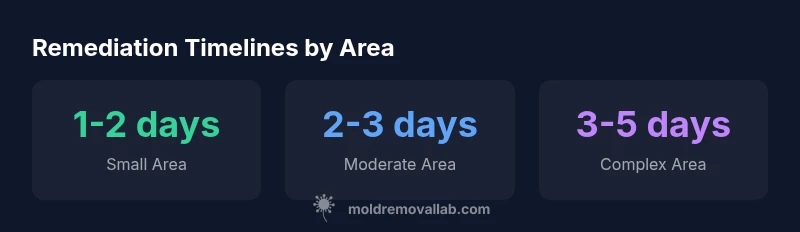
When homeowners ask how long does mold remediation take, the answer depends on several variables. The size of the affected area, the extent of contamination, moisture sources, and the building layout all shape the timeline. According to Mold Removal Lab, accurate estimates start with a professional assessment that maps out containment zones, material removal needs, and drying plans. In practice, a small, localized issue in a typical single-family home may resolve in 1-2 days, while larger areas or multi-room contamination can extend into 3-5 days or more. Important milestones include the initial containment setup, removal of affected materials, drying and humidity control, and final verification. By coordinating with a qualified remediation team, homeowners gain a realistic view of when they can resume normal activities. This section outlines the factors that influence duration and provides a framework to estimate duration across common home layouts.
Key Phases in Mold Remediation
A typical project unfolds in distinct phases: assessment, containment, removal, drying, verification, and documentation. Each phase has its own duration range and quality checks. The goal is to prevent cross-contamination, ensure indoor air quality, and verify that mold spores are no longer elevated above baseline. The exact sequence may vary based on the contamination pattern and the presence of moisture behind walls. In many cases, the remediation team performs simultaneous tasks—removing contaminated materials while setting up containment at other areas—so progress is steady rather than sequential.
How Size and Layout Influence Duration
Size and layout are primary determinants of how long remediation takes. A small bathroom with localized mold may take only a day or two, while open-plan living areas with multiple rooms, hidden moisture pockets, or tight crawlspaces extend the project timeline. Accessibility also matters: reach behind walls or in attics adds time due to scaffolding, equipment setup, and extra safety checks. If the moisture source requires repair—like a leaking pipe or roof damage—the remediation timeline extends to accommodate repair and subsequent drying. For older homes with porous materials, longer removal and decontamination steps may be necessary.
Containment, PPE, and Air Monitoring
Containment strategies are a primary driver of time. Building barriers, negative air machines, and selective sealing reduce the spread of spores but add setup and testing time. Workers wear PPE to protect occupants and themselves, which is essential for safety but can slow the pace of work in tight spaces. Air monitoring and clearance protocols determine whether you need post-remediation testing, which can add extra hours or days. Effective communication between homeowners and the remediation team helps avoid unnecessary delays.
The Role of Moisture Prevention and Source Removal
Moisture control is often the biggest determinant of remediation duration. If the moisture source is eliminated quickly, the drying phase proceeds faster and reduces the chance of recontamination. In cases where source repair involves extensive plumbing or structural work, timelines lengthen accordingly. The team may use desiccants, dehumidifiers, and specialized drying equipment to reach target humidity levels. Understanding the moisture plan can help homeowners prepare for the timing of re-occupancy.
Scheduling, Permits, and Crew Coordination
Work scheduling can influence overall duration, especially when permits or access restrictions come into play. Some jurisdictions require permits for mold-related demolition or structural work, which can add days. Conversely, well-coordinated teams with clear access plans can shorten delays. If multiple contractors are involved (plumbers, carpenters, remediation specialists), a shared schedule with milestones minimizes downtime. Owners should communicate preferred move-in dates to align guesswork with reality.
Clearance Testing: When It Is Needed
Clearance testing confirms that remediation has achieved acceptable indoor air quality. Depending on the jurisdiction and the project scope, post-remediation testing may be recommended or required. This phase can add 0.5-2 days to the timeline, including sample collection and lab analysis. If visual inspection suffices, time may be shorter. Discuss clearance expectations early with your contractor to avoid last-minute surprises.
Drying, Dehumidification, and Verification
Humidity control is a core step in remediation. After removal, professionals monitor moisture levels using meters and infrared cameras. Drying can take from 1-4 days in typical cases, longer in high-humidity climates or with porous materials. Verification includes repeating moisture readings and possibly re-running air tests. Properly executed drying reduces the risk of regrowth and speeds up re-occupancy.
Common Time Pitfalls and How to Avoid Them
- Delayed decisions on scope or approvals
- Inadequate moisture mapping leading to missed pockets
- Incomplete removal of porous materials
- Overly optimistic schedules without contingencies
- Poor communication between homeowners and contractors
Practical Prep for Day One
Before remediation starts, homeowners should clear workspaces, protect sensitive items, and document any visible moisture sources. Make sure access is unobstructed for equipment and waste disposal. Confirm who is responsible for cleanup and what to expect for the first 24-72 hours. A well-prepared space reduces downtime and helps teams stay on schedule.
Realistic Expectations and Next Steps
Remediation timelines are inherently variable, and the most reliable estimates come from a professional assessment. Use the timeline as a planning tool rather than a promise. After remediation, follow up with moisture control strategies to prevent recurrence. Keep a written plan with milestones and contact information for the remediation team to revisit if conditions change.
Remediation duration by phase
| Phase | Typical Duration | Key Activities |
|---|---|---|
| Assessment & planning | 1-2 days | Site assessment, moisture mapping, scope definition |
| Containment & removal | 1-3 days | Set up barriers, remove mold-infested materials, initial clean-up |
| Drying & dehumidification | 2-5 days | Drying, monitoring humidity, air movers, dehumidifiers |
| Verification & clearance testing | 0.5-2 days | Air tests or CT scans, visual inspection, documentation |
FAQ
What factors influence remediation duration?
The extent of contamination, moisture source repair, HVAC layout, and access to affected areas determine how long remediation takes. Complex sites with hidden pockets typically require more time and stricter containment.
Contamination size, moisture fixes, and access drive the timeline.
Can remediation be completed in a day?
In very localized cases with minimal materials to remove, a basic cleanup could finish in a day. Most residential jobs, however, spread over multiple days depending on scope and testing needs.
Sometimes for tiny jobs, but most take longer.
Does the building type affect duration?
Yes. Homes with crawlspaces, basements, or extensive walls may require more time due to access, specialized equipment, and more extensive material removal.
Layout and access matter a lot.
How does moisture repair impact timing?
Repairing the moisture source can add days, especially if plumbing or structural work is involved. If moisture is resolved quickly, drying proceeds faster.
Moisture repair can delay or shorten the timeline depending on complexity.
What is clearance testing and when is it done?
Clearance testing verifies removal success. It may be required by codes or insurers and can add time due to sampling and lab analyses.
Tests confirm mold is gone before re-occupancy.
What can speed up remediation?
Be prepared, provide clear access, and approve scope changes promptly. Quick decisions help prevent schedule creep and keep timelines accurate.
Be ready and responsive to help speed things up.
“Timelines for mold remediation are highly project-specific, but with thorough moisture control and clear scope, homeowners can anticipate a well-contained process that minimizes delays.”
The Essentials
- Plan your remediation window with a qualified contractor.
- Expect 1-4 days for small areas, longer for larger projects.
- Prioritize moisture source repair to shorten timelines.
- Schedule clearance testing if required by code.
- Prepare your home in advance to minimize delays.