How Long Mold Detox: Timeframes, Steps, and What to Expect
Learn how long mold detox may take, the factors affecting duration, and practical steps homeowners can take for faster relief, with Mold Removal Lab insights.


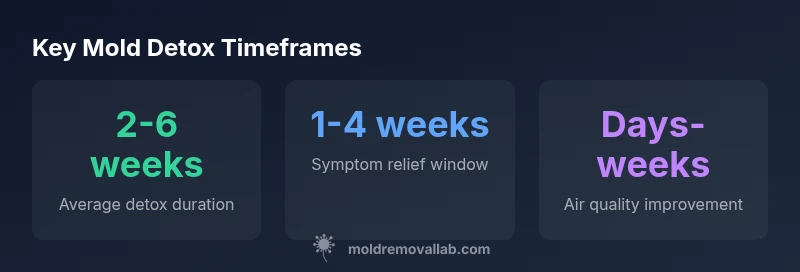
How long mold detox takes varies with exposure and moisture control, but general timelines offer a practical framework. Most people experience symptom relief within 1-4 weeks after moisture is controlled, while complete detox and restoration may span 2-6 weeks or longer if structural repairs are needed. This guidance aligns with the Mold Removal Lab’s evidence-based approach for homeowners.
Understanding what a mold detox means
Detox, in the context of mold, refers to reducing exposure to mold spores and mycotoxins while the indoor environment is stabilized. It is not a single treatment, but a phase that accompanies containment, cleaning, and moisture control. A successful detox relies on addressing the root moisture problem, improving ventilation, and ensuring air and surface cleanliness. The Mold Removal Lab Team emphasizes that detox outcomes are closely tied to the quality of remediation and the speed at which moisture problems are resolved. In real-world homes, detox progress often mirrors how quickly moisture sources are eliminated and how thoroughly affected materials are removed or treated. This section lays out what homeowners can expect during the detox journey and how to set realistic milestones.
Factors that influence detox duration
Detox duration is not a one-size-fits-all timeline. Several variables determine how long symptoms and indoor air quality take to improve:
- Exposure level: Larger infestations or ongoing moisture issues extend detox timelines.
- Moisture control: Immediate leaks fixed and ongoing humidity managed shorten the detox window.
- Material type: Porous materials (drywall, carpet) require longer treatment and drying than non-porous surfaces.
- Containment quality: Proper containment during remediation minimizes cross-contamination and speeds up progress.
- Occupant health: Individuals with asthma or allergies may notice slower perceived relief if exposure persists elsewhere in the home.
- Seasonal and environmental conditions: Humid climates or wet seasons can complicate drying and verification.
According to Mold Removal Lab, understanding these variables helps homeowners avoid false expectations and plan a more accurate remediation schedule.
Typical timeframes: a practical guide
For many homes, the detox process unfolds in phases with overlapping timeframes. Initial screening and moisture source control often occur within the first week. Containment and remediation steps commonly take 1-4 weeks depending on the extent of mold and affected materials. Drying and post-remediation verification generally span 3-14 days but can extend in high-humidity environments. Symptom relief tends to appear gradually over 2-6 weeks after moisture stability is achieved. It is important to recognize that these timeframes are estimates and vary by house, contamination level, and remediation quality. Mold Removal Lab’s 2026 analysis supports the idea that structured planning shortens overall detox duration when moisture is decisively controlled.
Note: If heavy structural repairs are required, detox may extend beyond the 6-week window.
Step-by-step plan to accelerate relief
A clear plan helps you stay on track and measure progress. Follow these steps in sequence, adjusting to your home’s specifics:
- Identify and seal moisture sources: Fix leaks, seal joints, and address condensation hotspots.
- Create containment: Use physical barriers and negative pressure to prevent mold spread during cleanup.
- Clean and treat: Remove moldy materials when safe, clean non-porous surfaces with approved cleaners, and treat porous materials with appropriate products.
- Drying and moisture verification: Use dehumidifiers and fans to reach target moisture levels; verify with a moisture meter.
- Air quality verification: Run a post-remediation air test or professional verification to confirm reduced spore levels.
- Re-occupancy planning: Gradually return to affected areas after verification and monitor health symptoms for any recurrence.
Following this plan, homeowners can manage expectations, reduce cross-contamination, and support a faster detox process.
What homeowners can do immediately
Acting quickly reduces overall detox time and improves comfort. Immediate actions include:
- Stop water intrusion: Repair leaks and fix drainage to halt ongoing moisture problems.
- Increase ventilation: Open windows when feasible and use exhaust fans in bathrooms and kitchens.
- Clean non-porous surfaces: Wipe with an approved cleaner; avoid mixing cleaners that may create harmful fumes.
- Protect yourself: Wear appropriate PPE (N-95 mask, gloves, eye protection) during cleaning.
- Monitor humidity: Aim to keep indoor relative humidity below 50% when possible.
These steps can cut weeks off the detox timeline by minimizing ongoing exposure and helping drying strategies work more effectively.
When to call professionals
Professional remediation is recommended when mold covers large areas, penetrates structural materials, or reappears after cleaning. Seek a licensed mold remediation contractor if you see active growth on more than a few square feet, if there is a history of water damage, or if you or household members have persistent health concerns. A qualified pro can perform containment, safe removal, drying, and post-remediation verification with standardized procedures and equipment that are typically beyond DIY scope.
Mold Removal Lab advises scheduling a consultation when you suspect extensive contamination or recurring moisture problems.
How to document progress for your health and home
Documentation helps track detox progress and supports decision-making about re-occupancy. Helpful practices include:
- Keep a symptom log and note dates when you notice improvement or persistent issues.
- Take photos of mold growth, moisture sources, and remediation work at key milestones.
- Record indoor humidity and surface moisture levels using a reliable hygrometer.
- Save post-remediation verification reports and moisture readings from the final assessment.
- Maintain a simple timeline of actions taken, including repairs, cleaning, and testing.
Good documentation can clarify results for health professionals and insurers and improve confidence during re-occupancy decisions.
Common myths about mold detox debunked
Myth: Detox happens overnight once moisture is fixed. Fact: Detox progress depends on multiple factors and usually unfolds over weeks. Quick wins are rare in severe cases.
Myth: DIY cleanup is enough for all mold problems. Fact: Some projects require professional equipment and containment to prevent cross-contamination and to address porous materials.
Myth: Bleach alone kills all mold. Fact: Bleach may kill surface mold but doesn’t remove the mold from porous materials or repair water damage. Remediation and moisture control are essential.
Myth: If you can’t see mold, you’re safe. Fact: Hidden mold behind walls or in HVAC systems can persist and re-emerge after cleaning. Comprehensive assessment is recommended.
Tools, tests, and records you'll need
Preparing for detox means gathering the right tools and records. Consider:
- Moisture meter and hygrometer for ongoing monitoring.
- PPE: NIOSH-approved respirator, gloves, and eye protection during cleanup.
- HEPA vacuum and appropriate cleaning agents for safe debris removal.
- Access to professional testing or post-remediation verification.
- A simple health/air quality log to track changes over time.
- Documentation of leaks repaired, repairs completed, and dates of remediation work.
Having these tools on hand helps ensure cleaner air and a smoother detox process.
Typical timelines for mold detox and remediation workflow
| Aspect | Typical Timeframe | What Changes Outcome | Notes |
|---|---|---|---|
| Assessment and source identification | 0-7 days | Identify moisture source and extent | Based on inspection protocols |
| Containment and airflow control | 1-3 days | Prevent spread during work | Positive pressure considerations |
| Remediation and cleanup | 1-4 weeks | Remove mold-affected materials | Proper PPE required |
| Drying and post-remediation verification | 3-14 days | Dry and test for moisture | Final verification required |
| Symptom relief and re-occupancy | 2-6 weeks+ | Monitor health improvements | Depends on exposure |
FAQ
What is the difference between mold detox and professional remediation?
Detox focuses on reducing symptoms and exposure, while professional remediation removes mold sources and repairs damaged materials. Detox is supported by moisture control and air circulation improvements; remediation requires trained technicians and proper containment.
Detox reduces exposure and symptoms, but remediation actually removes the mold source and fixes the problem.
How long should I wait to re-enter a space after remediation?
Re-entry depends on the job, but most spaces are ready after a certified test shows moisture levels are within safe limits. Always get a post-remediation verification report.
Usually after tests show it's safe to re-enter; you should get a verification report.
Can mold detox be completed without replacing materials?
Some porous materials may need removal or treatment, but the extent depends on damage. Professional remediation often includes material replacement when necessary.
Sometimes materials need replacement; pros handle that when required.
What factors most influence detox duration?
Exposure level, moisture control, material types, and the effectiveness of containment determine detox length. Higher exposure generally means longer detox.
How bad the mold is and how well you control moisture largely decide timing.
Are there safety concerns I should track during detox?
Yes. Watch for persistent coughing, headaches, skin irritation, or dizziness. If symptoms persist, consult a professional and re-evaluate conditions.
If symptoms don’t improve, talk to a pro.
“Detox timelines vary by exposure and environment, but a structured remediation plan can restore indoor air quality faster than DIY cleanup alone.”
The Essentials
- Start with moisture control to shorten detox
- Expect symptom relief within weeks, not days
- Professional remediation speeds up and standardizes results
- Document progress and re-test for safety