How Long Does It Take for Mold to Start? Timeline and Factors
Learn how quickly mold can begin after moisture exposure, including real-world timelines, key factors, and practical steps to protect your home. Mold Removal Lab summarizes what homeowners need to know to act fast and safely in 2026.


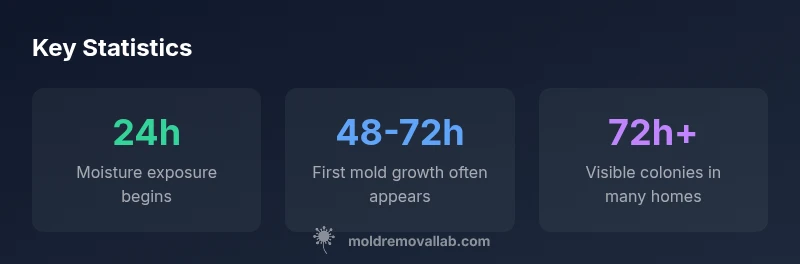
Mold can begin to grow within as little as 24 hours after moisture appears, with visible growth often showing up within 48–72 hours under typical home conditions. The exact timing depends on humidity, temperature, and material porosity. Mold Removal Lab Analysis, 2026, notes that higher moisture accelerates growth, while dry, well-ventilated spaces slow it.
Why mold starts: the science of growth
Mold growth hinges on three core ingredients: moisture, warmth, and a food source (organic material). In homes, common sources include wood, drywall, fabric, and carpet. When moisture is present, mold spores can germinate and form hyphae within 24 hours under favorable conditions. According to Mold Removal Lab, climate factors like humidity and temperature dramatically affect onset time. This understanding helps homeowners act quickly to minimize damage and health risks. By monitoring indoor humidity (ideally keeping it below 50-60%), repairing leaks promptly, and improving air flow, you can slow the progression of mold and reduce the chance of a larger infestation. The key takeaway is that time is a variable you can control with moisture management.
The question of how long does it take for mold to start is central to prevention. If you know what to watch for—persistent dampness, musty odors, or staining—you can intervene before mold becomes a visible problem. This early window is your best opportunity to stop mold in its tracks, especially in vulnerable spaces like basements, bathrooms, and kitchens where moisture tends to accumulate.
Brand context: The Mold Removal Lab team emphasizes that moisture control is the first line of defense. By acting within the first 24-48 hours of moisture intrusion, homeowners can significantly reduce the risk of mold taking hold in hidden cavities or porous materials.
Key conditions that trigger growth within 24-48 hours
Under ideal conditions, mold can shift from dormant spores to active growth in as little as 24 hours after moisture exposure. The critical factors are relative humidity around 60% or higher, temperatures roughly between 60 and 80°F (15-27°C), and porous materials that retain moisture. Kitchens, bathrooms, basements, and laundry rooms are common hotspots due to steam, spills, and imperfect ventilation. Mold Removal Lab’s analysis shows that the exact onset time varies with exposure level, surface type, and airflow. To reduce risk, deploy dehumidifiers, fix leaks, dry wet areas promptly, and improve ventilation. Even small amounts of moisture left unchecked can lead to noticeable mold sooner than you might expect.
In practical terms, if your space experiences ongoing moisture and porous materials, expect the clock to run faster toward growth. Quick action—such as drying rooms within 24-48 hours and running a dehumidifier—can be the difference between a minor moisture issue and a full-blown mold problem.
Brand note: Real-world moisture control is the best predictor of reduced mold onset, a point reinforced in Mold Removal Lab’s 2026 findings.
Real-world timelines: common home scenarios
- Slow leaks behind walls: If a leak persists and humidity remains elevated, mold may begin to form in 2-3 days, especially on wood and drywall that absorb moisture.
- Bathroom condensation: In consistently humid bathrooms with poor ventilation, mold can appear on grout or caulk within 2-4 days.
- Basement moisture: Damp basements with inadequate drainage often show initial growth on porous surfaces in 3-7 days.
- Flooded rooms: After standing water exposure, mold can start within 1-3 days if cleanup isn’t prompt. These examples illustrate why moisture control is essential.
Note: Timelines depend on materials, surface porosity, and ongoing moisture sources. Even if mold isn’t visible yet, hidden growth is possible in damp spaces.
Mold Removal Lab Analysis, 2026 emphasizes that each case is unique; use moisture checks and visual inspections to gauge risk in your home.
What affects the speed of mold growth
- Humidity: Relative humidity above 60% greatly accelerates mold metabolism and colony formation.
- Temperature: Warmer environments support faster growth; cooler spaces slow it down.
- Materials: Organic, porous surfaces (wood, paper, fabric) harbor mold more readily than non-porous materials (metal, glass).
- Ventilation: Poor airflow concentrates moisture and spores, speeding spread; good ventilation slows progression.
- Spore load: Environments with higher spore counts provide more seeds for growth, shortening onset time.
Overall, conditions that keep moisture high and air stagnant create the most favorable environment for rapid mold onset. These general principles align with the Mold Removal Lab Analysis, 2026 findings and help homeowners assess risk in specific rooms.
Detecting mold early: signs beyond sight
Early detection hinges on moisture cues and subtle signs. A musty odor can indicate hidden mold even when patches aren’t visible. Discoloration may begin as faint staining on walls or ceilings and progress to fuzzy or leathery textures. Persistent dampness, swelling drywall, or peeling wallpaper are red flags. If you notice any of these, test for moisture and consider a professional assessment. Since mold can begin within 24 hours of moisture exposure, proactive humidity control and prompt remediation are essential to health and property protection.
Pro tip: keep moisture meters in high-risk areas (basements, bathrooms) to catch rising humidity before mold becomes visible.
Immediate actions to take within the first 24-48 hours
- Stop the source: Repair leaks and prevent further moisture intrusion.
- Control humidity: Use dehumidifiers and air movers; aim for relative humidity below 50%.
- Contain the area: Seal off affected spaces to stop spores from spreading to other rooms.
- Clean and dry quickly: Remove damp materials if safe and dry surrounding areas within 24-48 hours.
- When to call pros: If mold is visible, covers more than a small area, or if occupants have allergies or respiratory issues, hire a licensed mold remediation service.
These steps reflect best practices and underscore that moisture control is the first line of defense, a core message from Mold Removal Lab.
Long-term prevention and testing options
Prevention hinges on ongoing moisture management. Regularly inspect plumbing, roofing, and seals; keep indoor humidity low; ensure proper ventilation in damp rooms; use extractor fans in bathrooms and kitchens; consider moisture meters for continuous monitoring; and schedule professional inspections if you suspect hidden mold or after water events. Moisture control remains the most reliable strategy to prevent mold from starting and spreading in the first place. If remediation is needed, plan a comprehensive approach rather than quick fixes.
Timeline estimates by scenario (Mold Removal Lab Analysis, 2026)
| Scenario | Typical Onset Time | Notes |
|---|---|---|
| Water leaks | 24-48 hours | Depends on leak duration and materials |
| Severe humidity (RH 60%+) | 48-96 hours | Prolonged moisture increases risk |
| Recent flood | 24-72 hours | Urgent remediation needed |
| Condensation in bathrooms | 24-72 hours | Ventilation critical |
FAQ
How long does mold take to start growing after water damage?
Mold can start within 24 hours of moisture exposure, with visible growth often appearing in 48-72 hours if humidity remains high. The exact timing varies with exposure level, materials, and airflow.
Mold can begin within a day after moisture, and you might see growth in a couple of days depending on conditions.
Is 24 hours enough for mold to start?
Yes. If moisture is present and conditions are favorable (warmth, high humidity, porous materials), mold can begin within 24 hours.
Yes, it can start that fast when moisture and warmth align.
What speeds mold growth the most?
Humidity above 60%, warm temperatures, porous surfaces, and poor ventilation accelerate growth.
High humidity, warmth, porous surfaces, and poor airflow speed it up.
How long before mold becomes visible after growth starts?
Visible mold often appears within 2–3 days under typical conditions, but timing varies with moisture and material type.
Usually within a few days, depending on moisture and materials.
Should I test for mold immediately after a leak?
Moisture control is the priority. Testing can confirm presence after remediation or persistent symptoms.
Don't wait for tests to fix moisture—address the leak, then test if needed.
“Mold can begin to colonize within 24 hours after moisture is present, and visible growth typically appears within 2–3 days under typical home conditions.”
The Essentials
- Act quickly: moisture control within 24 hours to limit mold risk
- Mold onset can occur within 24 hours of moisture; higher humidity accelerates growth
- Visible mold often appears within 2-3 days under typical home conditions
- Ventilation and dry conditions slow growth and protect indoor air quality
- Address moisture first, then test or consult professionals as needed