Mold Damage: Practical Home Remediation Guide
A comprehensive, step-by-step guide to mold damage remediation for homeowners. Learn moisture control, containment, cleaning, and prevention with expert insights from Mold Removal Lab.


According to Mold Removal Lab, the fastest path to mitigating mold damage is a moisture-first approach. You’ll contain the area, stop leaks, dry thoroughly, and survey for hidden growth before cleaning. This four-step framework—moisture control, containment, inspection, and cleaning—reduces health risks and prevents recurrence, helping homeowners protect their families and property. If contamination seems extensive, consult a professional promptly.
Understanding Mold Damage
Mold damage occurs when moisture seeps into building materials, creating hospitable conditions for mold growth. It can appear as visible black, green, or gray patches, or as a musty odor that hints at hidden colonies behind walls or under flooring. The risks extend beyond aesthetics: exposure to mold spores can irritate eyes, skin, and lungs, and long-term exposure may affect sensitive occupants more severely. In residential settings, common moisture sources include roof leaks, plumbing failures, high indoor humidity, and condensation in basements. The Mold Removal Lab team emphasizes that mold thrives where moisture persists, so addressing leaks and reducing humidity are the first lines of defense. Early detection and rapid response lessen material loss and simplify remediation.
Health Risks and When to Seek Help
Mold exposure can trigger allergic reactions and asthma symptoms in some people, and people with weakened immune systems may experience more serious health effects. Symptoms like coughing, sneezing, nasal congestion, throat irritation, and skin rashes can appear after exposure to moldy environments. If eyes, nose, or lungs feel irritated after spending time in a damp area, or if anyone in the home has a chronic cough or sinus issues, seek medical advice and reduce exposure immediately. Based on Mold Removal Lab analysis, maintaining indoor humidity below recommended levels and limiting exposure during cleanup are crucial steps to protect family health. If you see widespread growth, or if mold covers large areas or porous materials, call a licensed professional.
Assessing the Extent of Damage
Thorough assessment involves more than a quick visual check. Look for staining, warped materials, and musty odors that signal hidden growth. Use moisture meters or technology to identify damp zones behind walls and under floors. Document affected areas with photos before cleanup begins. The goal is to determine whether only nonporous surfaces are affected or if porous materials like drywall, insulation, or carpeting have sustained damage and must be removed. A careful assessment also helps you decide safe cleaning methods and whether containment is necessary to prevent spores from spreading to clean areas.
Cleaning and Remediation: What You Can Do
Nonporous surfaces such as glass, metal, and sealed stone can be cleaned with detergent and water, or a mild antimicrobial cleaner if permitted for the surface. Porous materials that have absorbed mold, such as drywall, insulation, or carpet, often require removal and disposal to prevent regrowth. Always ventilate the area and wear appropriate PPE before starting. For partial cleaning, target visible growth with gentle scrubbing and thorough drying. Do not attempt to encapsulate or seal moldy porous materials without professional guidance, as improper remediation can trap moisture and exacerbate the problem. The Mold Removal Lab team notes that remediation success hinges on removing moisture and removing contaminated materials when necessary.
Prevention: Stopping Mold Before It Starts
After cleanup, focus on moisture control to prevent recurrence. Repair leaks promptly and improve drainage away from the foundation. Use dehumidifiers in damp spaces and ensure proper ventilation in bathrooms, kitchens, and laundry rooms. Regularly inspect areas prone to humidity, like basements and crawl spaces, for signs of dampness or new mold growth. Consistent maintenance reduces the likelihood of mold returning and protects the integrity of building materials over time.
When to Hire a Professional and What to Expect
Professional remediation is advised when mold covers large areas, penetrates porous materials, or involves complex moisture issues. A licensed pro will contain the site, remove contaminated materials, treat remaining surfaces, and perform post-remediation testing to confirm that the environment is safe. The Mold Removal Lab team recommends obtaining written estimates, verifying credentials, and ensuring that proper containment methods and HEPA filtration are used during work. Professional remediation can save time, reduce health risks, and prevent recurring damage.
Tools & Materials
- N95 respirator(Fit-tested if possible; protects against inhalation of spores during cleanup)
- Protective goggles(Eye protection against splashes and airborne particles)
- Nitrile gloves(Disposable; consider double-gloving for added protection)
- Disposable coveralls(Optional, protects clothing and skin from contaminants)
- Plastic sheeting(Create containment barriers to limit mold spread)
- Duct tape(Seal containment edges and plastic barriers)
- HEPA vacuum(Use for cleanup to capture small particles and spores)
- Mild detergent and water(Basic cleaning solution for nonporous surfaces)
- Disposal bags for contaminated materials(Seal and remove mold-infested debris securely)
- Moisture meter or humidity gauge(Helpful for identifying damp zones (optional))
- Dehumidifier(Aids rapid drying, especially in humid spaces)
Steps
Estimated time: half a day to a full day
- 1
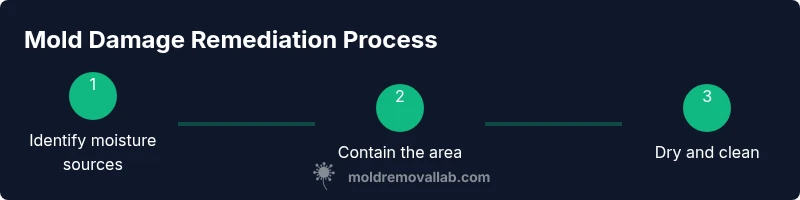
Identify moisture sources
Locate leaks and moisture hotspots in roofs, walls, plumbing, and HVAC. Stop leaks or fix the source before cleaning to prevent ongoing mold growth.
Tip: Document locations with photos to guide repairs and remediation decisions. - 2
Contain the area
Seal off the affected space with plastic sheeting and keep doors closed to prevent spores from spreading to clean areas.
Tip: Label containment zones to avoid accidental cross-contamination. - 3
Prepare PPE and workspace
Put on N95 respirator, gloves, and eye protection. Ventilate the area if possible and clear belongings from the space.
Tip: Avoid disturbing mold by limiting aggressive scrubbing early on. - 4
Clean nonporous surfaces
Wipe surfaces with detergent and water; for approved cleaners, follow label instructions and ensure thorough drying after cleaning.
Tip: Use a separate cloth for each area to prevent cross-contamination. - 5
Address porous materials
If mold penetrates porous materials, remove them safely and dispose of contaminated debris; porous items may require replacement.
Tip: Do not attempt to fully seal porous mold with paint or sealants. - 6
Dry and monitor
Dry the space completely using dehumidifiers and fans; monitor humidity to keep levels low and prevent recurrence.
Tip: Keep humidity below the level that supports mold growth in your climate.
FAQ
Is mold damage dangerous to health, and who is at risk?
Yes, mold exposure can irritate the eyes, nose, and lungs, especially for children, the elderly, and those with allergies or asthma. Prolonged exposure may worsen symptoms. If you notice persistent symptoms after exposure to damp environments, seek medical advice and limit exposure until cleanup is complete.
Mold exposure can irritate airways and worsen allergies. If you have symptoms, limit exposure and consult a professional for cleanup.
Can I safely remove mold by myself, or should I hire a pro from the start?
Small, nonporous areas can be cleaned by the homeowner with proper PPE and care. Large or porous mold, or growth behind walls, is best handled by a professional to ensure containment and complete removal.
DIY is possible for small, nonporous areas with proper protective gear; large or hidden mold should be handled by a pro.
When is it essential to call a professional remediation service?
Call a professional when mold covers a large area, involves porous materials, or moisture issues persist after initial cleanup. Professionals can contain the site, remove contaminated materials, and verify successful remediation with testing.
Call a professional for large or complex mold situations or if moisture problems persist.
What should I do with contaminated porous materials?
Porous items with mold growth, such as drywall or insulation, often require removal and disposal to prevent regrowth. Some surfaces can be cleaned if the material remains structurally sound, but always follow safety guidance.
Contaminated porous materials usually must be removed to ensure safety.
Will mold damage return after cleanup if moisture is not controlled?
Yes. If moisture sources are not addressed, mold can regrow. Ongoing moisture control and regular inspections are essential to prevent recurrence.
Mold can come back if moisture returns, so keep humidity in check.
Do I need post-cleanup testing after remediation?
Post-cleanup testing helps verify that the environment is safe, especially in shared spaces or when occupants are sensitive. A qualified professional can advise on appropriate testing methods.
Post-cleanup testing confirms safety; consult a pro for options.
Are there affordable DIY strategies to prevent future mold growth?
Yes. Regular moisture monitoring, prompt leak repair, improved ventilation, and routine cleaning of damp areas can reduce mold risk without significant expense.
Regular moisture checks and good ventilation can prevent mold easily.
Watch Video
The Essentials
- Identify moisture sources before cleaning
- Contain the area to prevent spread
- Dry thoroughly and monitor humidity
- Differentiate cleaning for nonporous vs porous materials
- Know when to call a professional