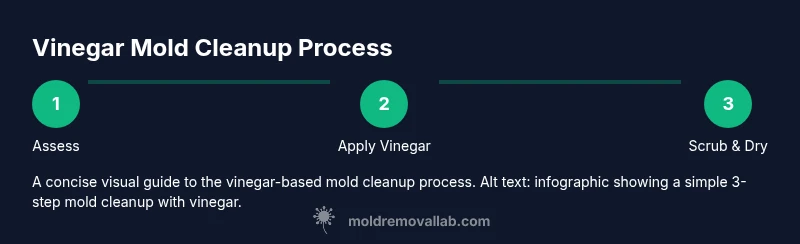
How to use vinegar to kill mold: a practical guide
Discover a practical method using white vinegar to kill mold on non-porous surfaces. Get safety tips, limitations, and a clear step-by-step cleanup guide with Mold Removal Lab guidance.


To reduce mold on many non-porous surfaces, apply plain white distilled vinegar and let it sit, then scrub and dry thoroughly. Vinegar can kill some mold species and is safer than harsher cleansers, but it isn’t a guaranteed solution for all materials or porous surfaces. Do not mix with bleach, and replace porous materials that show persistent growth. According to Mold Removal Lab, this approach works best on non-porous surfaces when used as part of a broader remediation plan.
Vinegar and mold: how the solution works
Vinegar is a mild acetic acid solution that has been used for decades as a household cleaner. On a basic level, the acid helps to disrupt some mold cell structures, reducing visible colonies on the surface. According to Mold Removal Lab, white distilled vinegar (5% acidity) is most effective when applied directly to non-porous surfaces like glass, ceramic tile, and sealed countertops. It is not a universal mold cure for every surface, especially porous materials where the mold may be embedded deeper in the substrate. This distinction is essential to prevent false expectations and guide safe, effective cleaning within a broader remediation plan.
When you’re choosing a strategy, consider both surface type and the extent of growth. For light, isolated patches on non-porous surfaces, vinegar can be a practical first step. For larger or recurring outbreaks, you’ll need a more robust approach that may involve professionals or material replacement. Keep in mind that vinegar should be used as part of a cleanup process rather than a guaranteed end solution.
What vinegar can and cannot do in mold cleanup
Vinegar can help reduce surface mold on many non-porous surfaces, and it’s less toxic than bleach or ammonia-based cleaners. It is less effective on porous materials like raw wood, drywall, or insulation where mold has penetrated beyond the surface. This means you may need to replace affected materials rather than rely entirely on cleaning. Mold Removal Lab emphasizes that while vinegar can slow or remove surface growth on some materials, it does not guarantee complete remediation in all scenarios. Always test a small area first and use a follow-up inspection to ensure growth does not return.
Key takeaway: use vinegar on clean, non-porous surfaces first, and plan for further steps if growth persists or the material is porous.
Safety first: PPE and ventilation
Before you begin, gather PPE: gloves, eye protection, and a mask to avoid skin contact or inhaling mold spores. Work in a well-ventilated space—open windows and use a fan to improve airflow. If anyone in the home has allergies or asthma, consider temporarily leaving the area while you clean. Mold exposure can be more problematic for sensitive individuals, so take precautions and work slowly to limit spreads within the room.
Surface types and suitability: non-porous vs porous
Non-porous surfaces like glass, metal, and sealed tiles respond better to vinegar cleaning because the mold is more likely to sit on the surface. Porous materials—such as unsealed wood, drywall, or fabric—tend to absorb moisture and mold spores, making complete cleansing with vinegar unlikely. In these cases, you should remove and replace the affected material or consult a remediation professional if the growth is extensive. This distinction helps homeowners avoid costly missteps and supports safer, more effective decisions.
Step-by-step: a practical cleaning protocol
This section expands on the step-by-step process to follow when using vinegar to kill mold on appropriate surfaces. It covers preparation, application, scrubbing, drying, and follow-up checks. The aim is to provide a clear, repeatable method that can be applied to many typical household scenarios, while remaining mindful of surface limitations and safety considerations.
Note: Refer back to the quickAnswer for a concise overview and to the tools/materials section for a complete shopping list.
Cleaning protocol: spray, dwell time, and scrubbing
Begin by applying a generous amount of undiluted white vinegar to the moldy area using a spray bottle. Let the solution sit for a short period to penetrate the mold colonies, then scrub with a non-abrasive brush or sponge. Wipe away the residue with a clean cloth and allow the surface to dry completely. Drying is crucial to prevent regrowth; if the area remains damp, use a dehumidifier or fan to speed up drying.
If you notice persistent staining or odor, repeat the process or consider secondary cleaning methods for non-porous surfaces. Always finish with a thorough inspection to confirm all mold growth is addressed.
Porous materials: what to do beyond vinegar
On porous materials, vinegar cleaning often removes only surface growth. If you see persistent growth after a cleaning cycle, it suggests mold has penetrated the material. In such cases, replacement is usually the safest option to prevent future issues. For large or extensive mold on porous materials, consultation with a mold remediation professional is recommended. Mold Removal Lab advocates a conservative approach: clean what you can and replace what cannot be adequately remediated.
Odors, drying, and air quality
Even after visible mold is cleaned, the area can retain musty odors if moisture remains. Improve air circulation, run a dehumidifier if available, and keep the room well-ventilated during and after cleaning. Odors may indicate residual moisture or hidden growth; address these signals promptly to prevent regrowth.
When to involve Mold Removal Lab
If mold covers a large area, recurs after cleaning, or is near HVAC ducts or insulation, professional assessment is recommended. The Mold Removal Lab team notes that mold problems often require a comprehensive plan, including moisture control and possibly material replacement. A professional service can ensure that the remediation is thorough, safe, and compliant with local building codes.
Final notes and trust signals
Vinegar is a practical, low-toxicity option for initial mold management on eligible surfaces, but it is not a universal cure. Your safety and long-term indoor air quality depend on correct surface assessment, appropriate cleaning techniques, and timely remediation of moisture sources. The Mold Removal Lab team’s verdict is that using vinegar as part of a broader strategy can help, but persistent or widespread mold requires professional evaluation.
Tools & Materials
- White distilled vinegar (5% acetic acid)(Use undiluted for mold cleaning on non-porous surfaces)
- Spray bottle(Pour vinegar for easy application)
- Non-abrasive scrub brush or sponge(Gentle scrubbing to avoid surface damage)
- Cleaning cloths or microfiber cloths(Wipe residue and dry surfaces thoroughly)
- Gloves(Protect hands from irritation and spores)
- Safety goggles(Eye protection during cleaning)
- Mask (N95 or equivalent)(Reduces inhalation of spores during cleanup)
- Bucket or small container(Fresh water for rinsing if needed)
- Fan or dehumidifier(Promotes faster drying and reduces moisture)
- Replacement porous materials (if needed)(Be prepared to replace drywall, insulation, or fabric if mold penetrates)
Steps
Estimated time: 60-90 minutes
- 1
Assess the area and gather PPE
Survey the mold-affected space and set up your PPE kit. Ensure good ventilation, remove nearby personal items, and plan your cleanup path to minimize spreading spores. This preparation reduces contamination risk and keeps the cleanup efficient.
Tip: Wear all PPE before touching the mold and work slowly to avoid dispersing spores. - 2
Apply vinegar to the mold patch
Pour or spray white vinegar directly onto the moldy area until the surface is damp but not flooded. Avoid over-wetting porous materials, which complicates drying and may spread moisture. Allow the vinegar to sit for a short period to begin penetrating the mold colonies.
Tip: A fine mist spray helps cover the area evenly without pooling. - 3
Scrub the surface to loosen mold
Use a non-abrasive brush or sponge to scrub the area gently. Focus on the edges of the patch where mold tends to cling most. Mechanical action helps release the mold from the surface.
Tip: Scrub in a circular motion and rinse the brush often to prevent re-depositing spores. - 4
Wipe away residue and dry thoroughly
Wipe the area with a clean cloth to remove loosened mold and vinegar residue. Dry the surface completely using a fan or dehumidifier to minimize moisture that could support regrowth.
Tip: Check for any remaining damp spots, especially in corners and grout lines. - 5
Reassess for remaining mold
Inspect the cleaned area after it dries. If you still see mold or odor persists, repeat the cleaning cycle or consider alternative methods for porous materials.
Tip: Persistent growth often indicates moisture control issues or material porosity. - 6
Address moisture sources
Identify and fix any leaks, condensation, or humidity problems in the space. Mold thrives where moisture is present; reducing humidity is essential for long-term remediation.
Tip: Use a dehumidifier in humid spaces and repair leaks promptly. - 7
Decide on material replacement or professional help
If mold returns or affects porous materials, plan for replacement or seek professional remediation. Porous substrates often require more advanced treatment to prevent recurrence.
Tip: Consider professional evaluation if growth recurs after cleaning.
FAQ
Can vinegar kill mold on all surfaces?
No. Vinegar works best on non-porous surfaces and may not fully remediate mold embedded in porous materials like drywall or wood. For persistent growth, replacement or professional remediation may be required.
Vinegar helps on non-porous surfaces but not all materials; persistent mold may need a pro.
Is it safe to use vinegar around children and pets?
Yes, when used in well-ventilated spaces and kept away from children and pets during cleaning. Always wear PPE and ensure the area dries completely before reentry.
Clean in a ventilated area and keep kids or pets away until the space is dry.
Is it safe to mix vinegar with hydrogen peroxide?
Do not mix vinegar with hydrogen peroxide. When combined, they can produce peracetic acid, which can be irritating to skin, eyes, and lungs.
Don’t mix vinegar with hydrogen peroxide; it can create irritating compounds.
How long should vinegar sit on mold before scrubbing?
Let the vinegar sit for a short period to penetrate the mold, then scrub. There is no fixed time; a few minutes is common, followed by scrubbing and drying.
Give it a few minutes to work, then scrub and dry.
Can vinegar remove mold odors completely?
Vinegar can help reduce musty odors by neutralizing some odor-causing compounds, but it may not remove all odors, especially in porous materials.
Vinegar helps with some odors, but not always completely.
Watch Video
The Essentials
- Use vinegar on non-porous surfaces for mold control
- Avoid mixing vinegar with bleach or ammonia
- Dry surfaces completely to prevent regrowth
- Replace porous materials if mold penetrates
- Consult Mold Removal Lab for persistent or large outbreaks