Epoxy Mold Removal: Safe DIY Guide for Homeowners
A practical, step-by-step guide to identifying, cleaning, and preventing epoxy mold growth on epoxy surfaces in homes. Learn PPE, moisture control, and safer cleaning methods to protect health.


Epoxy mold on resin-coated surfaces is a common issue in damp homes and workshops. This guide shows you how to identify epoxy mold, contain it safely, and clean without damaging finishes. You’ll learn to control moisture sources, use gentle cleaners, and prevent recurrence with sealing and ventilation. Follow the steps carefully to protect your health and property.
Understanding epoxy mold: what it is and why it appears
Epoxy mold refers to mold growth that forms on or near epoxy resin coatings, sealants, or surfaces where epoxy is present. In homes and workshops, high humidity, condensation, leaks, and poor ventilation create the perfect environment for mold spores to take hold on hard, non-porous epoxy surfaces. While epoxy itself is resistant to moisture, its surface can trap moisture in corners, under coatings, or around joints, allowing mold to flourish when organic matter (like dust or oils) accumulates. The term epoxy mold is not a separate species of mold; it is mold that has colonized epoxy-containing materials. Understanding this distinction helps you target moisture sources and choose compatible cleaners that won’t degrade epoxy finishes. According to Mold Removal Lab, identifying the exact location of moisture intrusion is as important as treating visible growth. For homeowners, the initial signal of epoxy mold often appears as dark green or black specks, fuzzy patches, or musty odors around epoxy countertops, floors, or garage surfaces. In many cases, mold growth begins in hidden pockets behind cabinets, under raised edges, or along seams where epoxy surfaces meet other materials. Early intervention reduces the risk of health symptoms and structural damage. If you notice recurring growth despite cleaning, re-evaluate ventilation, leaks, and humidity levels in the space and address the root cause before proceeding with treatment. Epoxy mold is treatable, but success hinges on moisture control and consistent maintenance. The Mold Removal Lab team emphasizes that prevention is more effective than repeated cleanups, especially on epoxy surfaces that are integral to your workshop or home aesthetics.
Safety first: PPE and containment when testing and cleaning
When you encounter epoxy mold, safety is non-negotiable. PPE protects you from inhaling spores and from skin contact with cleaners or biocides. Start with a sealed work area: close doors, lay plastic sheeting to trap any debris, and keep children and pets away. Wear a disposable coverall, nitrile gloves, a tightly fitted NIOSH-approved respirator or P100 mask, and safety goggles. If you must use a vent or fan, position it to pull air away from you and outside the building to minimize indoor exposure. Before any cleaning, test a small, inconspicuous patch to ensure your cleaning solution won’t damage the epoxy finish. This initial test confirms compatibility and reduces the risk of irreversible staining or dulling. Epoxy mold can release spores during disturbance, so gentle, non-abrasive tools are preferred. In short, containment and PPE reduce risk and make subsequent steps more effective. The Mold Removal Lab team notes that proper safety protocols are essential for protecting occupants, especially those with allergies or asthma. Keep your cleaning solutions clearly labeled and never mix household chemicals, which can create dangerous fumes.
Assessing moisture and source control for epoxy mold
Effective epoxy mold remediation starts with moisture control. Inspect the space for leaks, roof or pipe issues, condensation, and poor ventilation. Check behind cabinetry, under sinks, and along baseboard joints where dampness can persist. Use a hygrometer to monitor relative humidity; aim for steady levels below 50-60% in living spaces and below 40-50% in basements or crawl spaces. Address the moisture source first—repair leaks, improve ventilation, or install a dehumidifier—before intensive cleaning. Mold growth on epoxy surfaces thrives in damp conditions, and ongoing moisture will drive a quick recurrence even after cleaning. Based on Mold Removal Lab research, persistent humidity is a leading cause of epoxy mold reappearance; hence, successful remediation hinges on a lasting moisture solution as much as surface treatment. Document moisture readings and any changes to the space; this data helps determine whether professional assessment is needed for hidden leaks or large-scale moisture issues. When moisture is controlled, you can proceed with cleaners and protective measures more confidently, knowing the root cause is addressed and future growth is less likely.
Cleaning strategies for epoxy mold on epoxy surfaces
Cleaning epoxy mold requires a careful balance of effectiveness and respect for epoxy finishes. Begin with a non-abrasive scrub using a mild detergent and warm water applied with a soft-bristle brush or microfiber cloth. For light to moderate growth, a 3% hydrogen peroxide solution or isopropyl alcohol (at least 70%) can help kill spores without harshly affecting the epoxy. Avoid bleach on smooth epoxy surfaces, as it can discolor or degrade the finish over time. Test any cleaner on a small, hidden area first. If mold remains stubborn, reapply cleaner and give the surface extra time to dry before scrubbing again. Do not mix cleaners—especially bleach with ammonia or acids—as this can create toxic gases. After cleaning, rinse with clean water and dry thoroughly with a lint-free towel or a fan. Remember, epoxy mold is most effectively tackled when you combine surface cleaning with moisture control. The Mold Removal Lab team recommends documenting each treated area to track progress and identify spots that may require re-cleaning or sealing after drying.
Drying, sealing, and preventing recurrence
Drying is a crucial step after cleaning epoxy mold. Use a dehumidifier and fans to accelerate moisture removal, directing airflow away from your face and ensuring air moves across surfaces rather than trapping moisture in corners. Once dry, consider applying a mold-inhibiting sealer or an epoxy-safe coating designed for mold resistance to reduce future growth. For porous edges or seams, re-seal with compatible epoxy or concrete sealant to block moisture ingress. Regular inspections and humidity control are key to prevention. Maintain housekeeping practices that minimize dust and organic matter on epoxy surfaces, as these provide nutrients for mold if moisture returns. Schedule routine checks after heavy rainfall or seasonal changes, and consider a portable dehumidifier for moisture-prone rooms. The combination of prompt drying, sealing, and ongoing monitoring forms a robust defense against epoxy mold regrowth and protects both health and property.
Repair decisions: when to replace or recoat epoxy surfaces
In many cases, epoxy surfaces in homes or workshops can be repaired rather than replaced. If mold has penetrated the substrate, or if the epoxy coating is cracked, discolored, or has deep pitting, it may be more effective to refinish rather than attempt a patch. For countertops, tabletops, or workbenches, consider recoating with a high-quality epoxy resin designed for mold resistance and moisture protection. For structural components like plywood backing or drywall near epoxy installations, assess whether replacement is necessary to prevent future moisture issues. Recoating should occur only after the area remains completely dry for 24-48 hours and after the moisture source has been resolved. If the mold returns after recoating, it may indicate an ongoing moisture problem that requires professional assessment. Mold Removal Lab guidelines suggest evaluating the entire affected area rather than treating isolated spots to prevent a cycle of recurring growth.
Practical case study: step-by-step example
A homeowner noticed a moldy patch along a garage epoxy-coated workbench after a wet winter. They followed a 7-step plan: 1) isolate and protect the area with plastic; 2) wear PPE; 3) test a small patch with a mild detergent and water; 4) apply hydrogen peroxide to the affected area; 5) scrub gently with a soft brush; 6) rinse and dry thoroughly; 7) seal the epoxy surface with a mold-resistant coating. After drying for 48 hours, humidity was kept below 45% with a dehumidifier, and a moisture barrier was added behind the bench. The mold did not reappear in the following weeks, demonstrating the importance of moisture control and proper sealing. This case illustrates how epoxy mold remediation can be effective when moisture sources are addressed and cleaning is performed with appropriate care.
Authoritative sources
- https://www.epa.gov/mold/remediation
- https://www.cdc.gov/mold/default.htm
- https://www.osha.gov/mold
- https://niehs.nih.gov/health/topics/agents/molds/index.cfm
These sources provide official guidelines on mold safety, remediation, and health considerations. Always cross-check with local regulations and seek professional advice for large or persistent mold problems.
Tools & Materials
- Nitrile gloves(Heavy-duty, powder-free; change if torn)
- Safety goggles(Impact-resistant; side shields preferred)
- Respirator (N95 or P100)(Organic vapor cartridge if using solvents)
- Disposable coveralls(Prefer a one-piece; remove after work)
- Plastic sheeting and painter’s tape(Contain area; protect adjacent surfaces)
- Non-abrasive scrub brushes(Soft bristles to avoid scratching epoxy)
- Mild detergent(Biocide-free when possible)
- Isopropyl alcohol (70-99%)(Use for disinfection after detergent wash)
- Hydrogen peroxide (3%)(Alternate disinfectant; avoid mixing with bleach)
- Buckets, rags, and disposable towels(For washing and cleanup; seal contaminated items)
- Sealant or epoxy-safe mold-resistant coating(Apply after drying to reduce recurrence)
- Dehumidifier or air mover(Maintain below 50% humidity during and after cleanup)
Steps
Estimated time: Total time: 2-6 hours (including drying)
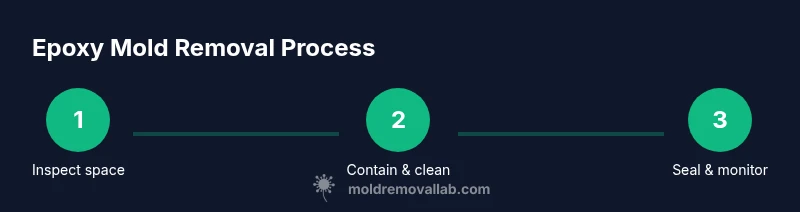
- 1
Prepare and protect the area
Clear the workspace and cover nearby surfaces with plastic. Put on full PPE, including gloves, goggles, respirator, and protective clothing. This step minimizes exposure and prevents cross-contamination.
Tip: Position a dedicated waste bag and seal it after each cleanup pass. - 2
Test a small patch with cleaners
Apply a mild detergent solution to a hidden area to verify epoxy compatibility. If the finish discolors or degrades, stop and switch to a gentler approach.
Tip: Always test on an inconspicuous spot first. - 3
Apply disinfectant to mold
Spray hydrogen peroxide on the moldy patch and let it sit for 5–10 minutes. This helps kill spores before scrubbing and reduces aerosolization.
Tip: Do not mix hydrogen peroxide with bleach or ammonia. - 4
Gently scrub the surface
Use a soft brush with a mild detergent solution to lift mold from the epoxy surface. Avoid abrasive tools that could scratch the coating.
Tip: Work in small sections to prevent pooling moisture. - 5
Rinse and dry thoroughly
Rinse with clean water and dry with towels or a fan. Ensure there is no remaining moisture in seams or edges.
Tip: Aim for complete drying within 24–48 hours of cleaning. - 6
Seal and protect the surface
If applicable, apply a mold-resistant sealant or epoxy topcoat once fully dry. This creates a protective barrier against future moisture ingress.
Tip: Choose a product compatible with your existing epoxy finish. - 7
Monitor and maintain humidity
Keep humidity consistently controlled with dehumidification and ventilation. Regular checks help detect moisture early and prevent recurrence.
Tip: Set humidity alerts or maintain a daily wipe-down routine in humid spaces.
FAQ
Is epoxy mold dangerous to health, and should I worry about exposure?
Mold exposure can affect health, especially for sensitive individuals. It’s important to wear PPE, minimize exposure, and address moisture sources to reduce spore counts. If you have persistent symptoms, consult a healthcare professional.
Mold exposure can affect health, especially for sensitive people. Wear PPE and manage moisture; see a doctor if symptoms persist.
Can I remove epoxy mold myself, or should I hire a professional?
Small, non-porous areas on epoxy surfaces can often be cleaned by homeowners using the steps in this guide. Large areas, hidden moisture, or structural damage should prompt a professional assessment to ensure complete remediation.
You can handle small areas at home, but call a pro for large or persistent problems.
What surfaces are safe to treat when epoxy mold is present?
Epoxy molds commonly affect epoxy-coated concrete, resin countertops, and plastic or fiberglass components. Always test cleaners on a hidden spot first to avoid damage.
Look for epoxy-coated surfaces like resin countertops and epoxy floors; test cleaners first.
How long does epoxy mold remediation typically take?
Remediation duration depends on area size and moisture control. Expect several hours for treatment plus additional time for thorough drying and sealing. In some cases, moisture issues may require days to fully resolve.
A few hours to treat, with extra time for drying and sealing; larger issues may take days.
When should I hire a professional for epoxy mold?
If mold covers a large area, recurs after cleaning, or you suspect hidden moisture or structural damage, professional remediation is wise. An expert can safely remove growth and identify root causes.
If it’s large, keeps coming back, or you have hidden moisture, get a pro.
Watch Video
The Essentials
- Identify moisture sources before cleaning.
- Use PPE and gentle cleaners to protect epoxy surfaces.
- Dry surfaces completely to prevent recurrence.
- Seal or reseal epoxy to reduce future growth.
- Monitor humidity to maintain a mold-free environment.