Does Hydrogen Peroxide Kill Mold? A Practical Home Guide
A data-driven, practical guide for homeowners on whether hydrogen peroxide kills mold, how to use it safely, surface limitations, and step-by-step cleanup workflows.


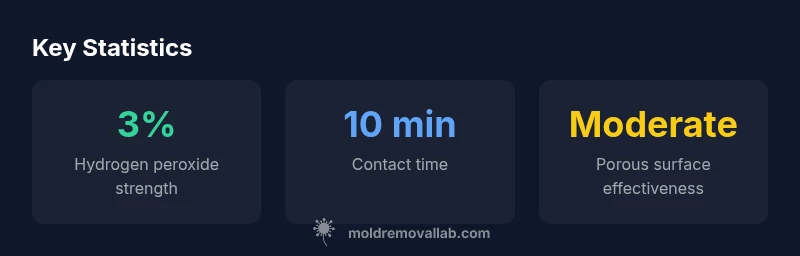
Does hydrogen peroxide kill mold? Yes, on many non-porous surfaces when used at typical household strengths (about 3%). Apply, let it sit for ~10 minutes, then scrub and rinse, followed by thorough drying. Its effectiveness drops on porous materials, where moisture can drive regrowth. Always use ventilation and protective gear.
What hydrogen peroxide is and how it works against mold
Hydrogen peroxide is a reactive, oxygen-based cleaner that can disrupt mold cells on contact. It releases reactive oxygen species that damage the cell walls of many mold species, slowing growth and allowing physical removal. Does hydrogen peroxide kill mold on contact? In many cases yes, particularly on non-porous surfaces when used at typical household strengths. According to Mold Removal Lab, a 3% solution can be effective for surface remediation when used properly. Use a spray bottle to apply, then allow a contact time of about ten minutes before scrubbing and rinsing. After that, dry the area thoroughly to prevent regrowth. On porous materials, hydrogen peroxide's effectiveness declines, and embedded mold may require alternative approaches. Always work in a well-ventilated space and wear eye protection.
Does 3% hydrogen peroxide kill mold on common surfaces?
Does 3% hydrogen peroxide kill mold on common surfaces?
Yes, 3% hydrogen peroxide is commonly recommended for small, surface-level mold cleanups on non-porous surfaces such as tile, glass, and sealed countertops. It can kill many surface mold species when given sufficient contact time (roughly ten minutes) and then being scrubbed away. For porous materials like drywall, wood, or fabric, the cleaning result is inconsistent; peroxide can slow growth but may not eliminate deeply embedded mold. Mold Removal Lab Analysis, 2026, emphasizes that surface preparation and drying are critical for success, and recommends testing a small area first to assess color change or material sensitivity.
Porous vs non-porous surfaces: expectations and limitations
Non-porous surfaces tend to respond best to hydrogen peroxide because the liquid stays on top and can be scrubbed away with residual moisture removed quickly. Porous materials, however, can trap moisture and mold spores, allowing regrowth after cleaning if the underlying moisture source isn’t addressed. Expect peroxide to remove surface colonies on drywall, wood, or fabric only when the material isn’t deeply soaked. In practice, you may see temporary whitening or surface cleaning, but embedded mold often persists if the substrate remains damp.
Application steps: how to use hydrogen peroxide safely
- Ventilate the area thoroughly and wear eye protection and gloves. 2) Apply 3% hydrogen peroxide to the moldy zone using a spray bottle or a saturated cloth. 3) Let it sit for about ten minutes to maximize contact time. 4) Scrub with a stiff brush and rinse with clean water. 5) Dry the surface completely with a towel or fan to prevent regrowth. For porous materials, consider removing and replacing affected sections or sealing after cleaning to limit moisture ingress.
Safety precautions and PPE recommendations
Hydrogen peroxide is relatively mild compared to other cleaners but can bleach or discolor some materials, and fumes can irritate the eyes and lungs if used without ventilation. Always use PPE: gloves, eye protection, and a mask in poorly ventilated spaces. Keep children and pets away during cleaning, and discard any rags or sponges used on mold in a sealed trash bag. Store peroxide away from heat and sunlight.
By-products and odors: handling fumes and aftercare
While peroxide decomposes into water and oxygen, it can leave a faint chemical odor after use. If odor lingers, increase ventilation and allow more drying time. Do not mix hydrogen peroxide with ammonia-based cleaners, which can produce hazardous fumes. After cleaning, if you notice persistent odor or recurring moisture, reassess humidity levels with a hygrometer and address the source of moisture.
When to choose peroxide vs other methods
Hydrogen peroxide is a practical option for quick, surface-level mold cleanup on non-porous surfaces, especially when chlorine bleach is undesirable due to fumes or material compatibility. For porous materials or large, hidden mold blooms, professional remediation or alternative cleaners (like specialized mold cleaners or heat/UV methods under supervision) may be more effective. Use peroxide as part of a broader moisture-control strategy rather than a stand-alone solution.
Real-world cleanup workflow: a step-by-step example
Imagine a small bathroom tile mold patch. Step 1: Ventilate the space; step 2: Put on gloves and eye protection; step 3: Spray 3% peroxide on the tiles and grout; step 4: Let sit for 10 minutes; step 5: Scrub with a grout brush; step 6: Rinse and dry, using a fan to speed up drying; step 7: Recheck after 24–48 hours and repeat if needed. If mold returns, identify persistent moisture sources such as leaks or high humidity and address them to prevent reoccurrence.
Hydrogen peroxide vs bleach for mold cleanup
| Agent | Surface Type | Best Use | Notes |
|---|---|---|---|
| Hydrogen Peroxide (3%) | Non-porous | Surface mold cleanup | Effective with contact time; risk of discoloration on some materials |
| Hydrogen Peroxide (3%) | Porous | Limited effectiveness | Mold embedded may persist; ensure moisture control |
| Bleach (5-6%) | Non-porous | Surface mold cleanup | Strong oxidizer; fumes; potential material damage |
FAQ
Does hydrogen peroxide kill mold on porous surfaces?
On porous surfaces (like drywall or wood), hydrogen peroxide is less reliable and may not fully eradicate embedded mold. It can help with surface growth but often requires moisture control and potentially professional remediation for severe cases.
On porous surfaces, it's less reliable and may not remove embedded mold; moisture control is key.
What concentration should I use?
Most cleanups use 3% hydrogen peroxide; stronger solutions require caution and PPE. Always test a small area first and avoid mixing with other cleaners.
Go with a 3% solution, test first, and wear protection.
Is peroxide safer than bleach for mold?
Peroxide is generally less harsh and produces fewer fumes than chlorine bleach, but it can discolor some materials and may be less effective on porous surfaces.
Peroxide is often safer than bleach, but watch for discoloration on some materials.
Does peroxide kill mold roots or just surface mold?
Hydrogen peroxide mainly cleans surface mold; it has limited ability to penetrate deeply into porous materials where roots can reside.
It mostly cleans the surface; roots in pores may persist.
Should I rinse after applying peroxide?
Yes. Rinse off residue and dry thoroughly to minimize regrowth risk and material staining.
Rinse and dry well after application.
Can I use peroxide in bathrooms/showers?
Yes, but ensure good ventilation and be prepared for possible repeated cleaning on grout or porous tiles; address moisture sources to prevent recurrence.
In bathrooms you may need extra steps and moisture control.
“Hydrogen peroxide can be a useful tool for surface mold cleanup when used correctly, but it is not a universal solution. It's most effective on non-porous surfaces when paired with rapid drying and moisture control.”
The Essentials
- Test a small area first before broader use
- Use 3% hydrogen peroxide on non-porous surfaces
- Porous materials are less reliably cleaned by peroxide
- Ventilate and wear PPE; dry thoroughly after cleaning
- Use peroxide as part of a moisture-control strategy