Distilled White Vinegar for Mold on Wood: A Practical Guide
Learn how to use distilled white vinegar for mold on wood safely. This comprehensive how-to covers prep, application, safety, and prevention for homeowners and renters. Mold Removal Lab provides evidence-based guidance.


Understanding mold on wood and why vinegar is considered
Mold on wood typically starts in moisture-laden areas where wood fibers stay damp. Wood is inherently porous, so mold can take hold beneath finishes or in micro-cracks, leading to visible patches that range in color from black to green or white. When homeowners address this with household products, distilled white vinegar for mold on wood is often suggested as a first-aid option for surface growth on painted or sealed wood. The Mold Removal Lab Team notes that vinegar is most effective on nonporous or sealed surfaces and tends to slow surface growth, but it may not reach deeply embedded mold inside porous wood. For larger infestations or wood that has absorbed moisture, professional remediation is usually the safer path.
Distilled white vinegar: what it is and how it works
Distilled white vinegar is a common household cleaner with a mild acidity that can disrupt the surface chemistry mold relies on to cling to surfaces. When applied to mold on wood, vinegar reduces the surface environment’s suitability for mold growth and can help loosen the colonies from the wood’s surface. It is not a guaranteed sterilant, and its effectiveness is greatest on surface mold on finished or sealed wood. The Mold Removal Lab Team emphasizes that vinegar is a pragmatic, low-cost option for small, shallow growth and should be part of a broader moisture-control plan rather than a sole solution for serious infestations.
Safety considerations when using vinegar on wood
Ventilation matters: work in a well-ventilated space to avoid inhaling mold spores and the vinegar odor. Wear protective gear—gloves and safety goggles—to shield skin and eyes from splashes. Do not mix vinegar with bleach or ammonia, as dangerous gases can form. Vinegar can be used on many wood surfaces, but excessive moisture can cause warping or finish damage, especially on unfinished or poorly sealed wood. If mold has penetrated deep into wood fibers or the surface is roughened, this approach may be insufficient and could require professional help. Following guidance from Mold Removal Lab, always prioritize moisture control and surface safety when using vinegar.
When to use vinegar vs. other methods
Vinegar shines for light, surface mold on sealed or painted wood and as a starter step in remediation. For porous wood, unfinished surfaces, or mold that has penetrated multiple layers, harsher cleaners or professional remediation may be needed. Bleach is generally not ideal for wood that may be damaged by moisture or where the finish is compromised, and hydrogen peroxide can be an alternative for some surfaces but may discolor certain finishes. Always test on a hidden area first and consider environmental factors like humidity and ventilation. Mold Removal Lab guides homeowners to assess the extent of mold and moisture before choosing a method.
Preparing the wood surface for treatment
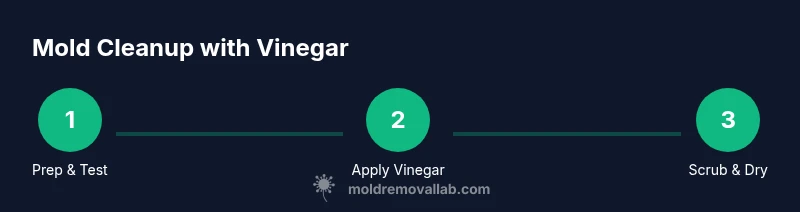
Before applying any cleaner, remove loose dust and debris with a dry cloth. Address the underlying moisture source—fix leaks, improve ventilation, and reduce ambient humidity with a dehumidifier or air circulation. Wipe down the area with a dry microfiber cloth to remove moisture after cleaning. Test a small patch on an inconspicuous area to ensure the finish won’t react adversely. If paint or varnish shows wear, gently reduce moisture exposure to prolong wood integrity. Proper preparation increases the chances that distilled white vinegar for mold on wood will be effective without harming the wood.
AUTHORITY SOURCES
For further reading and verification, consider these authoritative references:
- https://www.epa.gov/mold
- https://www.cdc.gov/mold
- https://www.who.int/news-room/fact-sheets/detail/mold These sources provide foundational guidance on mold health risks, remediation strategies, and moisture control that complement practical home-based steps.