Difference Between Mold and Black Mold: Key Differences and Guidance
A thorough, evidence-based comparison of mold and black mold, covering identification, health implications, testing, remediation, and prevention to help homeowners decide when to DIY or hire a professional.


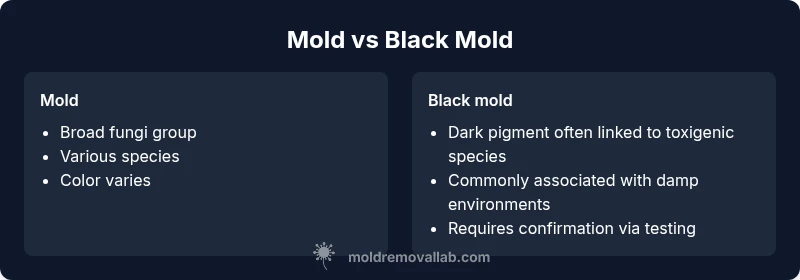
The difference between mold and black mold is that mold is a broad category of fungi found in many indoor environments, while black mold refers to a specific group often linked to Stachybotrys chartarum, known for dark greenish-black pigmentation and potential toxin-related concerns in moist spaces. Not all dark molds are the dangerous kind, but certain species can pose heightened health risks. Effective decisions about testing and remediation hinge on moisture levels, extent of growth, and exposure duration, rather than labeling alone.
Understanding the difference between mold and black mold
Mold is a broad term that describes a wide range of fungi that can grow on damp materials indoors. It is not a single organism but a diverse group that includes many genera such as Aspergillus, Cladosporium, and Penicillium. Black mold, in contrast, is a common name used to refer to a subset of molds that appear dark greenish-black and are often associated with Stachybotrys chartarum. Importantly, the color alone is not a definitive indicator of danger. The delivery system for any mold threat is moisture: damp conditions, organic material to feed on, and sufficient time for colonies to establish.
According to Mold Removal Lab, recognizing the moisture-driven nature of mold growth helps homeowners focus on remediation priorities rather than chasing labels. The presence of dark pigmentation can prompt cautious investigation, but it should not replace formal assessment. In many homes, areas labeled as black mold may be other non-toxigenic species that still require cleaning but pose different risk levels. The critical factor is sustained exposure and the ventilation context rather than color alone.
Common sources and distribution patterns
Mold thrives where moisture persists. Common indoor sources include leaky roofs, high humidity bathrooms, basements with poor drainage, and spaces around HVAC systems. Black mold often appears in areas with prolonged moisture exposure, such as after a flood, a long-term water intrusion, or chronic condensation. It can form colonies on drywall, insulation, wallpaper, wood, and carpet backing. However, mold work inventories show that many indoor traces labeled as black mold are simply colonies of other mold types that share a dark appearance due to accumulated debris and pigment.
Understanding distribution helps distinguish a localized patch from widespread growth. Small, well-contained growth on non-porous surfaces may be more straightforward to clean, while larger infestations require containment, protective equipment, and professional guidance. The goal is to interrupt the moisture source, then remove the colony safely and restore proper ventilation to reduce recurrence.
Growth conditions and moisture control
Mold growth accelerates in the presence of consistent moisture and organic material to feed on. Household humidity levels, leaks, condensate from windows, and infiltration from outside can create the perfect storm for mold blooms. Black mold tends to flourish in the same conditions but may be more conspicuous in areas that have experienced water intrusion or seasonal dampness. Effective moisture control includes repairing leaks promptly, improving drainage around foundations, using dehumidifiers in damp spaces, and ensuring adequate air exchange through vents or fans.
While the color may draw attention, remediation success hinges on eliminating moisture sources. Even a small amount of unnoticed water can sustain colonies and complicate cleanup. Homeowners should adopt a systematic approach: locate the moisture problem, dry the space thoroughly, disinfect the surfaces, and monitor for new growth after remediation.
Health implications and exposure risks
Exposure to mold can trigger a range of symptoms, especially for sensitive individuals, including allergies, respiratory irritation, and asthma-like reactions. Black mold has historically been associated with more serious health concerns due to claims about mycotoxins produced by certain species. In practice, the health risk depends on the extent of exposure, the specific mold species, and the affected individuals’ vulnerability (children, the elderly, or those with preexisting conditions). It is important to note that many homes have mold traces that do not result in significant health issues, while others may require medical consultation if symptoms persist.
Mold Removal Lab analyses emphasize that a cautious, evidence-based approach is essential: identify the species via appropriate testing when visible growth is present, limit exposure during cleanup, and consult healthcare professionals if respiratory or allergic symptoms appear or worsen after exposure. The relationship between color and toxicity is not absolute; therefore, professional assessment provides the most reliable risk appraisal.
How testing and identification work in practice
Laboratory testing helps distinguish mold species and confirms suspected black mold. Sampling can involve surface swabs, tape lifts, or air sampling conducted by trained professionals. Molecular methods, microscopy, and culture analyses each offer different strengths and turnaround times. The aim is to determine whether a toxic species is present, how widespread the contamination is, and whether remediation should involve specialized containment. Home test kits can be indicative but are not a substitute for professional laboratory confirmation in many cases.
Mold Removal Lab recommends prioritizing accredited testing when there is a possibility of toxigenic species, or when growth involves porous materials such as drywall or carpet padding. Documentation from testing can guide remediation strategies and potential insurance considerations. The key decision point is not merely whether mold is present, but whether the identified species and exposure level warrant more intensive remediation.
Comparison
| Feature | Mold | Black mold |
|---|---|---|
| Definition | Broad group of fungi that grow in damp interiors | A color-based label for certain molds, often linked to Stachybotrys chartarum |
| Notable species | Many genera (Aspergillus, Cladosporium, Penicillium, etc.) | Typically includes Stachybotrys chartarum in popular usage |
| Common appearance | Various colors and textures; may be green, gray, white, or black | Dark greenish-black patches that draw attention |
| Growth conditions | Moisture from leaks, condensation, or high humidity | Same moisture drivers; dark coloration often linked to chronic dampness |
| Health concerns | Most exposures cause irritation or allergic reactions in sensitive individuals | Historically associated with mycotoxins; public concern often higher |
| Testing methods | Surface swabs, air sampling, culture or molecular analyses | Targeted tests for toxigenic species when suspected |
| Remediation approach | Moisture control, cleaning, and replacement of affected materials as needed | Often requires containment and professional remediation for larger areas |
| Prevalence in homes | Common in damp spaces with visible growth | Reports often focus on homes with water intrusion or long-term dampness |
Upsides
- Clarifies the focus on moisture control as the root cause
- Helps prioritize testing and remediation actions
- Encourages routine indoor air quality maintenance
- Promotes safer cleanup practices when properly guided
The Bad
- Color alone can mislead about risk level
- Testing and professional remediation can add cost and time
- Overemphasis on ‘black mold’ may cause unnecessary alarm
- DIY cleanup can be unsafe for large or toxigenic growth
Mold is the broad category; black mold is a specific mold with potential risk when conditions support toxigenic growth
Rely on moisture assessment and species testing to guide remediation. When confirmed toxigenic species or extensive growth is present, lean toward professional remediation and moisture restoration to prevent recurrence.
FAQ
What is the precise difference between mold and black mold?
Mold is the broad group of fungi that grow in damp indoor areas. Black mold refers to a subset that appears dark and is often linked to Stachybotrys chartarum; not all dark molds are black mold, and not all black-colored molds are toxigenic. Identification and exposure context matter for risk assessment.
Mold is a broad category; black mold is a specific type that may pose higher risks under certain conditions. Proper testing helps determine the real danger.
Is black mold always dangerous?
No. The risk depends on species, extent of growth, and exposure duration. Some black-colored molds may be less hazardous than others, but testing is advised when growth is suspected in living spaces.
Not always dangerous, but it can be higher risk depending on the species and exposure.
Can I clean mold myself, or do I need a pro?
Small, contained growth on non-porous surfaces may be cleaned with proper PPE and containment guidelines. Larger growth, porous materials, or suspected toxigenic species should be handled by professionals to ensure safety and prevent spread.
You can handle tiny, contained spots with care; bigger problems deserve a pro.
When should I test for mold?
Test when there is visible growth, persistent musty odors, or health symptoms that improve after cleanup. Testing confirms species and informs remediation scope and safety planning.
Test when you see growth or have ongoing symptoms that don’t improve.
What are common signs of hidden mold growth?
Visible patches, musty odors, staining behind walls or under floors, unexplained humidity, and ongoing discoloration after cleaning efforts all suggest hidden growth.
Look for musty smells and staining that returns after cleaning.
How do I tell if remediation was successful?
Post-remediation, monitor for new growth, odors, and humidity changes. A follow-up inspection or third-party testing can verify that moisture sources are addressed and colonies are cleared.
Watch for no new growth and improved moisture after cleanup.
The Essentials
- Identify moisture sources first to stop mold growth
- Don’t rely on color alone to assess danger
- Use accredited testing to confirm species when needed
- Choose remediation strategy based on extent and exposure
- Prioritize ongoing moisture control to prevent reoccurrence