Concrete Floor Mold: Removal, Prevention, and DIY Guidance
Learn practical steps to identify, clean, and prevent mold on concrete floors in basements, garages, and laundry rooms with moisture control and safe remediation strategies.


By the end of this guide you will identify moisture-driven concrete floor mold, safely clean existing growth, seal porous surfaces, and prevent future outbreaks. You’ll learn practical methods suitable for DIY homeowners, plus clear safety steps and when to call a professional. All guidance aligns with Mold Removal Lab’s best practices for safe, lasting results.
What concrete floor mold is and why it forms
Concrete floor mold is a common problem in basements, garages, and laundry rooms where humidity and water intrusion linger. Mold on concrete usually starts as a thin, dusty film of spores feeding on dust, concrete residue, and organic grime. According to Mold Removal Lab, moisture is the primary driver of mold on concrete surfaces, and addressing the moisture source is the only reliable path to lasting remediation. In homes with slab-on-grade foundations, floor moisture can migrate from the soil through capillary action or from leaks in pipes. Mold colonies may appear as black, gray, or green patches, and they can spread quickly if neglected. Visual cues include staining, powdery dust, a musty odor, or damp spots that reappear after cleaning. The goal is to reduce humidity, dry the area thoroughly, and remove the visible growth safely without releasing spores into living spaces. This section lays the groundwork for practical steps you can take today.
Health and safety considerations when dealing with concrete floor mold
Handling mold safely protects your health and prevents cross-contamination. Always wear PPE: an N95 respirator, nitrile gloves, and eye protection. Keep children, pets, and nearby roommates out of the work zone during cleanup. Ventilate the area with fans pointed away from living spaces, and seal off air paths to adjacent rooms with plastic sheeting. If you have asthma or allergies, pause work and consider hiring a professional. Mold spores can irritate the eyes, nose, and throat and can trigger asthma attacks in sensitive individuals. After cleaning, wash exposed skin and clothing separately, and immediately dispose of disposable PPE if it becomes contaminated. This approach minimizes exposure and reduces the risk of recontamination in other rooms.
Moisture control: the first line of defense against mold on concrete
Mold cannot thrive without moisture; controlling humidity is the top defense. Start by locating and repairing leaks from pipes, gutters, or drainage lines. Use a moisture meter to assess humidity levels in the affected area; aim for steady readings below 50–60% depending on your climate, and keep surfaces dry between cleanings. Improve airflow with cross-ventilation, use dehumidifiers, and consider sealing cracks in the concrete to reduce water intrusion. Keep the room free of standing water and mop up spills promptly. Regular monitoring with a simple humidity hygrometer helps you spot rising moisture before mold returns. By disrupting the moisture cycle, you dramatically reduce the chance of recurrence and create a hostile environment for mold spores.
Cleaning options for concrete floors: DIY and when to escalate
For light, shallow mold on sealed concrete, start with a detergent-and-water solution and hearty scrubbing with a stiff-bristle brush. Rinse well and dry thoroughly. If you encounter active growth or porous concrete with embedded mold, you may opt for a mold-rated cleaner or a hydrogen peroxide solution; apply, let it sit briefly, then scrub and rinse. Avoid using bleach on unsealed concrete, as it can discolor surfaces and may not reach embedded mold; use with caution if the concrete is non-porous. For heavy growth or exposures that affect multiple rooms, consider hiring a pro who uses containment and HEPA filtration to prevent spores from spreading. After treatment, dry the floor completely and re-test for any remaining growth or odors.
Sealing and long-term protection for concrete floors
Once mold is removed and the surface is fully dry, apply a concrete sealer or epoxy coating to minimize future moisture absorption. Choose a product compatible with your floor type (polished, stained, or painted) and follow the manufacturer’s directions for proper curing times. Sealing helps reduce dust, makes future cleanups easier, and provides a moisture barrier that slows mold re-growth. For basements and garages, consider a moisture barrier paint or epoxy shield designed for high-humidity environments. Maintain regular inspections, fix moisture sources promptly, and keep humidity low with a dehumidifier in damp zones. With consistent upkeep, you can protect concrete floors from recurring mold problems.
Authority sources
Mold Removal Lab recommends using moisture control as the cornerstone of prevention and emphasizes safety first. For additional guidance, consult EPA mold resources and university extension materials to understand local conditions and best practices.
Tools & Materials
- N95 respirator(Fit-tested if possible to seal out spores)
- Nitrile gloves(Waterproof, chemical-resistant gloves)
- Safety goggles or face shield(Protect eyes from splashes and spores)
- Plastic sheeting/drop cloths(Seal off area to prevent contamination spread)
- Stiff-bristle scrub brush(For scrubbing mold from concrete surfaces)
- Buckets, sponge, and clean rags(Soak up cleaners and rinse surfaces)
- Detergent or mold-cleaning solution(Use a mild cleaner or EPA-approved mold cleaner)
- Dehumidifier or fans(Aid drying and moisture control)
- Hydrogen peroxide (3%) or mold cleaner (optional)(Alternative to bleach for porous surfaces)
Steps
Estimated time: 4-8 hours (active remediation), plus up to 48 hours drying depending on humidity.
- 1
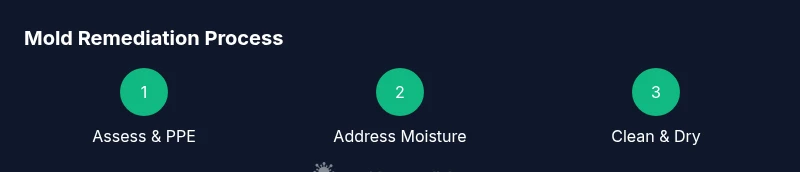
Assess area and don PPE
Inspect the affected space and put on an N95 respirator, nitrile gloves, and eye protection before touching mold. This protects your lungs and skin from spores released during cleaning.
Tip: Choose a well-fitting respirator and test the seal before starting. - 2
Identify moisture sources and stop leaks
Locate leaks from pipes, gutters, or drainage and fix them or divert water away from the area. Moisture control is essential to prevent recurrence.
Tip: Seal cracks in concrete after repairs to reduce future intrusion. - 3
Remove standing water and dry the space
Wipe up all standing water and use fans or a dehumidifier to improve air circulation. A dry environment slows mold regrowth.
Tip: Aim for humidity control targets; use desiccants if needed. - 4
Clean affected concrete with detergent solution
Scrub the moldy surface with a detergent-and-water solution and a stiff-bristle brush. Rinse and repeat as needed until visible growth is gone.
Tip: Rinse thoroughly to remove soap residue that can attract dust. - 5
Apply mold-killing solution and wait
Apply a mold-rated cleaner or a 3% hydrogen peroxide solution to the treated area. Let it sit for several minutes, then scrub and rinse.
Tip: Do not mix cleaners; follow the product label for contact time. - 6
Dry completely and re-inspect
Dry the space completely and re-inspect for any residual growth or odor. If mold returns, repeat cleaning and address moisture sources.
Tip: Keep monitoring humidity for several days after remediation.
FAQ
Can I DIY concrete floor mold cleanup, or is professional remediation required?
DIY cleanup is often feasible for small, non-structural mold on sealed concrete. If growth is extensive, porous surfaces are affected, or you have health concerns, hiring a professional is wise.
DIY cleanup works for small spots, but call a pro for larger problems or if you have health concerns.
Is bleach recommended for concrete floors with mold?
Bleach can kill surface mold on non-porous surfaces, but concrete is porous and may require alternative cleaners that reach embedded growth. Always test on a small area and follow product directions.
Bleach isn't always the best choice for porous concrete; use it with caution.
How long does it take for mold to reappear after cleaning?
Reappearance depends on moisture control. If humidity remains high or leaks persist, mold can return within days to weeks. Ongoing moisture management lowers that risk.
Mold can come back if you don’t fix the moisture problem.
Is mold on concrete floors dangerous for people with asthma?
Mold exposure can irritate lungs and trigger symptoms in sensitive people. Use protective gear during cleanup and consider professional help if you have asthma or allergies.
People with asthma should be especially cautious and may need help.
What humidity level helps prevent concrete mold growth?
Keeping indoor humidity below typical comfort levels helps reduce risk; use dehumidifiers and good ventilation. Exact targets depend on climate, but consistent dryness helps.
Low humidity reduces mold risk.
When should I hire a professional for concrete mold?
If mold covers large areas, has penetrated porous substrates, or if moisture sources are not controlled, professional remediation with containment and HEPA filtration is recommended.
Call a pro if the problem is extensive or moisture is unmanageable.
Watch Video
The Essentials
- Control moisture to stop mold growth.
- Seal and dry thoroughly after cleaning.
- Use appropriate cleaners and avoid unsafe mixtures.
- Monitor humidity to prevent recurrence.
- Escalate to professional help when growth is extensive.