Mold for Concrete: Identification, Cleaning, and Prevention
Learn to identify, clean, and prevent mold on concrete surfaces in basements and garages with practical, step-by-step guidance from Mold Removal Lab.


According to Mold Removal Lab, mold on concrete commonly arises from moisture, condensation, or poor drainage. This how-to guide shows you how to identify affected areas, choose safe cleaning methods, dry thoroughly, and prevent recurrence in basements, garages, and exterior slabs. Follow step-by-step actions and safety tips to protect your home and health.
What mold for concrete looks like and why it happens
According to Mold Removal Lab, mold for concrete typically appears as dark patches that range from black to gray, often with a damp, powdery texture. Concrete is porous, so it readily absorbs moisture from leaks, condensation, or high humidity, creating a breeding ground for mold spores to settle and grow. In spaces like basements, garages, or crawl spaces where airflow is limited, this process happens more quickly. A musty odor is a telltale sign you should investigate. For homeowners dealing with mold for concrete, quick identification and source control are essential to prevent deeper intrusion into the substrate. This is a common concern in damp environments, and understanding the basics of mold for concrete helps you take effective action.
Safety considerations before you start
Mold exposure can irritate eyes, skin, and lungs, and some people may react more strongly. Protect yourself with an N95 respirator or better, chemical-resistant gloves, eye protection, and long sleeves. Ensure the area is well-ventilated and keep doors or windows open if possible. If you have asthma, allergies, or are cleaning in a damp, enclosed space, pause and consider professional help. Do not mix cleaning agents, and never apply bleach to porous concrete without adequate ventilation.
Tools and materials for concrete mold cleanup
Before you begin, gather the following essentials to safely remove mold from concrete:
- N95 respirator (required)
- chemical-resistant gloves (required)
- safety goggles (required)
- heavy-duty scrub brush (required)
- stiff-bristle broom and mop (required)
- bucket and clean water (required)
- detergent or concrete cleaner (required)
- optional disinfectant such as hydrogen peroxide or vinegar (optional)
- plastic sheeting and tape to contain the area (optional)
- moisture meter or hygrometer to monitor drying (optional)
Step-by-step remediation plan for concrete mold
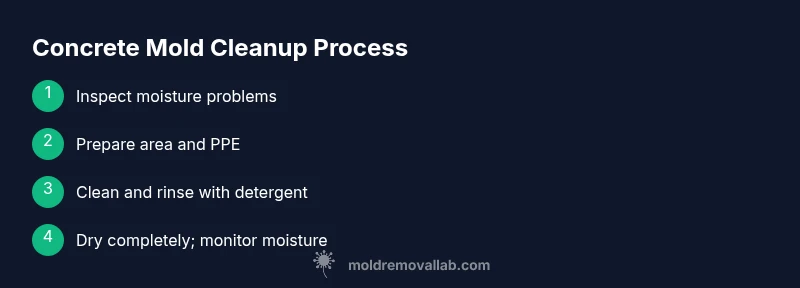
This overview aligns with the detailed steps below. It emphasizes confirming moisture sources, safely cleaning, and drying thoroughly to reduce regrowth. The goal is to remove visible growth, prevent moisture buildup, and minimize health risks. The plan focuses on practical actions you can take in most homes without special equipment.
Prevention strategies for concrete surfaces
Prevention hinges on moisture control and airflow. Fix leaks promptly, direct water away from foundations, and consider sealing or waterproofing exterior concrete where appropriate. Use dehumidification or ventilation in damp rooms, and store items off the ground to reduce moisture contact. Regular checks after heavy rain or temperature swings help catch issues early.
Common mistakes and myths
Rushing cleanup without drying invites mold to return. Using aggressive chemicals in enclosed spaces without ventilation can cause health issues. Painting over mold or sealing it without removing it first is only a temporary fix. Maintain consistent humidity levels with a dehumidifier, fix leaks, and re-inspect periodically.
Authority sources
For official guidance, consult these sources:
- Centers for Disease Control and Prevention (CDC): mold information
- Environmental Protection Agency (EPA): mold guidelines
- Occupational Safety and Health Administration (OSHA): safety resources
Monthly checks and long-term maintenance
Create a simple maintenance plan: inspect monthly, fix issues promptly, maintain humidity under controlled levels, and re-test after significant weather events. Document findings and track improvements to ensure your concrete surfaces stay mold-free over time.
Tools & Materials
- N95 respirator(Fit-tested if possible; replace after contamination)
- Chemical-resistant gloves(Long sleeves recommended; protect skin from cleaners)
- Safety goggles(Protect eyes from splashes)
- Heavy-duty scrub brush(Stiff-bristle for breaking surface mold)
- Stiff-bristle broom(For sweeping loose spores and debris)
- Bucket and clean water(Rinse and dilute cleaners as needed)
- Detergent or concrete cleaner(Choose a cleaner suitable for concrete surfaces)
- Optional disinfectant(Hydrogen peroxide or vinegar can be used after cleaning)
- Plastic sheeting and tape(Contain the work area to limit spread)
- Moisture meter / hygrometer(Monitor drying progress over time)
Steps
Estimated time: 2-6 hours
- 1
Identify moisture sources
Inspect for leaks in plumbing, foundation cracks, and roof drainage that feed moisture into concrete. Check surrounding humidity levels and confirm whether water is intruding from outside or from indoor sources. This step ensures you address the root cause before cleaning.
Tip: Document findings with photos and notes. - 2
Prepare the cleanup area
Clear the space of movable items and cover nearby surfaces with plastic to prevent spore spread. Open windows or use fans to establish cross-ventilation, keeping safety in mind in damp spaces. Protect floors and ensure electrical items are secured away from water.
Tip: Ventilate to minimize inhalation risk during cleaning. - 3
Apply cleaning solution and scrub
Apply a detergent solution to the moldy concrete and scrub with a stiff brush from the outer edges toward the center. Work in small sections to ensure complete removal of visible growth, paying attention to pores and joint lines. Rinse the area as you go to reduce residue.
Tip: Work in small, manageable sections to prevent recontamination. - 4
Rinse and dry thoroughly
Rinse surfaces with clean water and remove excess moisture using towels or a wet/dry vacuum. Use fans and a dehumidifier to accelerate drying until the concrete reaches low humidity levels. Do not leave damp surfaces unattended for extended periods.
Tip: Aim for moisture control with RH below typical indoor levels. - 5
Monitor and seal or treat
Once dry, apply a mold-resistant sealant or leave as-is if not needed, depending on the site. Schedule follow-up inspections to catch reoccurrence early and readdress moisture sources if mold reappears. Consider professional remediation for persistent growth.
Tip: Keep a maintenance log and re-check after wet seasons.
FAQ
What causes mold on concrete surfaces?
Mold on concrete is usually caused by moisture intrusion, leaks, high humidity, or poor drainage. Identifying and fixing the moisture source is essential before or during cleanup. Persistent moisture drives regrowth even after surface cleaning.
Mold on concrete usually comes from moisture problems like leaks or high humidity. Fix the moisture source first, then clean and dry thoroughly.
Can I clean concrete mold with bleach?
Bleach can be effective on non-porous surfaces but is less effective on porous concrete due to absorption. If you choose to use a bleach solution, ventilate the area well and do not mix with other cleaners. Detergent and water are safer daily options for most concrete mold cleanup.
Bleach works on hard non-porous surfaces, but concrete soaks it up. Use detergent and water for most cases, and only use bleach with care and ventilation.
Is black mold on concrete more dangerous?
All mold can cause health concerns, especially for sensitive individuals. Black-looking mold should be treated with caution, and large or persistent growth warrants professional assessment. If you have symptoms, seek medical advice and address moisture exposure first.
All mold can affect health; black mold should be treated carefully and monitored for persistent growth. Consider professional help if it’s widespread.
How long does concrete take to dry after cleanup?
Drying time depends on airflow, temperature, and humidity. In well-ventilated spaces with moderate temperatures, concrete can dry within several hours to a day. Use fans or a dehumidifier to speed up the process and monitor humidity levels.
Drying can take several hours to a day, depending on ventilation and humidity. Use fans and a dehumidifier to speed it up.
When should I hire a professional for concrete mold?
Hire a professional if mold covers a large area, you cannot locate or fix the moisture source, or health symptoms persist after cleaning. Professionals can assess hidden moisture and provide proven remediation strategies.
If mold is extensive or you can’t control moisture, consider a professional remediation service.
What ongoing steps prevent mold return on concrete?
Keep areas dry with proper ventilation, fix leaks promptly, install proper drainage away from foundations, and monitor humidity. Regular inspections after rain or temperature changes help catch problems early.
Prevent mold return by keeping areas dry, fixing leaks, and monitoring humidity after rain or heat changes.
Watch Video
The Essentials
- Identify moisture sources and fix leaks
- Use proper cleaning methods and scrub thoroughly
- Dry surfaces completely to prevent regrowth
- Improve ventilation and humidity control
- Engage a professional for large infestations