Cleaning Vinegar vs White Vinegar for Mold: A Practical Guide
Analytical comparison of cleaning vinegar vs white vinegar for mold, covering how they work, safety, surface limitations, and when to seek professional remediation.


Cleaning vinegar and white vinegar offer a common, affordable option for light mold cleanup, but they are not a universal remedy. For many homeowners, the choice between cleaning vinegar vs white vinegar for mold hinges on surface type, concentration, and safety considerations. This guide compares effectiveness, safety, and practicality to help you decide whether to DIY a small cleanup or call a pro.
The Chemistry Behind Vinegar-Based Mold Treatments
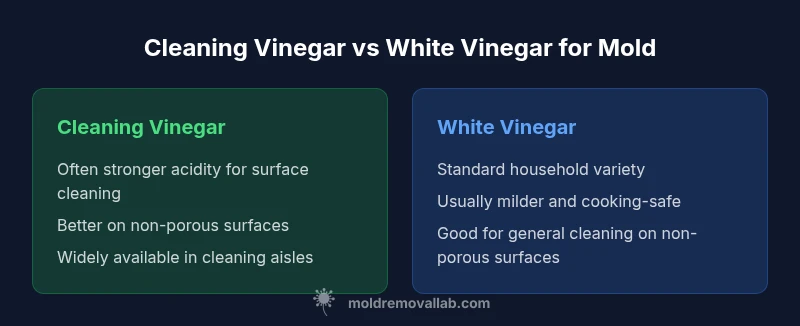
From a chemical perspective, vinegar relies on acetic acid to disrupt mold cell walls and loosen surface bonds. Cleaning vinegar is typically positioned as a stronger household cleaner and is often marketed with a higher acidity than standard white vinegar. White vinegar, while milder, remains a familiar, inexpensive option for basic cleaning tasks. According to Mold Removal Lab, the relative acidity can influence surface interaction and cleaning ease, especially on non-porous materials. Understanding this helps homeowners ask the right questions about what surface you’re treating and what counts as a “clean” result. The key takeaway is that the chemistry matters, but it is only part of the story; how you apply the solution, the surface involved, and ventilation all shape the outcome. The Mold Removal Lab Team emphasizes that while vinegar can slow mold growth on certain surfaces, it is not a universal disinfectant or a stand-alone remediation solution.
Surface Compatibility and Mold Location
The material you’re cleaning drives the suitability of cleaning vinegar vs white vinegar for mold. Non-porous surfaces like tile, glass, porcelain, and sealed metal respond more predictably to vinegar cleaning, because mold growth is generally superficial and easier to wipe away. On porous substrates – think drywall, untreated wood, or fabric – mold can penetrate deeper. In these cases, vinegar may remove surface staining and reduce visible colonies but is unlikely to eradicate embedded spores. The Mold Removal Lab Analysis, 2026, notes that efficacy decreases as porosity increases and recommends a more aggressive remediation approach for porous materials. Always test a small, inconspicuous area first and be prepared for conditioning or replacement if the substrate is degraded by moisture.
How Effective Are Vinegars Against Mold on Common Materials
When evaluating cleaning vinegar vs white vinegar for mold on common materials, the strength of the solution matters. Cleaning vinegar is commonly marketed for household cleaning and tends to have a stronger label than standard white vinegar, which can translate into faster surface cleaning on non-porous surfaces. However, the mold-remediation reality is nuanced: neither vinegar guarantees complete mold eradication on porous materials, and neither should substitute for professional remediation in larger infestations. Surface condition, mold type, and moisture history all play a role. In practice, many homeowners use vinegar for small, isolated spots on bathroom tiles or glass, while recognizing its limitations on drywall or wood. The goal is to reduce visible growth and odors, not to claim a full mold cure.
Safety and Ventilation Considerations
Vinegar fumes can be irritating to the nose and throat, and strong scents may persist after cleaning. Always use vinegar products in a well-ventilated area—open windows, run a fan, and consider PPE such as gloves and eye protection for higher exposure. Never mix vinegar with bleach or hydrogen peroxide, as chemical reactions can release harmful gases. The safety framework for using cleaning vinegar vs white vinegar for mold centers on reducing exposure, avoiding surface damage, and steering clear of mixtures that could create new hazards. If you notice persistent symptoms like headaches, dizziness, or coughing after a cleaning session, stop the work and reassess.
Cleaning Methods: Step-by-Step with Vinegar Solutions
Begin with a dry wipe to remove loose spores from the surface. Apply cleaning vinegar (stronger formulation) or white vinegar to the area with a spray bottle or cloth, ensuring complete coverage. Let the surface sit for several minutes to allow contact time, then scrub with a non-abrasive brush or sponge and rinse with clean water. Dry thoroughly; moisture control is essential to prevent re-growth. For porous materials, repeat in cycles and consider replacing affected panels if mold remains evident after multiple attempts. Remember: goal and expectations should be surface cleaning rather than total mold removal on porous substrates.
When Vinegar Falls Short: Signs You Need Professional Remediation
If mold covers a large area (typically more than a square foot on porous material), or if moisture sources cannot be controlled, professional remediation is advised. Signs that DIY vinegar cleaning is insufficient include persistent musty odors, visible growth returning within days, or health symptoms linked to indoor air quality. In these scenarios, a licensed mold remediation professional can assess moisture control, perform containment, and address the root cause rather than merely treating the symptom. Mold Removal Lab recommends erring on the side of caution when growth is extensive or repeated.
Alternatives and Supplements: Other Common Options
Vinegar can be part of a broader mold-management plan, but most cases benefit from additional strategies. Hydrogen peroxide can be effective on non-porous surfaces when used correctly, while baking soda can help control odors and moisture. For many homeowners, a combination of cleaning vinegar for accessible spots, thorough drying, and improved ventilation delivers reasonable results for light mold. However, avoid overreliance on any single agent for sustained mold control, especially on porous substrates. Always follow product labels and consider consulting a professional for larger or persistent issues.
Practical Real-World Scenarios: DIY vs Pro Remediation
In small, clean bathroom tiles or kitchen surfaces with no visible moisture source, cleaning vinegar vs white vinegar for mold can be appropriate for maintenance cleaning. For consistent humidity, poor ventilation, or mold on drywall, DIY cleaning is insufficient and may delay necessary professional remediation. In such cases, document moisture patterns, fix leaks, and engage a mold remediation specialist to safeguard indoor air quality and structural integrity. The takeaway is pragmatic: use vinegar as a first aid for minor spots, and escalate when the problem exceeds simple surface cleaning.
Best Practices and Common Mistakes to Avoid
Do not mix vinegar with bleach or peroxide. Always test on an inconspicuous area first, especially on painted surfaces or porous materials that may discolor. Use cleaners in a well-ventilated space and pursue thorough drying after cleaning to minimize regrowth. Common mistakes include overestimating vinegar’s disinfectant power, neglecting moisture sources, and assuming surface cleaning equates to remediation. The most reliable mold strategy remains moisture control, proper ventilation, and professional guidance for significant infestations. The goal is to reduce visible growth and odor while continuing to monitor for recurring moisture issues.
Comparison
| Feature | Cleaning vinegar | White vinegar |
|---|---|---|
| Acid strength (relative) | slightly stronger acidity in cleaning vinegar | standard acidity in white vinegar |
| Primary uses | surface cleaning and light disinfection on non-porous surfaces | general cleaning and cooking-safe uses |
| Mold remediation suitability | better on non-porous surfaces, limited on porous materials | less potent, more limited on porous materials |
| Residue and odor | more pronounced odor, easy to rinse | weaker odor, may leave mild scent |
| Availability and cost | widely available in cleaning aisles | widely available in grocery aisles |
Upsides
- Non-toxic and inexpensive
- Widely available in cleaning aisles and households
- Easy to apply with simple steps
- Less harsh on many surfaces than stronger disinfectants
The Bad
- Limited effectiveness on porous materials
- Vinegar odor can linger after use
- Not a replacement for professional remediation in significant mold problems
- Potential for surface discoloration on sensitive materials
Vinegar is a supportive tool for light, surface-level mold cleanup, not a universal solution.
Use cleaning vinegar for non-porous surfaces and small spots, with plenty of ventilation. For larger areas or porous materials, seek professional remediation and address moisture sources to prevent recurrence.
FAQ
Is cleaning vinegar more effective than white vinegar for killing mold?
Both vinegars can reduce surface mold in some cases, but neither guarantees complete elimination, especially on porous materials. Cleaning vinegar is often perceived as stronger, yet real-world results depend on surface type and moisture control. For significant mold, professional remediation remains the safer path.
Both vinegars may help with surface mold, but neither is a complete solution. For larger problems, call a pro.
Can I use vinegar to clean mold on drywall?
Vinegar can target surface mold on drywall, but porous drywall is prone to harboring mold below the surface. If mold has penetrated deeply or moisture is ongoing, professional assessment is advised. Always test a small area first and consider moisture control measures.
Vinegar can clean surface mold on drywall, but it may not reach deep growth. If mold keeps coming back, get expert help.
Does vinegar disinfect mold like household bleach?
Vinegar is not a broad-spectrum disinfectant like bleach. It can reduce visible mold on some surfaces but does not guarantee complete disinfection or deep mold removal. For persistent or widespread growth, use professional remediation and moisture control measures.
Vinegar isn’t a substitute for stronger disinfectants; it helps with surface cleanup but not complete disinfection.
Should I mix vinegar with hydrogen peroxide for mold cleanup?
Mixing vinegar with hydrogen peroxide creates a chemical reaction that can produce gases and is not recommended. Use each product separately with proper ventilation and never combine them in the same container. For dual-use strategies, apply one, rinse, dry, and then apply the other after an interval.
Don’t mix cleaners. Use them separately with ventilation and rinse between applications.
How long should I wait after applying vinegar to check results?
Apply the solution, allow contact time for several minutes, scrub as needed, and rinse. Repeat as necessary over multiple days if surface conditions improve but mold returns. Ongoing moisture control is essential to lasting results.
Give the vinegar time to work, then scrub, rinse, and dry. Watch for recurrence over time.
When should I call a professional for mold remediation?
Call a professional when mold covers a large area, recurs after cleaning, or moisture sources cannot be controlled. A pro can assess containment, moisture management, and structural impact to prevent future growth and protect indoor air quality.
If mold is widespread or keeps returning, get a mold remediation expert.
The Essentials
- Assess surface porosity before cleaning
- Choose cleaning vinegar for non-porous surfaces when cleaning
- Do not rely on vinegar for comprehensive mold remediation
- Ventilate and wear PPE during cleaning
- Test a small area first and monitor for recurrence