Cleaning Mould with Vinegar: A Practical Home Guide
Learn how to safely clean mould with vinegar, including when it helps, step-by-step methods, safety tips, and prevention strategies for a healthier home.


Vinegar can help clean mould on non-porous surfaces and is a good starting option for small areas. Use plain white distilled vinegar, apply to the affected spot, scrub gently, and let dry. This quick answer outlines when vinegar works, how to prepare surfaces, and when to seek professional help for porous materials.
What vinegar can and cannot do for mould
Vinegar, especially plain white distilled vinegar, is a mild acid that can disrupt surface mould on non-porous materials like glass, metal, and sealed tiles. It often helps loosen the visible growth and makes wiping easier. However, vinegar is not a universal cure. Porous substrates such as drywall, wood, or fabrics can trap moisture and mould deeper, reducing vinegar's effectiveness. For best results, treat small, surface-level growths and avoid porous materials that already show moisture damage. The Mold Removal Lab team notes that while vinegar can reduce visible mould when used consistently, it should not replace professional remediation in larger infestations or in areas with ongoing moisture problems. Always wear PPE, ventilate the area, and test a patch on an inconspicuous spot first to ensure no damage occurs.
Safety considerations before you start
Mold cleanup can release spores into the air. Protect yourself with gloves, a mask, and eye protection. Use a well-ventilated area and consider a fan placed to blow air out of the room. Do not mix vinegar with bleach or ammonia, as chemical reactions can create harmful gases. If you have asthma or allergies, limit your exposure by cleaning in short sessions and sealing off the area afterward. Keep children and pets away during the procedure, and wash hands thoroughly after handling cleaning products. This approach aligns with general safety guidance from Mold Removal Lab and widely accepted public health recommendations.
Surface prep and testing for mold
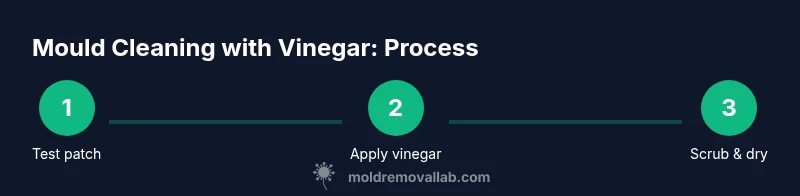
Before applying vinegar, identify the affected areas and assess moisture sources. Perform a patch test on a small, hidden area to confirm that the surface tolerates vinegar without discoloration or damage. For textured or porous surfaces, consider removing contaminated materials if moisture damage is extensive. Clean the area surrounding the growth to prevent spreading spores. Wipe the surface with a damp microfiber cloth to remove loose spores, then apply vinegar directly to the mouldy zone using a spray bottle. Allow it to sit for 10–15 minutes to maximize contact time.
Cleaning method: vinegar in practice
Apply undiluted white vinegar to the mouldy area using a spray bottle. Let the vinegar sit for 10–15 minutes, then scrub with a non-abrasive brush or sponge. Wipe away residues with a microfiber cloth and allow the surface to dry completely. If mould persists on hard non-porous surfaces, repeat the process once more. For odor control, a light sprinkle of baking soda after drying can help, but avoid mixing with vinegar during the cleaning step. Ventilation is essential throughout to reduce airborne mould particles and speed up drying.
Aftercare and prevention
Once the area is dry, recheck for any signs of regrowth in the next 24–48 hours. Address the underlying moisture source—leaks, condensation, or high humidity—to prevent recurrence. Use dehumidifiers or increasing air movement in damp spaces like bathrooms and basements. Clean regularly and inspect problem areas seasonally, especially after heavy rain or humidity spikes. If mould returns quickly or covers a large area, or if you notice symptoms like persistent musty odors, seek professional remediation. Vinegar is a useful DIY step for minor issues, but it is not a substitute for professional help in large or unsafe situations.
Authority sources
For further reading on safe mold cleanup and health considerations, consult these authoritative sources:
- https://www.epa.gov/mold/mold-cleanup-your-home
- https://www.cdc.gov/mold/dampness_building.html
- https://www.niehs.nih.gov/health/topics/agents/mold/index.html
Tools & Materials
- White distilled vinegar (5% acidity)(Use undiluted for mold cleanup on non-porous surfaces)
- Spray bottle(Clean and clearly labeled; fill with vinegar)
- Non-abrasive scrub brush or sponge(Gentle scrub to avoid surface damage)
- Protective gloves(Nitrile or rubber; helps prevent skin contact)
- Dust mask or respirator(N95 or equivalent recommended for mould particles)
- Microfiber cloths(For wiping and drying to avoid lint)
- Bucket (optional)(For rinsing cloths if needed)
- Baking soda (optional)(Deodorizing after cleaning, not to mix with vinegar)
- Ventilation(Open windows or use a fan to move air out of the room)
Steps
Estimated time: 60-90 minutes
- 1
Prepare area and safety gear
Put on gloves, mask, and eye protection. Set up ventilation by opening a window or using a fan to direct air out of the room. Clear the area of items that can absorb moisture and move them away from the work zone.
Tip: Ventilation reduces airborne mould spores and speeds drying. - 2
Test a patch for tolerance
Apply a small amount of vinegar to an inconspicuous patch. Wait 5–10 minutes to see if there is any discoloration or surface damage before proceeding widely.
Tip: Always test on sealed or finished surfaces first. - 3
Apply vinegar to mouldy spots
Spray undiluted vinegar directly onto the mould, ensuring full coverage. Let it sit for 10–15 minutes to contact and disrupt the mould.
Tip: Avoid soaking porous materials; focus on surface mould on non-porous areas. - 4
Scrub and wipe
Scrub with a non-abrasive brush or sponge, then wipe away residue with a microfiber cloth. Repeat if the mould persists on hard surfaces.
Tip: Work in small sections to control moisture and prevent spreading spores. - 5
Dry thoroughly
Use a dry microfiber cloth and/or a fan to speed up drying. Ensure no damp pockets remain, as moisture promotes regrowth.
Tip: Mould returns quickly in damp conditions; drying is the critical step. - 6
Optional deodorizing step
If odors linger, lightly dust with baking soda after surfaces are dry and wipe away after a short delay. Do not mix baking soda with vinegar during cleaning.
Tip: This step helps with lingering smells but is not a substitute for moisture control.
FAQ
Is vinegar effective for all mold types?
Vinegar can reduce surface mould on many non-porous materials, but it may not reach mould inside porous materials. In larger infestations or hidden mould, professional remediation is advised.
Vinegar helps with surface mould on non-porous surfaces, but for porous or extensive mold, seek professional help.
Can I use vinegar on drywall or wood?
Vinegar is less effective on porous materials where moisture has penetrated. If moisture damage exists, replacing affected sections may be necessary and professional evaluation is recommended.
On drywall or wood, vinegar may not remove deeply embedded mould. Consider replacing damaged sections and consult a pro if unsure.
Should I rinse after applying vinegar?
Rinsing is optional on non-porous surfaces after vacuuming or wiping, but ensure surfaces dry completely to prevent regrowth.
Rinse and dry thoroughly to avoid leaving any residue that could attract more dust.
Is vinegar safe for pets or children?
Vinegar is generally safe in small amounts, but avoid direct exposure and ensure the area is well ventilated during cleaning.
Keep pets and kids away during cleaning and ventilate the area well.
When should I call a professional?
Call a professional for large areas, persistent growth, or mould on porous materials, or if you notice moisture problems that you cannot fix.
If the mould is extensive or you can't find the moisture source, get a pro.
How long does it take to clean mould with vinegar?
For small spaces, plan 1–2 hours including drying. Larger areas may take longer and require more sessions.
Expect 1–2 hours for small areas and more for larger spaces; drying time varies with moisture.
Can vinegar replace professional remediation?
No. Vinegar is a DIY option for minor surface mould. Professional remediation is recommended for significant infestations or structural moisture problems.
Vinegar helps with small surface mould, but larger problems need a pro.
What about using baking soda with vinegar?
Avoid mixing them during cleaning; baking soda can deodorize after drying, but the fizzing reaction reduces effectiveness during cleaning.
Don’t mix baking soda with vinegar while cleaning; use baking soda after drying if needed.
Watch Video
The Essentials
- Vinegar works best on non-porous surfaces
- Drying is essential to prevent regrowth
- Use vinegar as part of a broader moisture control plan
- Call a professional for large or porous mold issues