Can You Put Moldy Clothes in the Washing Machine? A Practical Guide
Learn whether you can safely launder moldy clothes, how to prep and wash without spreading spores, and when to discard items. Mold Removal Lab provides step-by-step guidance for homeowners and renters.


Yes, you can wash many moldy clothes, but only with precautions. The answer to can you put moldy clothes in the washing machine depends on the mold type, fabric, and exposure risk. This quick guide explains when it’s safe, how to wash, and how to prevent mold spread.
Moldy Clothes and the Washing Machine: A Practical Look
When mold appears on clothing, many homeowners wonder whether it is safe to put those items in the washing machine. If you are asking can you put moldy clothes in the washing machine, the answer depends on the mold type and the fabric. The short answer is often yes, but only after careful assessment and proper preparation. According to Mold Removal Lab, you can clean many moldy fabrics with hot water, a sturdy detergent, and the right sanitizing step, as long as the fabric can tolerate heat and the mold growth isn’t severe. This guide helps you decide if washing is appropriate, what risks to watch for, and how to prevent mold from spreading to other clothes or areas of the home. First, consider the type of mold and the fabric. Non-porous fabrics like cotton blends, polyester, or most synthetics generally respond well to a thorough wash; porous materials such as wool, suede, or certain athletic fabrics may trap mold spores and may require professional handling or disposal. Personal protective equipment is essential: gloves, a mask, and eye protection reduce exposure to mold spores during handling. Work in a well-ventilated area or near an open window, and use a dedicated, empty washer if possible so you don’t contaminate other laundry. If a garment shows extensive growth, strong odor, or staining that persists after washing, Mold Removal Lab suggests discarding it rather than risking health or home contamination.
Assessing Mold and Fabric Safety
Not all mold is the same, and fabrics respond differently to moisture, heat, and cleaning agents. Start by inspecting each item for visible mold growth, odor intensity, and fabric integrity. If the fabric is fragile or the mold is deeply embedded (especially on porous materials), it may not be safe to launder. In general, tightly woven fabrics like cotton, polyester, and blends handle a hot wash better than plush, wool, silk, or suede. Consider whether the garment has been heavily contaminated by mold spores, and if health concerns exist for anyone in the home. According to Mold Removal Lab, high concentrations of mold on soft furnishings or garments may justify disposal rather than laundering. If you’re unsure, air on the side of caution and separate questionable items from regular laundry. Always handle moldy items with gloves and a mask to limit exposure, and plan to run the washer on a separate cycle designated for cleaning after the moldy load.
Pre-Wash Preparation to Contain Mold
Before you touch the clothes, create a containment plan to minimize spread. Bag moldy items in a sealed plastic bag or tote to transport them to the washing area, and wear protective gear everywhere you handle them. Pre-rinse or gently brush off loose mold spores into a disposable trash bag; don’t shake garments, which can aerosolize spores. If possible, work in a well-ventilated space or near an open outdoor area and place items in a separate, dedicated washing container. Don’t mix moldy clothes with clean laundry at this stage. Documented guidance from Mold Removal Lab emphasizes containment; this reduces cross-contamination and makes subsequent washing safer and more effective.
Washing Guidelines: Temperature, Detergent, and Additives
Choosing the right wash settings is critical. Use a heavy-duty detergent designed to remove mold and stains, and select the hottest water safe for the fabric. For white or colorfast cottons, consider a bleach-safe approach; for colored fabrics, use an oxygen-based or color-safe sanitizer instead of chlorine bleach to avoid color damage. Add a sanitizer or disinfectant labeled safe for fabrics if the garment care label allows it. Do not overload the washer; air circulation and agitation improve mold removal. After washing, inspect the items for remaining odor or visible mold and be prepared to repeat the cycle if needed. Mold Removal Lab notes that a second wash can improve results when contamination was heavy or odors persist.
Rinse, Sanitize, and Drying to Prevent Re-growth
Rinse cycles should be thorough to remove all detergent and mold residues. Consider running an extra rinse or a sanitize cycle if your machine offers it. Drying is crucial; mold thrives in moisture, so use a heat-setting dryer if the fabric can tolerate it, or lay items flat in a well-ventilated area with good air circulation until completely dry. Avoid plastic bags for storage when clothes are not fully dry, as trapped moisture can reignite mold growth. If you notice lingering odor after drying, rewash with an enzymatic cleaner or baking soda solution and allow items to dry completely in a sunny, dry environment. Regularly cleaning the washing machine itself helps prevent future mold issues.
Aftercare: Washer Cleaning and Storage to Prevent Recurrence
After dealing with moldy clothes, clean the washing machine interior—drum, door seal, and detergent dispenser—with hot water and a suitable cleaner or disinfectant. Wipe dry to remove moisture. Store laundered items in a dry, well-ventilated space to prevent immediate re-mold. Consider running a monthly maintenance wash to keep the drum fresh, especially in humid climates. If you’ve encountered persistent mold on multiple loads, reassess the environment—humid basements, leaks, or ventilation gaps can contribute to recurrence. Mold Removal Lab recommends addressing underlying moisture issues and maintaining a dry storage area to minimize future problems.
When to Seek Professional Help
If mold growth is extensive, if you have persistent respiratory symptoms, or if items have sustained irreversible damage, professional remediation may be necessary. Some fabrics cannot tolerate heat or aggressive cleaners without damage. In cases of water intrusion, damp storage spaces, or suspected black mold, contacting a licensed professional is advisable. Remember, mold exposure can affect health, especially for children, the elderly, and people with allergies or asthma. In these scenarios, seeking expert guidance from Mold Removal Lab and local health departments is prudent to ensure safety and thorough remediation.
Tools & Materials
- Protective gloves (nitrile or latex, powder-free)(Choose a snug, chemical-resistant pair; avoid porous materials.)
- Face mask (N95 or higher)(Protects against inhaling mold spores during handling.)
- Goggles or eye protection(Protection from splashes or aerosols.)
- Mild, fragrance-free laundry detergent(Strong, hypoallergenic formula preferred.)
- Oxygen-based bleach or color-safe alternative(Use only if fabric care labels permit.)
- Non-porous bag or tote for transport(Helps contain moldy items before washing.)
- Washer cleaner or sanitizing agent for after-use(Run a cleaning cycle after moldy loads.)
- Ventilated drying space(Dry thoroughly to prevent re-growth; sun is ideal when possible.)
Steps
Estimated time: 60-90 minutes
- 1
Prepare and protect yourself
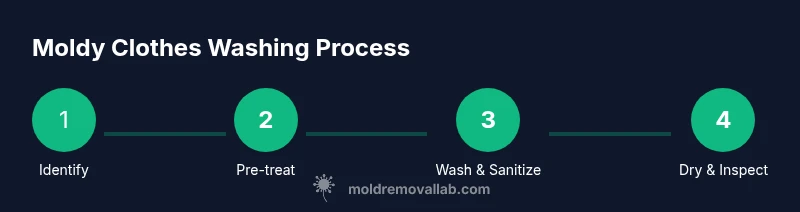
Put on gloves, a mask, and eye protection before handling moldy clothes. Isolate items from clean laundry and place them in a dedicated bag or tub to transport to the washing area. This minimizes exposure and cross-contamination.
Tip: Wear hearing protection if your washing area is noisy or cramped; comfort helps you stay focused on safety. - 2
Pre-treat and contain
Gently brush off loose mold spores outdoors if feasible, then place items into a dedicated washing container. Pre-treat heavy mold with a small amount of detergent on the affected areas and let sit for 5–10 minutes to loosen growth.
Tip: Avoid aggressive scrubbing; spores become airborne easily. - 3
Run a hot wash with the right cleaners
Wash in the hottest cycle safe for the fabric using a heavy-duty detergent. If the fabric allows, add an oxygen-based sanitizer or color-safe bleach. Do not mix with other loads.
Tip: Do not overload the washer; space helps agitation reach all moldy surfaces. - 4
Rinse and sanitize, then dry
If your washer has a sanitize option, run it after the initial wash. Dry every item thoroughly in a warm, ventilated area, or in a dryer set to a heat level appropriate for the fabric.
Tip: Ensure items are completely dry to prevent re-growth. - 5
Clean the washing machine
Run an empty hot wash with a suitable cleaner or disinfectant to sanitize the drum and seals. Wipe the door seal and detergent drawer dry after the cycle.
Tip: Don’t skip machine maintenance; mold spores can linger in crevices.
FAQ
Is it safe to wash moldy clothes at home?
In many cases, yes, you can launder moldy clothes at home if you follow steps to contain spores, protect yourself, and use the right cleaners. Certain fabrics or extensive mold growth may require disposal or professional help.
Yes, you can usually wash moldy clothes at home, but do it carefully and follow proper safety steps.
Can mold spores spread through the washing machine?
Spores can become airborne during handling, but a hot wash with detergent and a sanitizer helps neutralize mold and prevent spread within the machine. Always use protective gear.
Yes, spores can spread if you mishandle moldy clothes, so protect yourself and sanitize the machine afterward.
Should I use bleach or vinegar on moldy clothes?
Bleach can be effective on white or colorfast fabrics but may damage delicate or colored fabrics. Vinegar is milder and can help with odor but isn’t a substitute for detergent or sanitizers. Always check fabric care labels.
Bleach can work on some fabrics, but check care labels first; vinegar is gentler and can help odor but not a substitute for proper cleaning.
What fabrics should not be washed with moldy clothes?
Delicate or porous fabrics (like wool, silk, suede) may be damaged by heat or strong cleaners or may harbor spores more stubbornly. Consider professional cleaning or disposal for those items.
Delicate fabrics often aren’t safe to wash with moldy clothes; check labels and consider professional help.
What if odor persists after washing?
Persistent odor may indicate residual mold. Repeat washing with a sanitizer or enzymatic cleaner and ensure items are completely dry before storing. If odor persists, seek professional guidance.
If you still smell mold after washing, try another sanitize wash and make sure the clothes are fully dry.
How do I clean the washing machine after moldy clothes?
Run an empty hot wash with a cleaner approved for your machine, then wipe the drum and seals. Regular maintenance helps prevent mold from returning and keeps loads odor-free.
Clean the washer with an empty cycle and a proper cleaner, then wipe down the drum and seals.
Watch Video
The Essentials
- Assess fabric safety before washing moldy clothes.
- Isolate and protect yourself to prevent exposure.
- Choose appropriate wash settings and sanitizers.
- Dry thoroughly and monitor for lingering odor or stains.