Will Mold Come Out of Clothes? A Practical Guide for Home
Learn if mold can come out of clothes and how to safely treat moldy fabrics. This practical guide from Mold Removal Lab covers testing, fabric-safe cleaning methods, and prevention tips for laundry and textiles.


By following careful fabric-specific steps, you can determine whether will mold come out of clothes and how to treat moldy fabrics safely. This guide explains how to spot contamination, what to wash with (and what to avoid), and how to dry fabrics thoroughly to prevent re-growth. It also covers when to seek professional help for persistent mold.
Understanding the risk: can mold transfer to clothing?
Mold growth in the home doesn't stay on surfaces alone; damp fabrics can harbor spores that spread when touched, worn, or laundered. The phrase will mold come out of clothes is common, but the answer depends on the species of mold, the amount of moisture, and the fabric type. According to Mold Removal Lab, fabrics with persistent moisture are at higher risk, and early action greatly improves outcomes. If you notice a musty odor on clothes, staining, or fuzzy growth, treat the item as mold-affected and isolate it from other laundry until you determine the safest cleaning approach. Do not mix moldy garments with clean clothes in the same load, and wear protective gloves when handling suspect items. In sheltered conditions, mold on textiles can be removed with proper cleaning, but some textiles may be permanently damaged or carry spores that resist washing. This is why the initial assessment matters; if a stain seems embedded beyond surface visibility, or the item is valuable, seek guidance from Mold Removal Lab before proceeding.
How mold contamination happens on fabrics
Fabric contamination is usually driven by moisture, warmth, and time. Damp laundry baskets, humid closets, and overstuffed hampers create microclimates where spores settle into fibers. Mold can begin on the surface as visible spots or remain hidden beneath fibers, waiting for the next wash or wear to trigger growth. Based on Mold Removal Lab analysis, mold often takes hold when fabrics stay damp after washing, are stored in poorly ventilated areas, or come into contact with contaminated surfaces. Even white or light-colored fabrics may show discoloration once active growth begins. The key is to limit moisture exposure and handle suspect textiles with care: place them in a leak-proof bag until they’re washed, and avoid partially drying items that sit in a warm environment.
A practical, fabric-aware cleaning approach
Not all mold on clothing responds to the same treatment; depend on fabric type, colorfastness, and the extent of contamination. Start with a thorough inspection to decide whether you can salvage the item. Then follow a fabric-aware cleaning sequence: use a mold-killing detergent or enzyme cleaner, pre-treat spots, and select a washing cycle appropriate for the fabric. Always test a hidden seam for colorfastness before full laundering. Ensure you use proper PPE and work in a well-ventilated area to reduce inhalation risk. After washing, inspect for residual odor or staining. If mold returns, repeat a gentler approach or consider professional input from Mold Removal Lab for stubborn cases.
Drying thoroughly and storing properly
After washing, drying is the critical step: moisture left in fibers invites regrowth. Air-dry fabrics in sunlight when possible, or use a dryer on the appropriate setting for the fabric type. Do not fold or store items until completely dry, and keep the laundry area ventilated to prevent lingering humidity. Once dry, store cleaned items in a dry, breathable space away from damp basements or closets with poor airflow. If a musty smell persists, repeat the washing with an added rinse or consider a fabric-safe deodorizer. Mold can hide in washers and hampers, so you may also want to wipe down these areas regularly as part of maintenance.
When to call professionals
If you notice persistent odor, visible colonies, or staining that reappears after washing, it may indicate deeper contamination. The Mold Removal Lab team recommends consulting a professional for cases where mold has penetrated fabrics or surfaces beyond normal laundering capability. For high-value items or fabrics that resist cleaning, professional remediation can prevent ongoing exposure and further damage. In homes with widespread dampness, addressing the moisture source is essential alongside any cleaning.
Prevention tips for laundry and fabrics
Prevention is the best defense: control humidity, improve ventilation in laundry rooms, and promptly dry and launder damp items. Use the lowest effective heat setting compatible with colorfast fabrics and avoid leaving towels or clothes damp in laundry hampers. Regularly clean washing machine seals and drawers, and run a cleaning cycle with hot water and detergent if your machine accumulates odors. Finally, inspect storage areas for moisture intrusion and consider moisture-absorbing products in closets or basements to keep fabrics dry.
Tools & Materials
- Mold-killing laundry detergent or enzyme cleaner(Choose fragrance-free and color-safe if fabrics are delicate)
- White vinegar (optional)(Test on a small area first)
- Hydrogen peroxide (3%)(Use only on colorfast fabrics)
- Baking soda (optional)(For odor and stain help)
- Protective gloves (nitrile or rubber)(Protect skin from mold exposure)
- Stain-removal spray or pre-soak solution(Use before washing if needed)
Steps
Estimated time: 30-60 minutes active, plus drying time
- 1
Identify mold-affected clothing
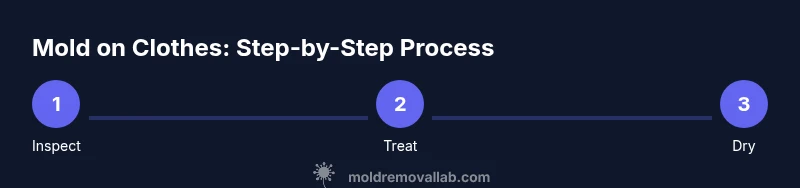
Begin with a careful visual check for visible growth, staining, and a musty odor. Isolate suspected items to prevent cross-contamination. If in doubt, wear protective gloves and handle them by the inner seams rather than the outer fabrics to minimize contact.
Tip: Take clear photos of the stains before cleaning to monitor changes. - 2
Pre-treat spots and spores
Apply a mold-killing detergent or enzyme cleaner to affected areas and allow it to sit briefly if the fabric label allows. Gently rub the solution into the fibers with a soft brush or cloth, avoiding aggressive scrubbing that can damage delicate fabrics.
Tip: Test on a hidden area first to confirm colorfastness. - 3
Wash with fabric-appropriate settings
Wash the item on the hottest cycle permitted by the care label using the recommended detergent. If safe for the fabric, consider an extra rinse to remove residual spores. Do not overload the washer, which can prevent effective cleaning.
Tip: Add an extra rinse for better removal of detergent and spores. - 4
Dry thoroughly
Dry the item completely in a well-ventilated area, preferably in sunlight for natural disinfection when weather allows. If using a dryer, select the correct heat setting for the fabric and ensure the item is fully dry before storage.
Tip: Do not store damp garments; moisture feeds mold growth. - 5
Inspect again and rewash if needed
After drying, recheck for odor and any remaining spots. If mold signs persist, rewash using a milder approach or a fresh batch of cleaner. Avoid repeatedly scrubbing, which can wear out fibers.
Tip: Persistent odor after washing may indicate deeper contamination; consider a professional opinion. - 6
Sanitize the washing area
Run an empty hot wash with detergent to sanitize the machine. Wipe down seals and drawers, and leave the door or lid open to air-dry. This reduces cross-contamination for future loads.
Tip: Regular washer maintenance helps prevent mold transfers to clothes.
FAQ
Can mold on clothes be cleaned at home?
In many cases, mold on clothes can be cleaned at home using fabric-safe cleaners and thorough drying. If the mold persists after washing, or if fabrics are delicate or valuable, consult a professional.
Yes, you can often clean mold on clothes at home with proper cleaners and drying. If mold keeps coming back, seek professional help.
Should I throw away clothes with mold?
If mold returns after washing or the fabric is structurally compromised, it’s safer to discard. Light contamination on sturdy fabrics may be salvageable with careful cleaning.
If mold keeps returning or the fabric is damaged, consider discarding. Light cases on sturdy fabrics can be salvaged with care.
What fabrics are most at risk?
Natural fibers like cotton and wool are more vulnerable in damp conditions. Synthetics may resist mold growth but should still be dried promptly to avoid odor and lingering spores.
Natural fibers are more prone to mold when damp; synthetics can still harbor spores if not dried properly.
Can bleach help remove mold from clothes?
Bleach can be effective on white or colorfast cotton but can damage colored fabrics and some materials. Always test a hidden area first and follow label directions.
Bleach can damage some fabrics; test a hidden area first and follow care labels.
How can I prevent mold in laundry rooms?
Control humidity, ensure proper ventilation, wash and dry clothes promptly, and regularly clean washer seals. Keeping surfaces dry reduces mold risk.
Keep humidity down, ventilate, wash and dry promptly, and clean the machine seals regularly.
Watch Video
The Essentials
- Assess mold presence before cleaning.
- Use fabric-safe cleaners aligned with the care label.
- Dry fabrics completely to prevent regrowth.
- If mold persists, seek professional remediation.