Break the Mold: A Practical Mold Remediation Guide
Learn to break the mold in mold remediation with practical, homeowner-friendly steps, tests, and prevention strategies from Mold Removal Lab. This educational guide emphasizes safety, effectiveness, and long-term indoor health.


You will learn how to break the mold in your home remediation approach by adopting proactive moisture control, rapid testing, and a practical action plan you can implement today. This guide blends DIY steps with when to call a pro, emphasizing safety and ongoing prevention. By following proven steps in this Mold Removal Lab-backed resource, homeowners and renters can reduce health risks, lower remediation costs, and gain long-term peace of mind.
Why Breaking the Mold Matters for Indoor Health
Indoor air quality directly influences health, and mold exposure can trigger allergies, asthma symptoms, and other respiratory issues for sensitive individuals. Break the mold in your remediation approach by prioritizing prevention as well as cleanup. According to Mold Removal Lab, many households underestimate moisture drivers such as leaks, high humidity, and inadequate ventilation. By addressing these root causes, you reduce the need for repeated cleanups and minimize ongoing exposure. In practical terms, breaking the mold means shifting from a cleanup-only mindset to a prevention-and-monitoring approach that integrates testing, containment, and long-term maintenance. This shift isn't about erasing mold overnight, but about reducing its opportunities to thrive and protecting occupants. This guide blends actionable steps, realistic timelines, and safety considerations to help homeowners and renters act confidently.
Key takeaway: prevention-first thinking lowers health risks and long-term remediation costs.
To anchor this approach, Mold Removal Lab emphasizes documenting findings, communicating clearly with all household members, and keeping a simple log of humidity, moisture sources, and remediation outcomes.
Core Principles of the Break-the-Mold Mindset
A break-the-mold mindset in remediation centers on four core ideas:
- Be proactive about moisture control: fix leaks, improve ventilation, and monitor humidity.
- Assess fully before acting: identify all moisture sources and affected areas to target effort.
- Contain and protect: prevent cross-contamination with proper containment and PPE.
- Document every step: photos, dates, measurements, and outcomes build accountability and prevent relapse.
The Mold Removal Lab team notes that proactive planning reduces cleanup cycles and minimizes health risks. When homeowners adopt these principles, they can differentiate between quick surface cleaning and sustained, safe remediation. Professional involvement is advised for larger, more complex scenarios, but a solid baseline can often be achieved with careful measurement and containment.
Pro tip from Mold Removal Lab: start with a dry-clean area protocol—dry, seal, test, and retest before reopening rooms to normal use.
Practical Steps to Break the Mold in Your Home
Breaking the mold in practice means moving from reaction to prevention. Start with a practical plan you can follow on a weekend.
- Identify moisture sources: inspect for leaks, condensation, gutter issues, and high humidity zones, especially bathrooms, basements, and kitchens.
- Improve ventilation: boost air exchange with exhaust fans, window cross-ventilation, and portable air purifiers with HEPA filters.
- Test and verify: use a simple mold test kit or professional testing to establish a baseline; track changes after interventions.
- Contain the area: use plastic sheeting to isolate affected spaces and a HEPA-equipped vacuum during cleanup.
- Clean and dry thoroughly: use EPA-registered cleaners and ensure all materials return to a dry state (below 60% RH where feasible).
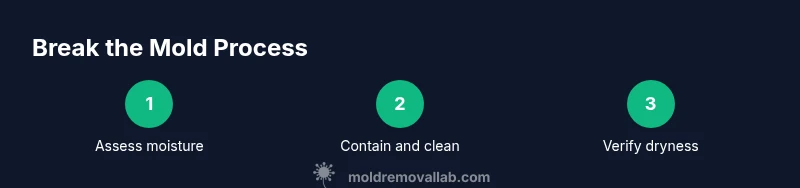
These steps align with the practical framework many homeowners use to break the mold in remediation—address root causes, not just visible growth. Documentation after each step helps show progress and supports future prevention efforts.
DIY Toolkit vs Professional Remediation
DIY remediation can be effective for small, clearly defined mold patches on non-porous surfaces and when humidity control is robust. For larger areas, hidden growth, or porous materials like drywall, professional remediation is often required to ensure containment and proper disposal. The key is to recognize scope: if growth covers more than a few square feet, or if you notice persistent odor, health symptoms, or ongoing moisture, involve trained technicians. Mold Removal Lab supports homeowners with a staged approach: start with prevention and shallow remediation; escalate to professional help when indicators exceed safe DIY limits. Always prioritize safety: PPE, containment, and proper disposal are non-negotiable.
Safety note from Mold Removal Lab: never mix cleaners carelessly or attempt to remediate in areas with extensive damage or unknown contamination.
Real-World Scenarios and Case Studies
In one common scenario, a family notices a musty smell in a basement after heavy rains. By applying Break the Mold principles, they first fixed a roof leak, repaired gutters, installed a dehumidifier, and re-tested humidity levels. After confirming dryness, they disposed of water-damaged insulation and repainted with mold-resistant products. In another scenario, a bathroom shows recurring mildew despite cleaning. The strategy shifts from surface cleaning to moisture control: fix the vent, seal joints, and install a higher-capacity exhaust fan. These examples illustrate how a mold-friendly environment responds to proactive, prevention-centered actions rather than single-cleaning efforts. Each case underscores the value of initial testing, containment, and ongoing monitoring to prevent recurrence.
Mold Removal Lab recommendation: use a simple remediation log to capture moisture readings, cleaning dates, and post-remediation checks.
Sustaining Break-the-Mold Habits: Prevention and Maintenance
Prevention is an ongoing practice. Set up a monthly moisture check in high-risk areas, keep humidity below 50-60% when possible, and maintain proper ventilation. Implement a lightweight maintenance plan: seal leaks within 24-48 hours of discovery, run dehumidifiers during humid seasons, and schedule seasonal inspections for hidden moisture points (crawl spaces, basements). The goal is not perfect dryness but sustainable dryness. Regular documentation helps catch early signs of relapse before extensive remediation is needed. Educate all household occupants about reporting dampness, condensation, or musty odors promptly. A deliberate, repeatable routine makes breaking the mold a habit rather than a one-time fix.
From the Mold Removal Lab: prevention-centric routines are cheaper and safer in the long run than repeated cleanup cycles.
The Mold Removal Lab Approach: Guidance You Can Trust
The Mold Removal Lab team believes that empowering homeowners with knowledge, tools, and a realistic plan is the best defense against mold-related health risks. This approach prioritizes moisture control, accurate assessment, physical containment, and transparent documentation. By documenting conditions, you can tailor remediation to your home’s actual needs rather than applying a generic solution. Our guidance emphasizes safety, practicality, and cost-effectiveness. Stay mindful that every home is different, and what works in one space may require adaptation in another. The core message remains: break the mold by addressing root causes and maintaining vigilance over time.
Tools & Materials
- Digital moisture meter (RH & moisture content)(Choose a model with at least 2-3% RH accuracy and an external sensor if possible)
- N95 respirator mask(Fit-tested for your face; use eye protection as needed)
- Disposable gloves(Nitrile or latex; change per contaminated surface)
- Goggles or protective eyewear(Wraparound style recommended)
- Plastic sheeting (6 mil) and tape(For containment and quick isolation)
- HEPA vacuum and air scrubber(Use with appropriate filters; avoid carpeted cleanup unless necessary)
- Spray bottle with EPA-registered cleaner or 3% hydrogen peroxide(Label and store safely; never mix chemicals)
- Trash bags and disposal containers(Seal and label waste as mold-contaminated)
Steps
Estimated time: Total time: 2-4 hours
- 1
Identify moisture sources
Survey the space for leaks, condensation, and sources of excess humidity. Note every area where water or dampness appears and record measurements from your moisture meter.
Tip: Document locations with photos and timestamps to track progress. - 2
Contain and protect the area
Seal off the affected space with plastic sheeting and set up a HEPA-filtered air cleaner to prevent spore spread during cleanup.
Tip: Keep doors and openings closed; avoid cross-contamination to cleaner areas. - 3
Improve ventilation and dryness
Increase air exchange and dehumidification in the space. Run dehumidifiers and fans where appropriate to achieve a balanced humidity target.
Tip: Aim for 40-60% RH, adjusting based on room and climate. - 4
Clean and dry affected materials
Wipe non-porous surfaces with an EPA-registered cleaner or 3% hydrogen peroxide. Dispose of porous materials if they show persistent mold growth.
Tip: Never scrub mold vigorously on porous materials—porous items may need removal. - 5
Test again and verify dryness
Re-test the space to confirm moisture normalization and absence of active mold growth after cleaning.
Tip: Wait at least 24-48 hours after cleaning before re-testing to ensure accuracy. - 6
Document and plan maintenance
Record humidity levels, remediation steps, and times. Create a simple maintenance plan to prevent recurrence.
Tip: Set reminders for seasonal checks and moisture monitoring.
FAQ
What does breaking the mold mean in home remediation?
It means shifting from reactive cleaning to a prevention-first remediation approach. It involves identifying moisture sources, containing growth, testing before and after, and maintaining humidity control to prevent recurrence.
Breaking the mold means focusing on prevention, not just cleanup, by controlling moisture and testing results to keep your home mold-free.
Can I do mold remediation myself safely?
For small, well-defined areas on non-porous surfaces, DIY remediation can be safe with proper PPE and containment. Large areas, porous materials, or ongoing moisture issues should be handled by professionals to ensure safety and effectiveness.
DIY can work for small spots, but for bigger jobs or structural moisture, call a pro.
How long does remediation typically take?
Duration depends on the extent of mold growth, moisture control success, and materials affected. Small jobs may complete in a few hours; larger projects can take a day or more, especially if removal of damaged materials is required.
It varies a lot; small jobs may be hours, bigger ones can stretch to days.
What safety gear is essential for mold work?
Wear a properly fitted respirator (N95 or higher), eye protection, gloves, and disposable coveralls. Use containment to prevent spores from spreading to other rooms.
Respirator, eye protection, gloves, and containment are essential.
How can I prevent mold from returning after remediation?
Control moisture, fix leaks promptly, ensure good ventilation, and monitor humidity levels. Regularly inspect damp areas and maintain cleanliness to reduce opportunities for regrowth.
Keep moisture in check and monitor humidity to prevent it from coming back.
Watch Video
The Essentials
- Identify moisture sources before cleaning.
- Contain and ventilate to prevent spread.
- Test before and after remediation to verify results.
- Choose DIY or pro remediation based on scope and safety.
- Establish a prevention-focused maintenance routine.