How to Handle Black Mold on Drywall Safely
Learn to identify, safely remediate, and prevent black mold on drywall with practical, step-by-step guidance from Mold Removal Lab for homeowners and renters.


You will learn how to identify black mold on drywall, assess safety risks, and execute a safe, step-by-step remediation plan. The guide covers essential PPE, containment, cleaning approaches, drying strategies, and prevention to reduce recurrence.
Understanding black mold on drywall
Black mold on drywall is typically a sign of persistent moisture and poor ventilation. It can appear as dark, splotchy patches, often growing in bathrooms, basements, kitchens, and crawl spaces where humidity or leaks occur. According to Mold Removal Lab, this mold type thrives in damp environments and requires careful remediation to protect health. It is not just a cosmetic issue; inhaling spores may irritate the eyes, skin, and airways, especially for people with allergies or asthma. The presence of black mold should trigger an immediate moisture assessment and a plan to dry the area thoroughly. Using a moisture meter and keeping humidity low are essential steps in preventing re-growth after cleaning.
For homeowners and renters, the key questions are: Is the mold limited to the surface, or has it penetrated the drywall’s porous core? Can the affected materials be cleaned and dried, or must they be removed and replaced? These decisions influence safety, cost, and how long the area will be out of use. Mold Removal Lab emphasizes that a cautious, methodical approach reduces risk and improves long-term outcomes.
Signs of mold presence and moisture problems
Visible signs include dark patches, fuzzy growth, or staining that spreads over time. Hidden moisture can exist behind walls from leaks, condensation, or plumbing issues. A musty odor is another clue that mold may be present even when patches aren’t obvious. Moisture control is central: standing water, damp drywall, or elevated indoor humidity supports ongoing growth. In many cases, the best defense is to locate and fix the moisture source first, then address the mold growth with appropriate cleaning or removal. Early action minimizes damage to structural materials and limits health risks associated with prolonged exposure.
Health risks, safety, and containment
Exposure to black mold spores can cause coughing, sneezing, throat irritation, and exacerbation of asthma symptoms in sensitive individuals. People with weakened immune systems or chronic lung conditions may experience more serious reactions. Before starting any remediation, create a containment zone: seal doors with plastic sheeting, close vents, and minimize traffic through the area. PPE is essential: an N95 respirator, gloves, goggles, and disposable coveralls protect you from inhalation and skin contact. If you smell strong mold or notice spreading growth after cleaning, pause and reassess. Mold Remediation should be approached with a plan and proper protective gear to reduce exposure.
Tools, materials, and safety basics
A prepared workspace makes remediation safer and more efficient. Gather PPE (N95 mask, goggles, gloves, disposable coveralls), cleaning agents suitable for mold on porous surfaces, plastic sheeting for containment, tape, a scrubbing brush, sponges, and a HEPA vacuum for cleanup debris. A moisture meter helps verify drying progress, and a dehumidifier maintains low humidity. Never mix cleaners that could produce hazardous gases; always follow label directions. Keep children and pets away from the work area, and ensure good cross-ventilation without spreading spores to other rooms.
DIY cleanup vs. professional remediation: when to escalate
For small, localized patches on non-porous surfaces, careful cleaning can be effective, followed by thorough drying. On porous drywall, however, spores can colonize within the material, making complete removal more reliable. If mold reappears after cleaning, or if the affected area is extensive, professional remediation is advised. Professionals have specialized equipment to contain, remove, and remediate mold safely while minimizing damage to building materials and ensuring proper air filtration. Consider your health, the size of the area, and the underlying moisture issue when deciding whether to DIY or hire a pro.
Prevention and drywall replacement considerations
After remediation, address root causes: fix leaks, improve ventilation, and control humidity (ideally below 50-60%). Use mold-resistant drywall in high-humidity areas if replacement is needed. Ensure the area is completely dry before patching or painting; moisture trapped behind paint can lead to a new mold colony. Regular checks after heavy rainfall or plumbing work help catch problems early. Ongoing maintenance—like inspecting bathrooms and basements, using exhaust fans, and keeping temperature consistent—reduces the likelihood of recurrence.
AUTHORITY SOURCES
For authoritative guidance, consult government and educational resources:
- https://www.epa.gov/mold
- https://www.cdc.gov/mold/dampness.html
- https://www.osha.gov/mold
These sources provide extensive information on mold health risks, moisture control, and safe remediation practices that complement practical, home-focused guidance from Mold Removal Lab.
Next steps and practical resources
If you’re currently dealing with black mold on drywall, start with a moisture assessment and containment plan. Document the affected area with photos, repair any leaks, and begin drying while you decide whether to DIY or bring in a professional. Maintain vigilance against moisture sources, keep humidity low, and schedule routine checks to catch issues early. Remember: early action and proper safety precautions protect health and home.
SEO-focused addendum
As you work through remediation, keep the topic of black mold on drywall in mind. Include terms like moisture control, containment, cleaning agents for mold on porous surfaces, and prevention strategies in your notes. This alignment helps with searchability and ensures the guidance remains practical for homeowners and renters seeking to resolve mold issues efficiently.
Tools & Materials
- N95 respirator(Fit-tested if possible; ensures respiratory protection.)
- Protective goggles(Clear lenses to shield eyes from spores.)
- Chemical resistant gloves(Nitrile or neoprene; avoid latex if you have sensitivities.)
- Disposable coveralls(Long-sleeve, full-body protection.)
- Plastic sheeting and tape(Create containment barrier around the work area.)
- Scrub brush and sponges(For scrubbing mold off non-porous surfaces.)
- Bucket and cleaning solution(Mild detergent or mold-specific cleaner.)
- Hydrogen peroxide 3%(Alternative cleaner for porous surfaces.)
- Vinegar (optional)(Mild alternative for non-porous patches.)
- HEPA vacuum(After cleanup, to capture residual spores.)
- Moisture meter(To confirm area is dry before patching.)
- Dehumidifier or fans(Aids in thorough drying and moisture control.)
- Trash bags(Seal contaminated materials for disposal.)
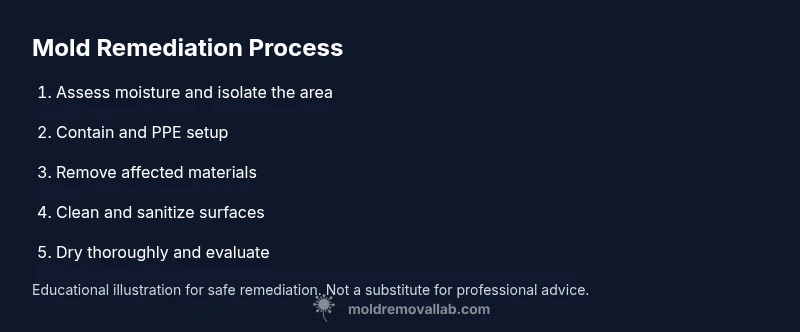
Steps
Estimated time: 3-5 days total (varies with moisture level and extent of damage)
- 1
Assess moisture and isolate area
Begin by inspecting the affected area and controlling the spread of spores. Turn off any sources of moisture if safe to do so, and seal the room with plastic sheeting to prevent cross-contamination. Document the extent of the mold with photos for your records and any professional evaluation.
Tip: Mark the boundary of contamination with tape for easy reference during cleaning. - 2
Put on PPE and establish containment
Wear an N95 respirator, gloves, goggles, and disposable coveralls. Set up containment barriers, seal doors, and cover vents to minimize airflow carrying spores to other areas.
Tip: Work from the clean side toward the contaminated area to avoid tracking mold to clean zones. - 3
Repair leaks and dry the space
Fix any leaks or moisture sources first. Use a dehumidifier and fans to reduce humidity and promote drying. A moisture meter helps verify when the area is dry enough to proceed with cleaning or drywall work.
Tip: Aim for consistent airflow to prevent damp pockets that foster mold growth. - 4
Clean mold from non-porous surfaces
If mold is on painted or non-porous surfaces, scrub with detergent solution and rinse. For stubborn spots, use diluted hydrogen peroxide or a vinegar solution, following product directions and safety guidelines.
Tip: Never mix cleaners; rinse thoroughly to remove residue that can encourage regrowth. - 5
Evaluate drywall condition and remove if needed
If the drywall shows staining or has been penetrated by mold, consider removing and replacing affected sections. Use mold-resistant drywall in replacement where feasible and ensure the area is completely dry before installation.
Tip: Dispose of moldy drywall in sealed bags to reduce contamination risk. - 6
Reinstall, seal, and monitor
Prime and repaint only after confirming the space is dry. Reinstall materials, maintain humidity control, and regularly inspect the area for signs of moisture or new mold growth.
Tip: Keep humidity below the recommended range and use exhaust fans in damp rooms.
FAQ
What causes black mold on drywall and how does it form?
Black mold on drywall typically forms where there is persistent moisture from leaks, poor ventilation, or high humidity. Correcting moisture sources is essential to stop growth, and remediation should be done with safety and containment in mind.
Black mold on drywall grows where moisture hangs around. Fix the moisture first, then remediate with care and containment.
Can I remove black mold from drywall myself?
In small, localized patches on non-porous surfaces, careful cleaning can be effective. On porous drywall, spores may be embedded; removal without professional remediation may lead to re-growth. If in doubt, consult a professional.
You can handle small areas if you follow safety steps, but larger or porous drywall areas are best handled by a pro.
Is bleach effective for drywall mold cleanup?
Bleach can kill surface mold on non-porous surfaces, but it is not always effective for porous drywall since mold can live inside the material. Hydrogen peroxide or mold-specific cleaners are often more reliable for drywall.
Bleach may not reach mold inside drywall; other cleaners or professional methods are usually better.
When should I call a professional remediation service?
Call a professional if the mold covers a large area, returns after cleaning, or if you are dealing with underlying moisture issues you cannot safely fix. A pro can contain, remove, and verify that the area is dry and safe.
If mold recurs or if it’s extensive, it’s time to involve a professional.
How can I prevent black mold from coming back?
Control moisture by fixing leaks, improving ventilation, and deploying dehumidification in damp rooms. Regular checks after rain or plumbing work help catch problems early and reduce recurrence.
Keep humidity low, fix leaks quickly, and monitor damp areas to prevent mold return.
How long does remediation typically take?
Time varies with area size and moisture levels. A small patch may resolve in a day, while larger issues can take several days to safely complete, including drying and possible drywall replacement.
It can range from a day to several days depending on the extent.
The Essentials
- Identify moisture sources before cleaning
- Use proper PPE and containment to reduce exposure
- Dry thoroughly; moisture control prevents recurrence
- Choose drywall remediation based on material penetration
- Know when to call professionals for larger areas