Are Mold and Mildew Different Types of Fungi? A Practical Guide
Explore the differences between mold and mildew, how they form, health implications, and practical remediation steps. Learn to identify whether you are dealing with are mold and mildew different types of fungi and take effective action.


Are mold and mildew different types of fungi? The quick answer is yes and no. Both are fungi, but they differ in biology, surface interaction, and risk profiles. Mold forms dense colonies on porous materials and often signals hidden moisture issues, while mildew appears as superficial, powdery growth on non-porous or mildly porous surfaces. Correctly identifying which form you’re facing guides cleaning, moisture control, and whether professional remediation is needed.
Are mold and mildew different types of fungi?
This question is common among homeowners who notice discoloration or odor and want to act quickly. The short answer is that mold and mildew are both fungi, but they differ in biology, surface interaction, and risk profiles. According to Mold Removal Lab, understanding whether you are dealing with mold or mildew is a practical first step that shapes your remediation plan, from identifying moisture sources to choosing cleaning methods and deciding when professional help is warranted. In this section we establish precise definitions and set up the decision framework that will guide the rest of the article. By the end, you’ll see why a correct initial identification matters for safety, cost, and long-term results. This discussion centers on the core question: are mold and mildew different types of fungi and how should that inform action?
The biology of mold and mildew
To understand the distinctions, it helps to review basic biology. Mold is a broad grouping of fungi that reproduce via spores and form visible colonies within a substrate, often penetrating porous materials. Mildew is not a single organism but a superficial growth pattern that belongs to the same fungal kingdom, typically presenting as lighter, powdery or fluffy patches on surfaces with sufficient moisture. Both thrive where warmth, moisture, and organic material are present, but their life cycles, structures, and ecological niches differ in meaningful ways. Recognizing these biological differences supports accurate assessment, guides sampling needs, and informs moisture-control strategies. In many homes, the question are mold and mildew different types of fungi becomes a practical question of how far the growth has penetrated surfaces and whether underlying moisture should be addressed first.
Visual cues and textures: tell them apart
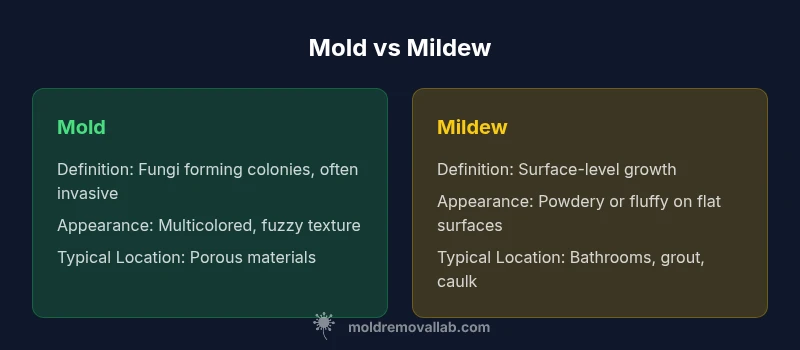
Visual identification is useful but not definitive. Mold often appears in irregular patches with multiple colors—black, green, brown, or gray—and a fuzzy or woolly texture that can penetrate into porous materials. Mildew tends to sit as a thin, flat layer with a powdery or cottony appearance, usually on non-porous surfaces like tile, grout, and bathroom fixtures. These cues can help homeowners decide whether a surface cleaning is appropriate or if more extensive steps are required. Because appearances can be deceiving, use visual checks in combination with moisture history and, when in doubt, seek professional testing to confirm the form as part of a are mold and mildew different types of fungi assessment.
Growth environments and surfaces
Mold often colonizes porous substrates such as drywall, wood, insulation, and ceilings where hidden moisture has persisted. It can cause structural damage if left unchecked and may require containment during cleanup. Mildew prefers damp, non-porous or mildly porous surfaces like bathroom tile, grout, and caulk, where it tends to form on the surface without deeply penetrating materials. Understanding these preferences helps prioritize remediation tasks: porous materials with visible mold growth frequently need replacement or professional remediation, while mildew on non-porous surfaces can be cleaned effectively with proper technique and moisture control. This distinction is central to a safe, efficient home maintenance plan.
Health implications for occupants
Both mold and mildew can affect indoor air quality and trigger allergic reactions, coughing, sneezing, and eye irritation in sensitive individuals. Some molds produce mycotoxins under certain conditions, raising concerns about chronic exposure in susceptible populations. Mildew, while often milder, should not be ignored in households with vulnerable residents such as children or people with asthma. The practical takeaway is that are mold and mildew different types of fungi matters less for casual observation and more for deciding on air quality improvements, cleaning strategies, and whether professional remediation is warranted to protect occupant health.
Testing and diagnosis: when to test and how
Visual inspection alone rarely provides a complete answer to are mold and mildew different types of fungi. Homeowners may start with a simple moisture assessment and surface cleaning trial, but a definitive diagnosis often requires sampling and laboratory analysis. Air sampling and surface swabs can identify the presence of fungal contamination and help determine species or groupings, which can influence remediation methods. However, tests have limitations: sampling may not capture all affected areas, and results can take time to process. Based on Mold Removal Lab research, testing is most valuable when you suspect hidden growth, persistent odors, or potential health risks that warrant a professional assessment before committing to aggressive cleanup.
Cleaning methods and best practices for different forms
Cleaning approaches differ for mold versus mildew due to substrate porosity and growth depth. Mildew on non-porous surfaces can typically be removed with a solution such as detergent and water or a mild fungicidal cleaner, followed by thorough drying. Mold on porous materials often requires removal and replacement of affected materials and addressing the moisture source; cleaning may be possible on non-porous surfaces but should be performed with appropriate PPE and containment if growth is extensive. Always wear gloves, a mask with a suitable filter, and eye protection, and ensure adequate ventilation. Do not mix cleaners carelessly, and avoid scrubbing aggressively on porous materials that could release spores. Following are general guidelines for are mold and mildew different types of fungi-informed cleanup, with emphasis on moisture control and surface porosity.
When DIY is appropriate vs professional remediation
Small, isolated mildew on a non-porous surface can often be cleaned by a confident homeowner using basic cleaners and proper drying. However, when you see mold growth on porous materials, or when growth recurs after cleaning, professional remediation is typically warranted. Health concerns, hidden moisture behind walls, or large affected areas require trained technicians and specialized containment to prevent cross-contamination. The decision to DIY or hire a pro should consider surface type, extent, underlying moisture, presence of black mold or toxic species, and the health of household occupants. In many cases, a cautious, moisture-focused plan with professional input yields the best long-term outcomes.
Prevention strategies: moisture control and ventilation
Preventing both mold and mildew begins with controlling moisture. Fix leaks promptly, reduce humidity with dehumidifiers when needed, and improve ventilation in damp spaces like bathrooms and basements. Routine cleaning, prompt drying of wet areas, and maintaining clean, dry surfaces minimize opportunities for fungi to establish colonies. Even small measures—fixing dripping fixtures, using exhaust fans during showers, and ensuring gutters direct water away from the house—contribute to a stable indoor environment that keeps are mold and mildew different types of fungi at bay. Prevention is the most cost-effective strategy for long-term safety and health.
Real-world scenarios and decision aids
Consider a scenario in which a bathroom wall shows a gray-green patch behind the tile grout after a long humid season. An initial test or professional moisture assessment would help determine whether this is mildew confined to grout or mold penetrating into the substrate. For a kitchen sink area with a persistent white powdery film on metal surfaces, mildew is a plausible diagnosis if the surface remains dry and cleaning restores appearance quickly. In both cases, the underlying moisture source must be addressed as the top remediation priority. These practical examples illustrate how a structured approach to are mold and mildew different types of fungi leads to safer, more effective outcomes.
Documentation, insurance, and records
Keeping careful records of inspection findings, testing results, cleaning methods, and moisture-control actions supports future maintenance and insurance claims. Documenting the timeline of growth, the steps taken, and any professional services used helps homeowners prove that remediation was comprehensive. When in doubt, records should clearly show moisture sources identified and resolved, cleaning products used, and any ventilation or dehumidification improvements implemented. This documentation aligns with best practices for are mold and mildew different types of fungi remediation, providing a solid basis for ongoing home health and safety.
Quick-start remediation plan: next steps
If you suspect mold or mildew, begin with a simple moisture survey and surface inspection. Remove stagnant water, dry affected areas, and implement targeted cleaning for mildew on non-porous surfaces. For mold on porous materials, prioritize containment, moisture source repair, and professional evaluation. Replace damaged materials when necessary and monitor humidity levels to ensure conditions do not return. Throughout the process, keep health and safety at the forefront by using protective equipment and avoiding actions that could disperse spores. A measured, moisture-centered plan is the most reliable path to a safe home.
Comparison
| Feature | mold | mildew |
|---|---|---|
| Definition | A broad group of fungi forming colonies, often invasive on porous materials | A surface-level growth of fungi, typically easier to clean and more superficial |
| Appearance | Multicolored, with fuzzy or velvety texture; often black, green, or orange | Powdery or fluffy, usually white, gray, or yellow, on flat surfaces |
| Growth conditions | Requires moisture and organic material; can penetrate porous substrates | Thrives in damp environments on non-porous or mildly porous surfaces |
| Common locations | Walls, insulation, drywall, and porous materials | Bathrooms, grout, caulk, and shower tiles |
| Health risks | Some species produce mycotoxins; potential allergic reactions and respiratory issues | Typically milder, but can trigger allergies or irritation in sensitive individuals |
| Cleaning approach | Often requires removal and moisture remediation; may need professional help for porous materials | Usually easier to clean with detergent or mildewcide on non-porous surfaces |
| Testing complexity | Lab testing may identify species and quantify contamination; more involved | Testing may confirm presence but not always distinguish severity |
| Remediation cost | Higher when addressing hidden mold in structure; often requires containment | Lower and quicker when mildews are superficial and surfaces are cleanable |
| Best for | Porous, structural surfaces with sustained moisture concerns | Non-porous or lightly porous surfaces where mildew grows |
Upsides
- Clarifies health and safety priorities for homeowners
- Guides targeted moisture control and remediation steps
- Helps decide between DIY cleaning and professional remediation
- Improves documentation for insurance and remediation records
- Supports efficient budget planning by distinguishing effort required
The Bad
- Misidentification can lead to ineffective cleaning or recurring moisture issues
- Hidden mold can persist behind walls, increasing risk
- Tests can be costly and may not always be definitive
- DIY methods may expose occupants to irritants if not properly protected
Mold and mildew are not the same, but both require careful moisture management and appropriate remediation.
Correctly distinguishing mold from mildew informs the cleaning approach, moisture control, and whether professional remediation is needed. Prioritize moisture sources and use targeted methods for long-term safety.
FAQ
What is the main difference between mold and mildew?
The main difference is depth and aggressiveness. Mold tends to penetrate porous materials and may cause structural damage, while mildew stays superficial on surfaces and is usually easier to clean. Both signals moisture problems that need addressing.
Mold tends to be more invasive than mildew, which is usually superficial. Both indicate moisture that should be addressed.
Is mildew less dangerous than mold?
Generally, mildew is considered less hazardous than many mold species, but both can affect air quality and trigger allergies. The risk increases with the presence of humid conditions, sensitive occupants, and hidden mold behind walls.
Mildew is usually milder, but it’s not something to ignore; mold can be more dangerous depending on the species.
Can I clean mold or mildew myself?
Small amounts of mildew on non-porous surfaces can often be cleaned with detergent and thorough drying. Mold on porous materials may require professional remediation or material replacement, especially if moisture sources persist.
You can usually tackle mildew on non-porous surfaces yourself, but for mold on porous materials, consider professional help.
When should I test for mold?
Testing is useful when growth is extensive, recurring after cleaning, or when occupants have health concerns. Lab tests can help identify species and guide remediation, but results take time and may not always change the plan.
Test if you have persistent growth or health concerns; it helps inform the remediation plan.
Do bleach and other cleaners kill mold and mildew?
Bleach can kill surface-level mold on non-porous surfaces, but it may not reach mold inside porous materials. Always follow product instructions and ensure adequate ventilation; for porous materials, replacement is often necessary.
Bleach can help on non-porous surfaces, but porous materials may need more thorough treatment or disposal.
How long does mold remediation take?
Time varies with area size, moisture sources, and whether professionals are involved. Small, well-contained cases may resolve in days; larger or complex cases can take weeks to ensure all spores are removed and moisture is controlled.
Duration depends on scale and moisture control; expect a plan that spans days to weeks.
The Essentials
- Identify form to choose cleaning strategy
- Address moisture sources to prevent regrowth
- Use appropriate cleaning methods per surface porosity
- Consult professionals for hidden or toxic concerns
- Document findings for insurance and future maintenance