Are Mold and Mildew Different? Key Distinctions for Homeowners
Learn whether mold and mildew are different, with clear definitions, health impacts, common locations, and practical steps homeowners can take for safe, effective remediation.


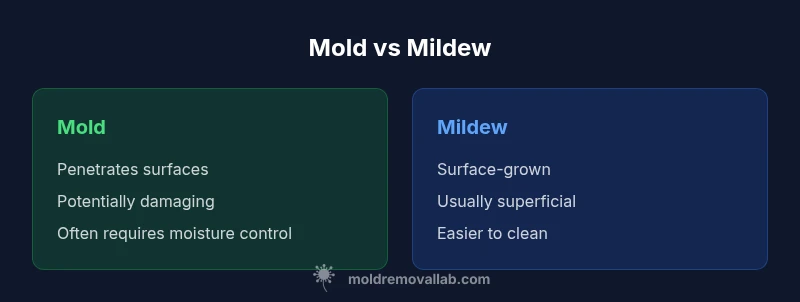
Quick answer: Yes, mold and mildew are different. Mold is a fungus that can penetrate surfaces and cause structural damage, while mildew is a lighter growth on surfaces like walls and tile. Understanding whether you’re dealing with mold or mildew helps determine cleanup steps, moisture control needs, and potential health implications for occupants.
Are mold and mildew different? Definitions and scope
The question of whether are mold and mildew different is more than a semantic distinction; it drives how you respond in real life. Mold is a diverse group of fungi that can colonize porous materials, producing strands called hyphae that penetrate substrate surfaces. This characteristic makes mold potentially damaging to building materials over time. Mildew, by contrast, refers to a surface-level growth that sits on top of surfaces, typically appearing as a powdery or cottony film on damp areas like bathroom tiles, window sills, or kitchen backsplashes. The practical implication is simple: mold often requires more thorough remediation and moisture control, while mildew is usually easier to remove with routine cleaning. According to Mold Removal Lab, misidentifying these organisms can lead to underestimating a moisture problem or overreacting to a cosmetic stain. Throughout this article, we’ll unpack how to tell them apart, where you’re most likely to find each, and how to address them safely. The goal is to empower homeowners and renters to act confidently when they spot damp growth.
wordCount": 185
Comparison
| Feature | Mold | Mildew |
|---|---|---|
| Definition | A fungus that penetrates surfaces and can cause structural damage | A surface-growing fungus, typically superficial on moisture-warmed surfaces |
| Growth patterns | Penetrates into porous materials and can spread through building substrates | Remains on the surface and can be wiped away with cleaning |
| Common locations | Walls, wood, insulation, and other building materials | Bathrooms, showers, sinks, and tiled surfaces |
| Health implications | More likely to provoke allergic reactions, asthma symptoms, and possible toxin exposure | Typically causes milder irritation; usually less likely to pose systemic risks |
| Remediation approach | Often requires containment, mold-specific remediation, and moisture control | Usually addressed with cleaning, improved ventilation, and moisture reduction |
| Cost/effort | Can involve professional remediation and longer timelines | Often manageable with DIY cleaning and preventive measures |
Upsides
- Clear identification improves targeting of cleanup efforts
- Supports focused moisture control to prevent recurrence
- Helps communicate with contractors and insurers
- Aids in prioritizing safety precautions for occupants
The Bad
- Risk of misidentification in mixed-growth environments
- Professional remediation can be disruptive and costly
- Overemphasis on one term may overlook combined contamination
- DIY attempts carry health and safety considerations
Differentiating mold from mildew improves remediation success; mold generally requires more proactive action and moisture management, while mildew is typically easier to remove.
If you correctly identify the growth, you can tailor cleanup and moisture-control steps. Mold often signals a broader moisture problem; mildew usually indicates surface-level dampness. Correct identification supports safer, more effective remediation decisions.
FAQ
Are mold and mildew scientifically different organisms?
Yes. Mold refers to various fungal colonies that can invade porous materials, while mildew is a surface-friendly term for certain fungi that grow on damp surfaces. Identifying which one you have guides remediation and safety measures.
Yes. Mold can invade porous materials; mildew stays on surfaces. Identifying which one you have helps you choose the right cleanup and safety steps.
Can mildew turn into mold over time?
In persistent moisture conditions, mildew can evolve into a more invasive mold growth. Addressing the moisture problem quickly is key to preventing this transition.
If moisture sticks around, mildew can become mold. Fixing the moisture now helps prevent a bigger problem.
Is mold always dangerous?
Mold can pose health risks, especially for sensitive individuals, and can damage materials. Some molds also produce allergens or toxins, making timely remediation important.
Mold can be hazardous, especially for sensitive people, so don’t delay cleanup when you suspect it.
When should I call a professional?
Call a professional when growth covers large areas, recurs after cleaning, or if you smell a musty odor that indicates hidden moisture. Professionals assess containment, remediation, and moisture control.
If growth is widespread or recurs, or you’re unsure, contact a pro for safe remediation.
What home methods are safe for mildew?
Mildew can often be cleaned with soap and water or mild cleaners, followed by thorough drying and improved ventilation. Persistent mildew should be evaluated if it returns after cleaning.
Clean mildew with soap and water, dry thoroughly, and fix moisture problems to prevent recurrence.
Can ventilation alone solve mold problems?
Ventilation helps, but it’s not a cure. Mold usually requires moisture reduction, material replacement when damaged, and sometimes professional remediation.
Ventilation helps but isn’t enough—you’ll likely need moisture control and possibly professional remediation.
Are there safe household products for removal?
Mild detergents and water are often sufficient for mildew and small mold patches. Avoid bleach on porous materials without proper ventilation, and never mix cleaners.
Use mild cleaners and ensure good ventilation; avoid mixing products or using bleach on porous surfaces.
What are common signs of a moisture problem?
Persistent humidity, condensation, staining, musty odors, and visible spots that reappear after cleaning are common indicators of ongoing moisture problems.
Watch for humidity, condensation, stains, musty smells, and spots that come back after cleaning.
The Essentials
- Identify growth type before acting to avoid under- or over-cleaning
- Mold signals moisture issues that may damage materials over time
- Mildew is typically superficial and easier to remove
- Prioritize moisture control to prevent recurring growth