What Causes Mold in the Attic and How to Fix It Fast
Urgent guide to attic mold: identify moisture sources, fix leaks, improve ventilation, and properly remediate to protect health and home.


Attic mold is usually caused by moisture problems that enable mold spores to grow. The quickest fixes start with identifying leaks and improving ventilation, then drying affected areas. This guide walks you through the most common causes (poor insulation, roof leaks, high humidity) and provides a practical, step-by-step remediation plan you can start today.
Understanding attic mold and why it happens
Attic mold is not a seasonal nuisance—it's a signal that moisture control has failed. When humidity is high in an enclosed attic, mold can grow on wood, drywall, insulation, and even cardboard storage. If you're searching for what causes mold in attic, the answer is almost always water intrusion or trapped moisture. Roof leaks, plumbing, humid air, and poor ventilation combine to create the damp conditions mold loves. According to Mold Removal Lab, attics are frequently neglected until visible growth appears or a musty odor signals a hidden problem. This guide explains the main sources, how to spot them, and the practical steps you can take to fix the issue quickly and safely. We’ll also discuss health risks and why remediation should be prompt.
Common moisture sources that fuel attic mold
There are several reliable culprits behind attic mold, and finding the right one is the key to an effective fix. Roof leaks let water seep into sheathing and insulation, while missing or damaged flashing creates steady moisture entry. Condensation forms when warm indoor air cools down in the attic, especially in areas with limited insulation or air leaks. Poor attic ventilation compounds the problem by trapping humid air from bathrooms, kitchens, or laundry rooms. Even high humidity in the living space can migrate upward through ceilings if there are gaps. In many homes, the question what causes mold in attic is answered by a combination of leaks, poor ventilation, and insufficient drying capacity after a moisture event. Documenting any visible stains, damp spots, or persistent musty smells helps you prioritize which source to tackle first.
Why attic design and insulation matter
The attic’s physical design determines how moisture moves and settles. Inadequate insulation allows warm, moist air to reach cooler surfaces where condensation can form. Air sealing gaps around attic hatches, duct chases, and electrical penetrations reduces drafts that carry moisture into the attic. Undersized vents or blocked soffit vents prevent dry, outdoor air from circulating, accelerating mold growth. Based on Mold Removal Lab analysis, homes with proper moisture-control strategies — including continuous insulation, sealed air leaks, and balanced ventilation — show fewer moisture problems and smaller mold risks in attics. Learning to read attic moisture patterns now helps homeowners head off the most common mold triggers before they start.
How to inspect attic for mold without causing damage
Start with a careful, non-destructive inspection. Look for visible spots on rafters, joists, and insulation, plus staining or biomatter on sheathing. Check for roof leaks in the attic by examining decking near joints, flashing, and vents. Use a flashlight and moisture meter to identify damp areas behind walls or under insulation. If you detect mold growth beyond a small patch, err on the side of caution and assume wider contamination. Remember to wear PPE: gloves, goggles, and an NIOSH-approved respirator. Do not disturb large patches; disturbing mold can release spores into living spaces. Document findings with photos, measurements, and dates to guide remediation planning.
Step-by-step remediation plan (overview)
This is a high-level outline of a safe remediation process. First, address the moisture source(s) to stop ongoing growth. Then dry the space to below ambient moisture levels. Remove and dispose of severely contaminated materials in sealed bags. Clean remaining surfaces with a mold-safe cleaner according to manufacturer instructions, and finally sand, prime, and repaint or reseal affected areas after drying. Do not skip containment steps when mold is present, as spores can spread through the attic and into living spaces. For larger infestations, hire a mold remediation professional to ensure proper containment, air filtration, and disposal.
Preventing attic mold: long-term strategies
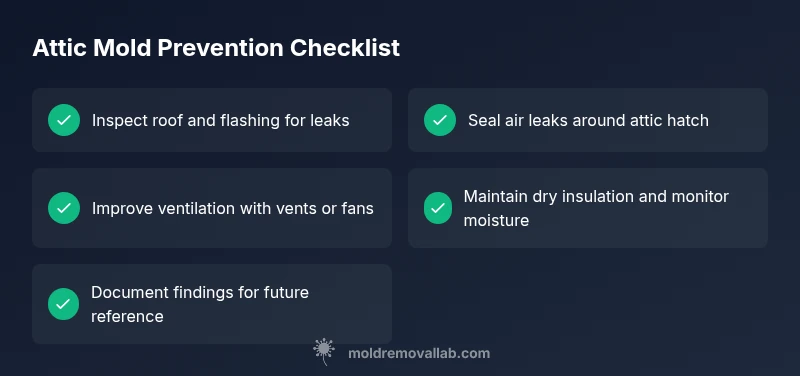
Prevention focuses on moisture control, air sealing, and ongoing maintenance. Fix roof leaks promptly and repair damaged flashing. Seal attic air leaks around hatches, vents, and wiring. Upgrade insulation where needed to reduce condensation risk, and ensure balanced ventilation with intake and exhaust vents. Maintain a dehumidifier or ensure the home’s HVAC system reduces humidity in the upper space. Regularly inspect the attic for signs of moisture, unusual smells, or damp insulation, and address issues before mold becomes visible. A proactive approach reduces growth and protects indoor air quality over time.
When to call a professional and safety considerations
If mold covers a large area or if you have health concerns or a compromised structure, professional remediation is essential. Mold Removal Lab strongly recommends professional evaluation for hidden mold behind walls or when moisture problems persist after initial fixes. A licensed mold remediation contractor will establish containment, use HEPA filtration, and responsibly dispose of contaminated materials. If you are pregnant, elderly, or have respiratory issues, seek medical advice if you notice symptoms while inspecting mold. Always follow local regulations and safety guidelines to minimize exposure risk.
Quick checks you can perform today
Use this fast, actionable checklist to identify and address moisture drivers in your attic. Start by inspecting the roof line from the attic side after a rainstorm for signs of active leaks, soft spots, or staining. Check flashing around vents and the chimney if present. Next, examine insulation for dampness or mold-like odor; replace any damp or crumbled insulation. Test ventilation by feeling for air movement at soffit vents and the attic exhaust; improve airflow if nothing moves. Look for obvious gaps around the attic hatch and around duct penetrations; seal them with appropriate sealant and weatherstripping. Ensure humidity is controlled with a dehumidifier or by running the HVAC system to maintain comfortable levels. Finally, create a small log with dates, weather conditions, and mold observations to track recurrence and evaluate whether professional help is needed.
Steps
Estimated time: 2-4 days for small issues; longer for extensive contamination
- 1
Don PPE and isolate the area
Put on an NIOSH-rated respirator, gloves, and eye protection. Limit access to the attic to minimize spore spread while you work.
Tip: Keep a clean, sealed waste bag ready for any contaminated material. - 2
Identify and stop moisture sources
Inspect for roof leaks, plumbing issues, and trapped humidity. Fix leaks and address condensate sources before cleaning.
Tip: Fixing moisture is the first and most important step. - 3
Dry the space thoroughly
Use fans and dehumidifiers to reduce humidity and dry damp insulation and wood. Ensure surfaces reach a stable moisture level before proceeding.
Tip: Move damp items out of the attic to speed drying. - 4
Remove severely contaminated materials
Dispose of visibly moldy insulation and porous materials in sealed bags following local guidelines.
Tip: Do not mix waste; keep contaminated debris contained. - 5
Clean and treat remaining surfaces
Clean non-porous surfaces with a mold-safe cleaner and dry completely. Avoid generating aerosols by scrubbing too aggressively.
Tip: Follow product instructions for contact time. - 6
Repair, seal, and re-insulate
Seal leaks, air gaps, and re-insulate as needed. Ensure ventilation is balanced to prevent future condensation.
Tip: Consider professional testing to verify containment.
Diagnosis: Visible mold growth or musty odor in attic
Possible Causes
- highRoof leaks or plumbing leaks allowing water intrusion
- mediumCondensation from poor ventilation in the attic
- mediumInsulation gaps and air leaks that trap moisture
Fixes
- easyInspect and repair roof leaks; fix plumbing if present
- easyImprove attic ventilation with soffit fans or ridge vents
- mediumSeal air leaks and add proper insulation; consider a blower door test
- hardConsult a mold remediation professional for larger infestations
FAQ
How does attic mold affect health?
Exposure to attic mold can irritate the eyes, skin, and airways, especially for people with asthma or allergies. In some cases, prolonged exposure may worsen respiratory conditions. If you notice persistent symptoms, seek medical advice.
Attic mold can irritate eyes, skin, and lungs. If symptoms persist, consult a healthcare professional.
Can I remove attic mold myself?
Small, clearly contained mold patches may be cleaned with proper PPE and non-porous surfaces. Larger infestations or mold behind walls require professional remediation to ensure containment and safety.
Small patches may be DIY if you’re careful, but large infestations need a pro.
Should I test attic mold before remediation?
Testing can help identify the type of mold but is not always necessary for small, visible growth. Professional inspectors use tests to guide complex remediation and to verify completion.
Testing helps guide complex cases; for small growth, remediation may proceed based on observation.
How long does attic mold remediation take?
Time varies with the extent of moisture and contamination. Small jobs may take a day or two, while larger issues could extend to several days with drying and re-insulation.
It depends on the extent, from a day or two to several days if drying is needed.
When should I hire a professional?
Call a professional if mold covers more than a small patch, if there’s ongoing moisture, or if you have respiratory issues or health concerns. Professionals provide containment, HEPA filtration, and safe disposal.
Hire a pro if the mold is extensive or moisture persists; professionals provide containment and safe cleanup.
Can attic mold come back after remediation?
Mold can return if moisture sources are not fully addressed. Ongoing moisture control and regular attic inspections are essential to prevent recurrence.
If moisture isn’t controlled, mold can return. Keep up with inspections and fixes.
Watch Video
The Essentials
- Identify moisture sources before remediation
- Moisture control is the foundation of attic mold prevention
- Seal and insulate to reduce condensation
- Call a professional for large or persistent mold