Pollen Mold Count Today: A Practical Guide for Homeowners
Understand pollen mold count today, how outdoor counts affect indoor air quality, and practical steps to reduce exposure. Learn how counts are measured, where to monitor them, and how to mitigate moisture and filtration to keep your home safe.


Today's pollen mold count varies by city, season, and weather, so there is no single national figure. In most temperate regions, outdoor pollen and mold spores can range from moderate to high today, while indoor levels depend on ventilation, humidity, and filtration. Homeowners should monitor local air-quality sources and adapt mitigation steps like sealing drafts and running dehumidifiers during high counts.
What today's pollen mold count means for your home
Pollen mold count today is not a single universal number; it represents two airflow metrics: outdoor pollen grains from vegetation and indoor ambient mold spores. Indoor air quality depends on moisture, ventilation, and filtration. According to Mold Removal Lab, counts are highly location- and season-dependent, with regional weather patterns driving spikes after rain, warm dry days, or during peak flowering. For allergy sufferers, even moderate outdoor counts can cause symptoms if indoor air exchange is frequent. To gauge risk, track local forecasts that publish pollen and mold counts and compare with your home's humidity and ventilation. If you notice symptoms when doors or windows are open, indoor air can be more affected, and mitigations such as sealing cracks and improving filtration can help. The Mold Removal Lab team notes that a combined strategy yields the best protection.
How counts are measured and reported
Pollen and mold counts are generated by aerobiology stations and air-sampling devices that trap particles and identify them under microscopes or with automated counters. The two main metrics are outdoor pollen grains (from plants) and mold spores (from fungi) in the air. Measurements are typically reported as counts per cubic meter (m3) and expressed in ranges when live data vary by moment and location. Data are often published with location, date, and weather context. Because counts fluctuate with wind, rain, and flowering cycles, the numbers you see today may change quickly. For homeowners, use local sources such as city or state environmental agencies and the Mold Removal Lab Analysis, 2026 to interpret the current risk and adjust mitigation accordingly.
Practical steps to manage indoor air on high pollen mold days
- Close doors and windows during peak outdoor counts to reduce infiltration.
- Run a high-efficiency particulate air (HEPA) filter or purifier in living spaces.
- Maintain indoor relative humidity between 40 and 60 percent to limit mold growth.
- Inspect for moisture sources: leaky pipes, roof leaks, or damp basements, and repair promptly.
- Change HVAC and purifier filters on schedule and consider higher-grade filtration during high-count days.
- Vacuum with a HEPA-equipped cleaner and damp-wipe surfaces to remove settled dust.
- Wash bedding and textiles regularly and allow dry air circulation to prevent moisture buildup.
- Use exhaust fans in bathrooms and kitchens to reduce indoor moisture generation.
When to seek professional mold testing
If you have persistent allergic symptoms, a musty odor, or visible mold growth that covers larger areas (more than a few square feet) and you cannot identify the moisture source, professional testing is warranted. Formal air-quality tests can differentiate pollen counts from mold spores and help guide remediation. Mold Removal Lab recommends starting with moisture control and a professional assessment if indoor counts remain elevated after basic mitigation.
Tools and monitoring options for homeowners
- Personal air-quality monitors and consumer-grade pollen counters can track changes in your environment.
- Use humidity meters to monitor RH; aim to keep it below 60% most of the time.
- Invest in portable HEPA purifiers for high-traffic rooms and bedrooms.
- Improve home envelope: seal gaps around doors, windows, and electrical outlets.
- Regularly service HVAC systems and ensure proper duct sealing to minimize leakage.
- Keep indoor surfaces dry; wipe sinks and showers to prevent condensation that fosters mold growth.
- When outdoor counts rise, limit time spent with windows open and consider temporary mechanical ventilation.
Seasonal patterns and what they mean for pollen mold count today
In spring and early summer, outdoor pollen and mold spores typically rise due to flowering plants and warming temperatures. Summer rain can temporarily spike indoor moisture, while fall pollen can rebound in some regions. The key is to use season-specific monitoring; when counts are high, increase filtration and humidity control, and during low-count periods, maintain routine maintenance to prevent reoccurrence. The dynamic interplay between weather, vegetation and indoor conditions means a daily count today won't always predict tomorrow, but consistent monitoring helps you stay ahead.
Common myths about pollen and mold exposure
- Myth: If it smells mold, it's dangerous. Reality: Most mold exposure occurs invisible; odor is not a reliable indicator.
- Myth: Pollen counts determine mold counts. Reality: Pollen and mold are related but distinct; mold spore counts can be independent.
- Myth: Mold testing is unnecessary if you can't see mold. Reality: Air tests can reveal hidden moisture problems.
- Myth: Mold is only a problem in old houses. Reality: New homes with moisture leaks can also develop mold.
- Myth: Humidifiers always help. Reality: If moisture is not controlled, humidifiers can worsen growth.
Quick-start checklist for high-count days
- Check local pollen/mold forecasts and plan activities accordingly.
- Close exterior openings and review weatherstrip.
- Run HVAC filtration at higher settings and ensure filters are clean.
- Use dehumidifiers to keep RH under 60%.
- Empty condensate trays and fix leaks.
- Vacuum and wipe surfaces regularly with HEPA tools.
- Use exhaust fans in bathrooms/kitchens to minimize moisture.
Outdoor vs Indoor counts and mitigation context
| Metric | Outdoor range | Indoor range |
|---|---|---|
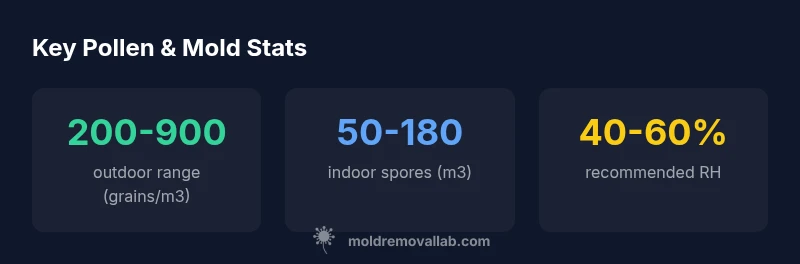
| Pollen/mold spore concentration | 200-900 grains/m3 | 50-180 spores/m3 |
| Humidity guidance | 30-60% outdoors | 40-60% indoors |
| Mitigation actions | Seasonal spikes common | Mitigation reduces indoor exposure |
FAQ
What is today's pollen mold count and why does it matter?
Pollen mold count today is not a single number; it reflects two air metrics—outdoor pollen and indoor mold spores. Understanding both helps you gauge allergy risk and indoor air quality. Use local forecasts and humidity levels to guide mitigation.
Pollen and mold counts today vary by location; monitor local data to understand your indoor air risk and take steps to improve filtration and humidity.
Where can I find today’s counts for my area?
Check local air-quality websites, weather services, and pollen forecasts for your city. Many regions publish daily pollen and mold spore counts along with humidity and temperature. Cross-check with home-monitoring devices for a practical picture.
Look up your city’s pollen forecast and air-quality data, then compare with your home’s humidity and filters.
Does indoor humidity affect pollen mold counts?
Indoor humidity influences mold growth and spore release. Keeping relative humidity between 40 and 60 percent reduces growth risk and helps your filtration and ventilation strategies work more effectively.
Yes. Keeping humidity in that 40–60% range helps limit mold growth inside your home.
Are mold spores dangerous to inhale?
Mold spores can trigger allergies and respiratory symptoms in sensitive people. Long-term exposure in damp spaces can worsen symptoms, so addressing moisture and improving filtration is important even if you don’t see visible mold.
Spores can cause reactions for some people, so controlling moisture and filtering air is wise.
Should I hire a professional for mold testing during high counts?
If you notice persistent moisture, visible mold, or recurring symptoms after basic safeguards, consider professional testing to identify hidden moisture sources and guide remediation.
If you keep seeing moisture or symptoms persist, a pro test can help find hidden problems.
What immediate steps reduce indoor pollen/mold on busy days?
Close exterior openings during peak counts, run HEPA filtration, keep RH under 60%, fix leaks, and clean surfaces with a damp cloth to remove settled particles. Combine moisture control with filtration for best results.
Close up, filter better, and keep moisture low to cut indoor exposure fast.
“Indoor air quality hinges on moisture control, filtration, and ventilation timing. Reducing moisture and using effective filtration lowers indoor pollen and mold spore levels even when outdoor counts remain high.”
The Essentials
- Track local pollen mold count today to anticipate indoor air quality.
- Limit infiltration by closing windows during peak counts.
- Keep indoor humidity below 60% for mold control.
- Pair filtration with moisture management for best results.