Mold Allergies Treatment: Practical Home Guide 2026
Learn practical mold allergies treatment strategies for homes, including symptom relief, environmental controls, safe remediation, and when to seek professional help.


You will learn practical steps to manage mold allergies at home, including environmental controls, symptom relief strategies, and safe remediation tips. This guide emphasizes non-toxic cleaning, air quality improvements, and when to seek professional help. By following a simple, step-by-step plan, you can reduce triggers and breathe easier in 6–8 hours of focused effort.
What mold allergies are and why they matter
Mold allergies occur when immune systems react to mold spores in the air. For many homeowners and renters, exposure triggers sneezing, nasal congestion, itchy eyes, coughing, and fatigue. While a single mold colony is unsightly, it’s the invisible spores and fragments that often drive symptoms, especially for people with asthma or allergic rhinitis. According to Mold Removal Lab, indoor mold exposure is a common trigger for nasal congestion, sneezing, itchy eyes, and asthma symptoms. Understanding what drives exposure helps you target the right controls.
Molds thrive where moisture is present: bathrooms, basements, kitchens, and laundry rooms are common hotspots. Even if you don’t see visible growth, tiny amounts can be enough to worsen allergies. The good news is that most mold-related symptoms can be reduced with focused actions: lowering humidity, improving air exchange, and using proper cleaning methods. This section explains how allergies develop in response to mold, and why the home environment matters just as much as medications in managing symptoms.
How mold affects health and common triggers
Mold spores and fragments can irritate airways and provoke immune responses. For people with mold allergies, exposure may worsen sneezing, nasal congestion, coughing, and eye irritation, and can aggravate asthma symptoms. VOCs emitted by some indoor molds may contribute to headaches and fatigue. Common triggers include persistent moisture, poor ventilation, water damage, damp building materials, and clutter that traps humidity. Mold Removal Lab analysis shows that even low-level moisture and poor air exchange can sustain allergen presence indoors, underscoring the importance of environmental controls. Prolonged exposure may exacerbate respiratory conditions, especially in children and older adults.
Understanding triggers helps you prioritize controls, because source removal and habit changes often yield faster symptom relief than medication alone. This is why a combined approach—environmental modification plus symptom management—is the most effective path to long-term comfort.
Environmental controls to reduce exposure
- Reduce indoor humidity to a comfortable range using dehumidifiers and air conditioners. Use moisture meters to track humidity in problem rooms.
- Improve air exchange with balanced ventilation and targeted air cleaning. A HEPA air purifier in high-risk rooms can cut particle load when used consistently.
- Keep mold-prone areas dry and clean. Wipe down bathrooms after use, fix leaks promptly, and ensure proper drainage around your home.
- Seal leaks and maintain gutters to prevent ongoing moisture intrusion. Replace water-damaged materials only after the area is dry and free of spores.
- Establish a routine cleaning schedule using non-ammonia cleaners and microfiber cloths to prevent surface buildup that harbors spores.
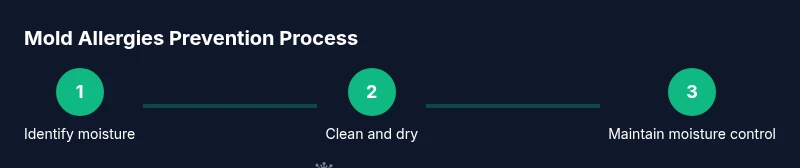
Incorporating these controls creates a drier, cleaner environment that lowers allergen levels and reduces symptom flare-ups over time.
Safe cleaning and remediation basics
Begin with adequate PPE: gloves, a mask suitable for particulates (such as an N95), and eye protection. Work gradually and ventilate the area well.
- For small, non-porous surfaces, scrub with a non-ammonia cleaner or a hydrogen peroxide solution, then dry completely.
- For porous materials with visible growth, removal may be required if cleaning is unlikely to restore them. If materials are structural (wood, drywall), consult a professional for safe removal.
- Never mix cleaners; avoid chlorine bleach on organic materials in sensitive indoor spaces. If you must use bleach, follow strict safety guidelines and never combine with ammonia.
- After cleaning, dry the area thoroughly within 24–48 hours to prevent regrowth.
Residual moisture is the enemy of remediation. Focus on drying time and material replacement when necessary, rather than relying solely on cleaning.
When to test and what tests mean
Testing is not always required. If symptoms persist after environmental controls and cleaning, or after significant water events, mold testing can help identify hidden reservoirs or confirm remediation success. Common tests include surface cultures, air sampling, and DNA-based assays. Interpreting results requires context: a positive test does not necessarily indicate a risk, and a negative test does not guarantee absence of exposure.
A practical approach is to test after a water damage event or when you cannot locate a mold source despite inspections. Use certified laboratories and compare results to moisture history and symptom patterns to guide further steps.
Building a long-term prevention plan
A lasting mold-allergy strategy centers on moisture control and proactive maintenance:
- Implement continuous humidity monitoring in key rooms (bathrooms, kitchen, basement).
- Schedule regular HVAC maintenance and filter changes to prevent spore recirculation.
- Repair leaks promptly and address any signs of condensation or dampness.
- Keep clutter to a minimum in humid areas to reduce moisture retention.
- Consider air purifiers with true HEPA filters in living spaces where occupants spend most of their time.
By combining moisture management with routine cleaning and surveillance, you establish a preventive habit that sustains healthier indoor air quality over seasons and years.
Working with professionals and insurance considerations
For extensive mold growth, structural damage, or persistent symptoms, a professional remediation team can assess and address hidden reservoirs, moisture sources, and contaminated materials. Get multiple estimates and verify licenses, certifications, and insurance coverage. If your home insurance covers mold-related repairs, document water events, repairs, and any medical symptoms reported by sensitive occupants. A proactive approach often reduces long-term costs and health impacts.
In many cases, combined efforts—household improvements, medical guidance, and professional remediation when needed—provide the most reliable path to a mold-safe home. The Mold Removal Lab team recommends prioritizing prevention and timely action, especially in damp climates where mold risk remains higher.
Tools & Materials
- HEPA air purifier(Choose a model sized for the room (CADR appropriate for the space). Use in rooms with ongoing exposure risks.)
- N95 respirator mask(Wear during cleaning and handling moldy materials.)
- Nitrile gloves(Protect skin from cleaners and spores.)
- Disposable cleaning cloths or microfiber cloths(For effective, lint-free cleaning.)
- Non-ammonia cleaning solution(Use EPA-registered cleaners or mild soaps.)
- Hydrogen peroxide 3% solution(Alternative cleaner for sealed surfaces.)
- Drop cloths or plastic sheeting(Contain work area when removing materials.)
Steps
Estimated time: 6-12 hours active; 24-72 hours drying
- 1
Prep and PPE
Put on PPE (N95 mask, gloves, eye protection) and prepare a contained work area. Clear the space to avoid spreading spores, and ventilate if possible. Gather cleaning supplies and a plan before starting to minimize repeat trips in and out of the room.
Tip: Set a dedicated cleaning zone to prevent cross-contamination with other rooms. - 2
Identify moisture sources
Inspect for leaks, condensation, or hidden moisture behind walls. Check pipes, roof entries, and drainage. Fixing the root cause reduces recurrence after cleaning.
Tip: Use a moisture meter to identify damp spots you can’t see with the naked eye. - 3
Contain the area
Close doors to the room and turn off HVAC supply to prevent air from carrying spores to other spaces. Place plastic sheeting to seal off the space if you expect large quantities of spores.
Tip: Avoid creating new cross-contamination paths while working. - 4
Clean non-porous surfaces
Scrub surfaces with a non-ammonia cleaner or hydrogen peroxide. Rinse, then dry thoroughly using fans or dehumidifiers. Do not leave moisture behind on any cleaned surface.
Tip: Work from the least contaminated to the most contaminated area to minimize spread. - 5
Assess porous materials
If porous materials (drywall, insulation, carpet) are visibly moldy or saturated, removal may be necessary. For structural items, consult a professional rather than attempting DIY removal.
Tip: Prioritize safety; porous material removal can release mold into air if not handled properly. - 6
Dry thoroughly
Continue drying the space for 24–72 hours if needed, using dehumidifiers and airflow to ensure complete dryness before re-occupying.
Tip: A dry environment disrupts mold’s ability to regrow. - 7
Re-inspect and monitor
Check the area weekly for signs of dampness or new growth. Re-test if symptoms persist or you see renewed moisture.
Tip: Keep a moisture log to track improvements over time. - 8
Plan for prevention
Implement long-term moisture control strategies, HVAC maintenance, and routine cleaning to reduce future mold risk.
Tip: Prevention is more effective than reactive cleanup.
FAQ
Can mold allergies be cured at home?
There is no permanent cure for mold allergies, but symptoms can be significantly reduced with environmental controls, medical treatment, and timely remediation. A combination of cleaning, moisture management, and avoidance helps many people breathe easier.
There is no permanent cure, but you can reduce symptoms by cleaning, controlling moisture, and seeking medical guidance when needed.
Is it safe to clean mold yourself?
DIY cleaning is reasonable for small, contained areas with proper PPE and non-porous surfaces. For larger growth, moisture damage, or porous materials, it’s safer to consult a professional to avoid spreading spores.
You can clean small, contained spots safely if you wear PPE, but large or porous mold requires a pro.
What humidity level helps prevent mold growth?
Aim to keep indoor humidity generally below 50% in most climates, adjusting with dehumidifiers and good ventilation. In damp environments, closer monitoring is helpful.
Keep humidity under about 50% and improve ventilation to reduce mold chances.
How long does mold cleanup take?
Active cleaning may take several hours for small areas; drying and monitoring can extend the timeline to a few days. Larger or damaged areas require more time and may involve professionals.
It varies, but expect several hours of work with a few days for complete drying and monitoring.
Do I need tests after cleaning?
Testing isn’t always necessary if the area is visibly clean, dry, and occupants feel better. Tests can help after water damage or if symptoms persist, guiding further action.
Tests are optional if there’s no ongoing moisture and symptoms improve, but can help after water damage.
When should I hire professionals for mold?
Consider professional remediation for extensive growth, hidden mold behind walls, structural damage, recurring moisture issues, or if occupants have severe allergies or asthma.
Call a pro if mold covers a large area or you can’t locate hidden growth.
Watch Video
The Essentials
- Control moisture to prevent mold growth
- Use PPE and proper cleaning methods
- Prioritize area containment and drying
- Reserve professional remediation for extensive growth
- Maintain a long-term prevention plan for healthier indoor air