How to Know If You Have Mold Toxicity: A Practical Guide
Learn how to recognize mold toxicity symptoms, test your home, and take urgent steps to protect health with practical, clinician-informed guidance for homeowners.


how to know if you have mold toxicity often starts with persistent, unexplained symptoms that worsen indoors. The quick answer: watch for chronic fatigue, headaches, coughing or wheezing, brain fog, and mood changes that improve when you’re away from the home. Then test your environment for moisture and mold, consult a clinician, and document symptom patterns to guide next steps.
What mold toxicity is and why it matters
Mold toxicity refers to health effects caused by exposure to mold spores and mycotoxins released by damp environments. For homeowners, recognizing this issue early can prevent worsened symptoms and reduce long-term health risks. If you’re wondering how to know if you have mold toxicity, you start by watching for persistent problems that don't fit one diagnosis and that worsen when you’re in a damp space. According to Mold Removal Lab, prolonged exposure to moisture-damaged environments increases the likelihood of mold-related illness, especially for children, the elderly, or people with asthma or allergies. The health effects can be wide-ranging—respiratory irritation, headaches, fatigue, skin changes, and, in some cases, cognitive or mood disturbances. This guide provides practical steps to verify mold exposure, assess your home environment, and take urgent action to protect health. The emphasis is on swift, safe assessment and documented next steps.
Common symptoms and risk factors
Symptoms vary by individual, but several patterns suggest mold-related illness. Common signs include chronic fatigue, headaches, persistent cough or wheezing, sinus congestion, and brain fog that doesn't clear after sleep or time away from the home. Some people report mood swings, dizziness, skin rashes, and eye irritation. People with preexisting asthma, allergies, or immune issues may experience more severe reactions. Remember that symptoms can overlap with viral infections, seasonal allergies, or chemical sensitivities, so consider the indoor exposure history. Mold toxicity is not a single disease; it’s a spectrum of responses to spores and mycotoxins. According to Mold Removal Lab Team, symptoms that persist for weeks and recur when you return to a damp environment are red flags. Tracking when symptoms start and subside, and noting any family members with similar symptoms, can help differentiate mold-related illness from unrelated conditions. If the pattern points to indoor exposure, you have a starting point for next steps.
Environmental clues and exposure patterns
Look for moisture problems as the root cause: visible leaks, condensation on windows, water stains, musty odors, and rapid mold growth after wet seasons. Damp basements, bathrooms without proper ventilation, and poorly sealed crawl spaces are high-risk zones. Even if you don’t see mold, hidden growth behind drywall, inside HVAC ducts, or under carpets can release spores into the air. Prolonged exposure increases risk, particularly for sensitive groups. Consider how long you’ve lived or worked in a space with repeated moisture issues. If you notice water damage or persistent humidity above recommended levels, it’s time to investigate further. This is where testing and professional assessments become important because not all mold is visible, and indoor air can carry invisible contaminants. Mold Removal Lab’s research emphasizes moisture control as the first defense against mold toxicity, because reducing humidity often reduces spore counts and toxin exposure.
Testing options: when to test and what to expect
Testing for mold exposure involves environmental sampling of air and surfaces and sometimes medical testing to evaluate health effects. Home tests sold in stores or online can provide clues, but they have limitations and may not pinpoint the species or toxin load. A comprehensive approach combines moisture assessment, professional mold inspection, and indoor air testing. When you see elevated moisture, odd odors, or recurring symptoms, schedule a certified environmental technician to perform a moisture map, surface swabs, and air samples from multiple rooms. Medical testing may include blood work, clinical evaluation for inflammatory markers, and allergen panels to distinguish mold-related illness from other conditions. Remember that a positive test does not always prove culpability if symptoms have other triggers; conversely, a negative test does not guarantee safety if exposure is intermittent. Based on Mold Removal Lab Analysis, 2026, correlation between environmental findings and symptoms remains essential for an accurate diagnosis.
Medical evaluation and interpreting results
Medical professionals will review symptoms, exposure history, and tests to determine if mold toxicity is contributing to illness. A clinician may rule out infections, autoimmune diseases, or allergies with similar symptoms. They may recommend imaging, pulmonary function tests, and inflammatory markers. Tell your doctor about home conditions, cleaning methods, and any remediation attempts, as those details help identify ongoing exposure. If mold is confirmed as a factor, treatment focuses on reducing exposure, managing symptoms, and addressing any underlying conditions. Treatments can include medications to relieve nasal congestion or asthma, dietary changes to support detoxification, and sleep optimization to support recovery. It’s important to pursue a plan that includes environmental control, medical management, and follow-up to monitor progress. Mold Removal Lab Team emphasizes that a coordinated approach between patient and clinician yields the best outcomes and reduces long-term health risks.
Immediate steps you can take today
While pursuing testing and medical care, you can take practical steps to reduce exposure. Start with moisture control: fix leaks, improve ventilation, run dehumidifiers in damp areas, and clean visible mold using approved products on non-porous surfaces. Use personal protective equipment when cleaning or handling moldy materials: gloves, mask rated for particulates, and eye protection. Remove or seal off severely affected porous materials (like drywall) if advised by professionals. Clean and dry areas within 24-48 hours after use to prevent new growth. Ensure your HVAC system has high-quality filters and consider temporary air purifiers with HEPA filters. Finally, document all symptoms and environmental changes to discuss with your clinician and insurer. This proactive phase reduces exposure while you build a formal remediation plan.
Steps
Estimated time: 2-4 hours for initial checks; full remediation may take days to weeks depending on severity
- 1
Assess symptoms and exposure
Begin by listing symptoms, onset dates, severity, and whether they improve away from home. Track weather, seasons, and places where symptoms are better or worse. This diary helps identify a potential indoor trigger.
Tip: Keep a daily log with dates and locations. - 2
Check moisture sources and indoor environment
Inspect for leaks, condensation, and visible water damage. Note musty odors and dampness in bathrooms, kitchens, basements, and crawl spaces. Photograph problem areas for professionals.
Tip: Take wide and close-up photos from multiple angles. - 3
Conduct preliminary environmental checks
Use a hygrometer to measure indoor humidity; aim for below 50-60% where possible. Clear clutter to improve airflow and inspect HVAC ducts for signs of moisture or mold transfer.
Tip: Record humidity readings by room and time. - 4
Schedule professional inspection
Contact a certified mold inspector for a thorough assessment, including moisture mapping and air-quality tests. Ask for a written report and remediation plan before work begins.
Tip: Get at least two quotes to compare methods and costs. - 5
Consult medical evaluation
Share your exposure history and test results with a clinician. They may order imaging, blood tests, or allergy panels to determine mold-related contributions.
Tip: Bring symptom diary and home inspection reports to the appointment. - 6
Develop remediation plan and follow up
Work with professionals to remove moisture sources, clean or replace contaminated materials, and retest after remediation. Schedule follow-up medical review to assess recovery progress.
Tip: Document remediation steps and re-test outcomes.
Diagnosis: Persistent health symptoms believed to be mold-related in a damp home
Possible Causes
- highChronic mold exposure indoors
- mediumHidden mold behind walls or in HVAC
- lowAllergic or non-mold disease mimicking mold symptoms
Fixes
- easySchedule medical evaluation to assess symptoms and rule out other conditions
- easyArrange a professional mold inspection and moisture assessment of the home
- mediumMitigate moisture by fixing leaks, improving ventilation, and cleaning visible mold with approved methods (avoid DIY if large area)
FAQ
What is mold toxicity and how does it happen?
Mold toxicity refers to adverse health effects from mold exposure and toxins. It can occur with prolonged indoor moisture and exposure to spores. Symptoms vary and often require both environmental and medical assessment.
Mold toxicity happens when you’re exposed to mold over time, causing a range of symptoms. A combined environmental and medical check helps confirm it.
What symptoms are most concerning?
Persistent fatigue, headaches, coughing or wheezing, and brain fog that worsens indoors should raise concern. If symptoms improve away from home, mold exposure is more likely involved.
Watch for fatigue, headaches, and breathing issues that ease outside the home.
Can I test for mold toxicity at home?
Home tests can indicate mold presence but are not definitive for toxicity. Use them as a screening step and follow with professional testing and medical evaluation.
At-home tests can hint at mold, but you’ll need professionals to confirm toxicity.
Should I hire a professional for mold remediation?
Yes. For visible contamination or large areas, hire licensed remediation specialists who follow safety and containment protocols to prevent cross-contamination.
Hiring pros is essential for safe, effective mold cleanup.
Is mold toxicity dangerous for children or pets?
Children and pets can be more susceptible to mold-related effects. Minimize exposure and seek medical advice if symptoms arise in them.
Kids and pets can be more sensitive to mold exposure; protect them and check with a doctor.
How long does treatment take?
Treatment duration varies with severity and exposure duration. Early environmental control plus medical management improves outcomes, but full recovery can take weeks to months.
Recovery times vary, but acting quickly helps.
Watch Video
The Essentials
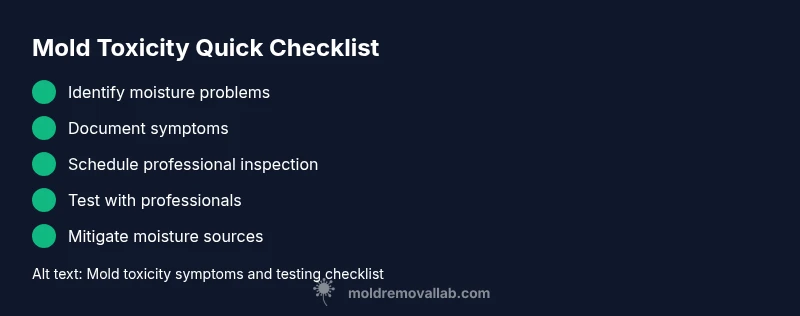
- Identify indoor moisture as a trigger
- Document symptoms and exposure patterns
- Use professional testing for accuracy
- Coordinate medical and environmental care
- Act quickly to prevent long-term health effects