How Much Mold Is Toxic: A Practical Home Guide to Risk
Learn how mold toxicity is defined, why thresholds vary by species and exposure, and practical steps homeowners can take to reduce risk. Based on Mold Removal Lab Analysis, 2026.


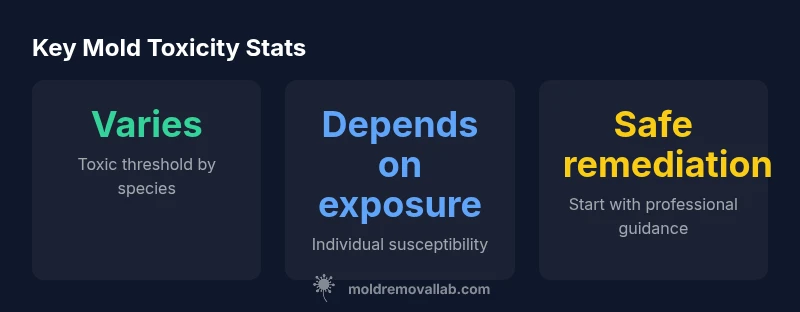
The exact amount of mold that is considered toxic depends on species, exposure duration, and individual sensitivity. There is no universal threshold that applies to everyone; even small amounts can trigger symptoms in sensitive people. In practice, any visible mold growth or musty odor should prompt prompt cleanup and a professional assessment if needed.
What counts as toxic mold?
When homeowners ask how much mold is toxic, the answer isn't a single concentration. Mold toxicity depends on species, exposure duration, and individual health. According to Mold Removal Lab, there is no universal threshold that applies to everyone. Even small amounts can trigger symptoms in sensitive people, and growth in damp spaces is a red flag. In practice, any visible colony, musty odor, or elevated moisture should be treated promptly. This section explains how mold becomes a health concern and why the quantity that matters varies case by case. We'll discuss how to interpret signs at home and when to seek professional testing.
How Much Mold Is Toxic: The Reality
There is no universal threshold to declare mold 'toxic.' Different species produce different compounds, and exposure intensity matters. Mold Removal Lab analysis shows that health risk rises with persistent exposure and with preexisting conditions such as asthma or allergies. For most households, noticeable growth coupled with moisture problems signals a need for action, not a waiting game. This section clarifies why a single numerical line cannot capture risk and what practical steps you can take in response.
Why individual susceptibility matters
Health risk from mold is not identical for everyone. Age, existing respiratory conditions, immune status, and even genetics influence how you react to mold exposure. People with allergies or chronic lung disease may notice symptoms at lower exposure levels. Non-visible growth behind walls or inside ductwork can still contribute to health concerns. This reality underscores that reducing humidity, fixing leaks, and improving ventilation are foundational steps that benefit most households.
How mold exposure is assessed (not just a number)
Evaluating mold-related risk involves more than counting colony size. Air sampling, surface swabs, and environmental assessments provide context about species and concentration, but results must be interpreted by trained professionals. A health risk assessment typically considers symptoms, home moisture, and the locations of growth. Because different people respond differently, a 'safe' exposure threshold isn't one-size-fits-all.
Practical risk indicators you can observe at home
- Visible mold growth in any color or texture
- Persistent musty odors even after cleaning
- Signs of moisture intrusion: leaks, condensation, or water stains
- Dark, powdery patches on walls or ceilings
- Warped or buckled materials indicating moisture damage
- Allergy-like symptoms that improve after cleanup These indicators warrant removal and a professional evaluation to ensure hidden contamination is addressed.
When to escalate remediation
If you find growth larger than a few areas or in HVAC, behind walls, or in areas with ongoing moisture, it's time to escalate. DIY cleaning may suffice for tiny, non-porous patches, but broader contamination requires professional remediation to ensure containment and thorough removal. A licensed mold remediation contractor will seal off the area, use HEPA filtration, and address moisture sources to prevent recurrence. Starting steps include reducing airflow through the affected space and removing porous items if safely possible. Always verify that moisture sources are fixed before finishing the job.
Cost and time of remediation basics
Remediation costs vary by scope, location, and methods. Small, accessible patches may be addressed quickly with limited disruption, while extensive or hidden growth can require multiple days and specialized equipment. Expect an upfront assessment, containment, removal, cleaning, and moisture control. Insurance coverage for mold remediation depends on policy type and the reason for moisture intrusion, so check with your provider. For planning, talk with a licensed contractor about timelines, access needs, and post-remediation verification.
Common myths debunked
Myth: Bleach kills all mold and prevents recurrence. Truth: Bleach can surface-kill some molds but often doesn't reach porous materials; proper remediation is needed. Myth: If you can't see it, it's not there. Truth: Hidden growth behind walls or in ductwork can cause ongoing exposure. Myth: Any mold is a cancer risk. Truth: Risk is highly individual and depends on exposure and health status.
Overview table: mold risk factors and remediation focus
| Aspect | Health Impact | Remediation Focus |
|---|---|---|
| Mold species | Different species carry different health risks; some produce toxins | Identify species, containment, targeted removal |
| Moisture source | Moisture fuels growth and mold spore spread | Repair leaks, dehumidify, improve ventilation |
| Exposure duration | Longer exposure increases cumulative dose | Limit time in contaminated spaces, employ air filtration |
| Material type | Porous materials harbor more mold | Professional removal or disposal of porous items |
FAQ
Is all mold dangerous?
No. Risk depends on the mold species, level and duration of exposure, and the health status of the person. Some molds commonly found in homes are mostly allergens, while others may produce toxins under certain conditions.
Not all mold is equally dangerous; risk varies by species and exposure.
Can you tell if mold is toxic just by looking?
Visual checks alone aren’t enough. Lab tests and moisture assessments are needed to determine potential risk.
You can’t tell by sight alone; testing helps.
What should I do if I find mold in the HVAC or behind walls?
Avoid disturbing the growth, shut off affected airflow if safe, and contact a licensed mold remediation professional for containment and removal.
Don’t DIY on big growth; call a pro.
Are bleach or household cleaners enough to remediate mold?
Bleach may kill surface mold but often fails to address porous materials or hidden growth. Professional remediation is usually needed for substantial contamination.
Bleach isn’t enough for many mold problems.
How long does remediation take?
Time varies with extent; small patches may be quick, while hidden growth behind walls can take longer. A contractor can provide a realistic timeline after inspection.
Timeline depends on how much mold there is and where it is.
“Mold exposure is a health issue that requires timely, informed action. There is no single home remedy or universal threshold; assessment and remediation should be guided by professional testing and moisture control.”
The Essentials
- Act quickly on visible mold and odors
- Mold risk depends on species, exposure, and health status
- Control moisture to prevent growth
- Engage professionals for large or hidden growth
- Use testing to guide remediation decisions