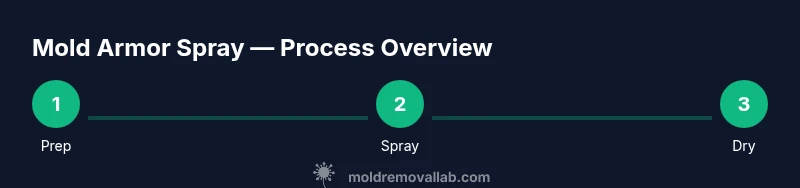
How to Use Mold Armor Spray: A Practical Home Guide
Learn the safe, effective steps to apply Mold Armor spray for mold control. This guide covers prep, application, drying, and maintenance, with practical tips from Mold Removal Lab to protect indoor air quality.


Using Mold Armor spray safely can stop mold growth and reduce future regrowth in common areas. This quick answer outlines the exact steps: prep the area, apply evenly, allow thorough drying, and perform light maintenance to keep surfaces mold-free. Follow these steps to protect indoor air quality and long-term home health.
What Mold Armor Spray Is and When to Use It
Mold Armor spray is a consumer-friendly mold treatment designed for non-porous surfaces such as ceramic tile, sealed metal, glass, and finished wood. It helps inhibit light, surface-level mold growth after proper cleaning, creating a protective film that can slow regrowth in moisture-prone areas like bathrooms, kitchens, laundry rooms, and basements. This guide, informed by Mold Removal Lab analysis and industry best practices, emphasizes safe use, surface preparation, and moisture control. It is not a substitute for professional remediation on large or deeply embedded mold problems. As of 2026, homeowners frequently use Mold Armor as part of routine maintenance after reducing moisture sources and cleaning visible mold.
Safety First: Ventilation, PPE, and Surface Prep
Ventilation is critical when applying spray products. Work in a well-ventilated area, open windows, and run a fan to move air. Put on nitrile gloves, eye protection, and a disposable mask or respirator if the room is small or mold levels are high. Begin by cleaning visible mold residue with mild soap and water, then dry the surface completely. Mask off adjacent surfaces to prevent overspray. This preparation reduces inhalation risk, improves product performance, and helps ensure you only treat the intended area. According to Mold Removal Lab, following label directions precisely is essential for safety and effectiveness.
Surface Compatibility and Testing a Small Area
Mold Armor spray is best suited for non-porous and sealed surfaces. Always test a hidden corner of each material before full application to rule out staining or texture changes. Avoid applying to porous substrates like drywall, untreated wood, fabric, or plaster where mold has penetrated. After testing and a thorough cleaning, apply the spray to the predefined area only if the test area looks unchanged. This cautious approach helps prevent unexpected damage and ensures reliable results.
Aftercare: Drying, Reapplication, and Moisture Control
Mold control hinges on drying time and moisture management. After spraying, allow the treated surface to dry completely before touching or cleaning. Drying times vary with humidity and airflow, so use a dehumidifier or additional fans if the space remains damp after several hours. In many homes, a thorough moisture-management plan (fix leaks, improve ventilation, reduce humidity) reduces the likelihood of regrowth and minimizes reapplication needs. Regular inspections after rain or plumbing events help catch issues early.
Common Mistakes and How to Avoid Them
Avoid heavy or thick coats; a thin, even layer is usually sufficient for non-porous surfaces. Do not mix Mold Armor with bleach, ammonia, or other cleaners unless the label explicitly allows it. Over-wetting or spraying too close can cause runs or uneven coverage. Always follow the product label for surface suitability, coat recommendations, and drying times. Pair the spray with ongoing moisture control to maximize effectiveness and reduce re-growth risk.
Realistic Expectations: What Mold Armor Spray Can and Cannot Do
Mold Armor spray can help inhibit surface mold on suitable materials and support maintenance after cleaning. It is not a cure-all for extensive mold growth, hidden mold behind walls, or structural moisture damage. For persistent or widespread mold, consult a professional mold remediation service. When used as part of a broader moisture-control plan, Mold Armor can contribute to safer indoor air quality and easier surface maintenance.
How Mold Armor Spray Interacts with Common Basement and Bathroom Materials
Basements and bathrooms often present high humidity and condensation. On non-porous surfaces, Mold Armor can form a protective film that impedes new mold growth between cleanings. On glossy tiles or sealed surfaces, it tends to dry clear and resist smudging. However, on porous substrates like drywall or untreated wood, the product may not adhere well or could alter texture. Always follow the label and perform border testing when applying near walls, ceilings, or wooden trims.
Case Scenarios: Small Areas vs Large Rooms
For small mold spots (e.g., around a bathroom sink), apply a light, even coat to the affected area and allow full drying. In larger spaces with higher humidity (like basements or laundry rooms), ensure adequate ventilation, clean more surfaces, and monitor for residual moisture. When in doubt, apply a conservative amount across many small patches rather than saturating a single area. This approach reduces the risk of pooling and ensures more uniform coverage.
Tools & Materials
- Mold Armor spray (mold treatment)(Follow label instructions; ensure it’s appropriate for the surface type.)
- Nitrile gloves(Protect hands from residue and solvents.)
- Safety goggles(Eye protection against overspray.)
- N95 respirator (or equivalent)(Use in limited-ventilation areas or high mold load.)
- Microfiber towels or cleaning cloths(For pre-cleaning and post-application wipe-down.)
- Masking tape or plastic sheets(Protect edges and nearby surfaces.)
- Mild detergent and water(For initial cleaning before treatment.)
Steps
Estimated time: Active work 1-2 hours; drying times vary (2-24 hours) depending on humidity
- 1
Prepare the area
Open windows and run a fan to ensure good ventilation. Remove or cover nearby items, and wipe visible dust with a microfiber cloth. This reduces debris and improves product contact with the mold-affected surface.
Tip: Ventilation is key; prioritize a cross-breeze setup to lower inhalation risk. - 2
Shake and ready the spray
Shake the bottle vigorously for 10-15 seconds to activate the formula. Test a small area if you’re unsure about surface compatibility before full application.
Tip: Keep the can upright and avoid tilting excessively to prevent sputtering. - 3
Apply a light, even coat
Hold the spray 6-8 inches from the surface and sweep with smooth, overlapping strokes. Do not saturate; aim for a thin, uniform layer that covers the mold-affected area.
Tip: Overlap strokes by about 50% to avoid missed spots. - 4
Allow to dry completely
Let the treated surface dry according to the label—drying times vary with humidity and airflow. Avoid touching or cleaning the area until fully dry.
Tip: If humidity is high, increase airflow or use a dehumidifier to speed up drying. - 5
Inspect and recoat if needed
After the first drying cycle, inspect for missed patches and apply a second thin coat if necessary. Do not reapply heavily in one go.
Tip: Recoat only where needed to preserve surface finish. - 6
Clean up and store
Wipe down tools, seal the bottle, and store away from children. Ventilate the area during storage and ensure the space is dry before reoccupation.
Tip: Wash hands thoroughly after use and dispose of used wipes safely.
FAQ
Is Mold Armor spray effective on all mold types?
Mold Armor spray is designed for common household mold on non-porous surfaces. For porous materials or extensive growth, professional remediation may be required.
Best for non-porous surfaces; porous materials or heavy growth may need a pro.
Can I use Mold Armor spray on wood or drywall?
Use only on sealed, non-porous surfaces. Porous materials may absorb the product and mold differently; check the label and consider professional help for extensive mold.
Only for sealed surfaces; porous materials may require a professional touch.
Do I need PPE beyond gloves and goggles?
Wear an N95 respirator if ventilation is limited or you’re working in tight spaces. Use gloves and eye protection at all times.
Wear a proper mask if ventilation is limited; always protect eyes and hands.
How often should I reapply after drying?
Reapply only if you observe new mold growth or after significant moisture events. Avoid over-application; follow label guidance for coats.
Reapply only if mold returns after drying and moisture events.
Is Mold Armor spray safe for pets and children?
Follow label instructions and keep the area ventilated. Allow the surface to dry completely before allowing pets or children back in.
Ventilate well and keep kids/pets away until dry.
Should I mix Mold Armor with bleach?
Do not mix cleaning products unless specified on the label. Mixing chemicals can release dangerous gases; use Mold Armor spray alone unless directed.
Don’t mix with bleach or other cleaners unless the label says it’s safe.
Watch Video
The Essentials
- Prepare the area and protect surrounding surfaces.
- Apply evenly with the correct distance for consistent coverage.
- Allow complete drying and inspect before reuse.
- Maintain moisture control to prevent mold regrowth.