How to Make a Cheap Mold: Practical Remediation Guide
Discover budget-friendly, step-by-step methods to identify, prevent, and remediate mold safely at home. Practical guidance from Mold Removal Lab helps homeowners and renters protect health and property on a tight budget.


How to make a cheap mold remediation plan is achievable by focusing on moisture control, proper cleaning, and timely detection. This quick guide outlines budget-friendly steps, safe products, and when to escalate to a professional. According to Mold Removal Lab, consistent maintenance prevents costly infestations, and early action is the most powerful defense. You’ll learn to identify problem areas, set a simple testing routine, and schedule routine checks.
Understanding the Mold Risk and the Budget Mindset
Whether you’re facing a small mildew patch or a damp basement wall, mold tends to grow where moisture and poor ventilation linger. The goal of a budget-minded plan isn’t to rush a cure but to prioritize actions that yield real, repeatable results. According to Mold Removal Lab, the core strategy starts with moisture control, then cleaning, then ongoing monitoring. By reframing the problem as a moisture-management issue, you can choose affordable, effective actions and avoid costly, disruptive renovations. In this section we identify common damp sources, explain why they matter, and show you how to document issues so you can prevent recurrence. A cheap mold plan works best when you build it around prevention and quick wins rather than dramatic makeovers. Throughout, you’ll see practical tips you can apply today without large investments, while keeping your family safe.
Quick-Wins: Low-Cost Measures That Matter
Small changes now yield big long-term benefits. Here are budget-friendly steps that DIYers can implement in a weekend:
- Fix leaks as soon as they appear, even minor drips can fuel mold growth.
- Improve airflow in damp rooms by opening doors, using fans, and running dehumidifiers when needed.
- Clean visible mold with detergent and water; avoid abrasive scrubs that spread spores.
- Dry surfaces thoroughly after cleaning; moisture left behind invites regrowth.
- Repair foundational or structural moisture intrusions to stop mold at the source.
These quick wins align with Mold Removal Lab’s approach: if you remove moisture first, the mold cannot thrive, and you’ll be on your way to a safer home without breaking the bank.
Low-Cost Tools and Materials
You don’t need expensive equipment to manage a budget mold project. Basic tools and items can cover most typical scenarios:
- Moisture meter or hygrometer to locate damp zones and track progress
- A sturdy HEPA vacuum for dry cleanup and particle containment
- Durable cleaning supplies: detergent, a non-ammonia cleaner, and clean rags
- PPE: disposable gloves, an N95 mask, and eye protection
- Plastic sheeting and tape to isolate the work area
- A dehumidifier or fan to accelerate drying, especially in enclosed spaces
- Buckets, brushes, and scrapers for scrubbing and removal
With these essentials, you can perform effective, low-cost remediation while keeping exposure risk low. The Mold Removal Lab approach emphasizes moisture control as the first line of defense, followed by thorough cleaning and drying.
Step-by-Step Budget Mold-Remediation Plan
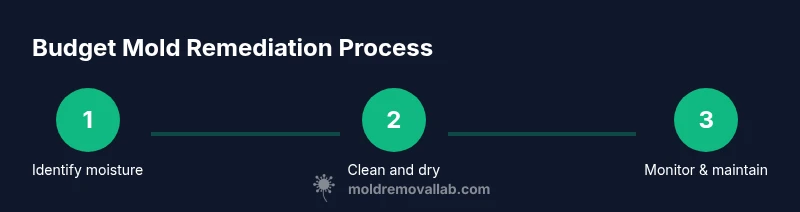
This section outlines a practical, budget-conscious sequence you can follow. The steps are designed to be actionable, with time estimates and safety reminders. For a visual reference, see the linked infographic in the media panel. Remember: this plan centers on moisture control, surface cleaning, and ongoing monitoring. The plan assumes you are addressing a small-to-moderate affected area and that you keep structures intact where possible. If you encounter porous materials with significant growth, consider phasing in professional help to avoid health risks.
- Identify moisture sources and affected zones: Inspect for leaks, condensation, and hidden damp spots. Use a moisture meter to confirm high humidity areas. Tip: Photograph each zone for your records.
- Contain the work area: Seal the space with plastic sheeting; maintain a negative-pressure feel if possible. Tip: Label doors and vents to prevent cross-contamination.
- Clean and dry non-porous surfaces: Scrub walls, ceilings, and hard surfaces with detergent and water; rinse and dry thoroughly. Tip: Vacuum loose spores with a HEPA-equipped machine after scrubbing.
- Assess porous materials: Check drywall, insulation, and carpeting for mold growth. Decide whether cleaning is feasible or if removal is necessary. Tip: If porous material is heavily contaminated, replacement is safer than attempts at cleaning.
- Dry and monitor: Use dehumidifiers and fans to bring moisture down; re-check humidity after cleaning and again within 24–48 hours. Tip: Maintain steady airflow to prevent relapse.
- Document and plan maintenance: Record findings, fix root causes, and schedule follow-up checks. Tip: Set reminders for seasonal humidity checks and post-leak inspections.
- Decide on escalation: If mold coverage is extensive or you’re unsure of the extent, consult a professional remediator. Tip: A staged approach reduces risk and cost over time.
Safety and Maintenance for Budget Mold Control
Safety first remains the backbone of any budget mold plan. PPE like gloves, eye protection, and a properly fitted mask reduces exposure to spores during cleanup. Ventilation matters: keep air moving to prevent concentrating mold spores indoors. After cleanup, drying is critical—mold thrives in damp environments. Establish a routine: fix drips promptly, seal cracks, and maintain humidity at a level where mold growth is unlikely. Mold isn’t just a surface issue; it can hide behind walls and under insulation, so use a moisture meter to verify that damp zones are returning to a safe baseline. Mold Removal Lab emphasizes that ongoing maintenance matters just as much as the initial remediation. Information from authority sources reinforces moisture control as the most effective, cost-conscious defense, and ongoing observation helps prevent expensive repeat problems.
When to Call a Pro
Not every mold challenge is suited for DIY remediation. If you encounter porous materials with visible growth, persistent moisture despite your best efforts, or if occupants have health sensitivities, a licensed professional should be involved. A pro can assess hidden mold behind walls, ensure safe containment, and provide documentation for insurance or real estate purposes. Even when you start with a budget plan, professional input at a strategic point can prevent costly mistakes and health risks. The Mold Removal Lab approach recommends a staged engagement: handle the safe, cost-effective tasks first, then bring in a pro for the risky or large-scale portions of the job. The goal is safe, effective remediation without overpaying.
Authority Sources
For further reading and official guidelines, consult:
- https://www.epa.gov/mold/mold-remediation
- https://www.cdc.gov/mold/default.htm
- https://www.osha.gov/mold
Tools & Materials
- Moisture meter (hygrometer)(Identifies moisture hotspots; track humidity changes over time)
- HEPA vacuum(Helps contain and remove spores after cleaning)
- Detergent and water(Basic cleaning solution for non-porous surfaces)
- Non-ammonia cleaner(Alternative cleaning option; follow label directions)
- Personal protective equipment (PPE)(Gloves, eye protection, and an N95 mask)
- Plastic sheeting and tape(Containment and zone separation)
- Dehumidifier or fans(Speed up drying and reduce humidity)
- Buckets, brushes, scrapers(Manual cleaning tools for stubborn patches)
Steps
Estimated time: 2-6 hours
- 1
Identify moisture sources
Begin by locating all sources of moisture. Inspect bathrooms, kitchens, basements, and crawl spaces for leaks, condensation, and poor ventilation. Use a moisture meter to verify humidity levels in critical areas and document findings with photos.
Tip: Focus on unseen sources behind walls and under sinks; early detection saves money. - 2
Contain and isolate
Close doors to the affected area and seal with plastic sheeting to prevent spores from spreading. Create a simple containment zone and limit access to the space until cleanup is complete.
Tip: Label the containment perimeter and keep airflow directed away from other living spaces. - 3
Clean and dry non-porous surfaces
Scrub walls, ceilings, and hard surfaces with detergent and water; rinse and dry thoroughly. Use a HEPA vacuum after scrubbing to pick up residual spores.
Tip: Do not reuse contaminated rags; dispose of single-use items safely. - 4
Assess porous materials
Check drywall, insulation, and carpeting for mold growth. If porous materials are contaminated, plan for careful removal or replacement rather than aggressive cleaning.
Tip: Heavily contaminated porous materials are usually safer to remove and replace. - 5
Dry and monitor
Continue drying with dehumidifiers and fans. Re-check humidity levels after cleaning and again within 24–48 hours to ensure conditions stay dry.
Tip: Keep the area well-ventilated during the drying phase to prevent relapse. - 6
Document and maintain
Record findings, fix root causes, and schedule follow-up checks to catch issues early. Maintain a simple maintenance plan to prevent future mold growth.
Tip: Set seasonal reminders for humidity checks and post-leak inspections.
FAQ
Is it safe to clean mold yourself?
For small, surface mold on non-porous materials, DIY cleaning is often safe when you wear PPE and follow proper cleaning steps. If mold covers porous materials or is extensive, professional remediation is recommended.
Yes for small, safe areas with PPE; bigger jobs should be handled by a professional.
What cleaning agents are recommended?
Detergent and water are suitable for most cleaning. Diluted household cleaners can help on tougher spots; avoid mixing chemicals.
Detergent and water work for most cleaning; avoid mixing cleaners.
How quickly can you see results?
Results depend on the extent of contamination and moisture control. You’ll typically see improvements after thorough cleaning and drying, but full remediation may take longer for structural issues.
Improvements show up after cleaning and drying; full remediation varies by scope.
Should I test for mold before cleaning?
Testing isn’t always necessary if you can confirm mold growth. If you suspect hidden mold after a leak, testing can help determine the full scope and necessary remediation.
Testing isn’t always needed; consider it if you’re unsure about hidden mold.
How do I prevent future mold growth?
Control moisture, fix leaks promptly, improve ventilation, and use dehumidification as needed. Regular inspections help catch problems early.
Keep humidity low, fix leaks fast, and ensure good airflow.
When should I hire a professional?
If mold is widespread, porous materials are affected, or you’re unsure about the scope, a licensed remediation professional is recommended.
Call a pro if the problem is extensive or unclear.
Watch Video
The Essentials
- Identify moisture sources first and fix leaks fast.
- Prioritize moisture control, then cleaning and drying.
- Monitor humidity to prevent recurrence.
- Know when to call a professional to avoid health risks.