Pink Mold vs Hard Water Stains: A Practical Home Guide
Compare pink mold and hard water stains to identify risks, causes, and effective cleaning steps. This Mold Removal Lab guide helps homeowners distinguish biology from mineral deposits and offers surface-safe remediation tips.


Pink mold and hard water stains are common bathroom nuisances, but they signal different problems and require different fixes. In this comparison, we distinguish between a biological pink mold issue and mineral-based hard water stains, explain health implications, and outline practical cleaning approaches. Mold Removal Lab notes that identification matters for safety and long-term maintenance.
Why Pink Mold vs Hard Water Stains Matter in Home Hygiene
The difference between pink mold vs hard water stains is more than cosmetic; it determines how you respond. Moist environments in bathrooms, kitchens, and laundry rooms foster two distinct challenges: a biological growth that can harbor bacteria and a mineral buildup that deposits on surfaces. Identifying which is present informs cleanup, safety considerations, and maintenance plans. According to Mold Removal Lab, early recognition reduces exposure to moisture-related hazards and prevents surface damage from improper cleaners. The Mold Removal Lab team found that many homeowners treat pink discolorations with the same descaling agents used for mineral stains, which can be ineffective and potentially harmful to sensitive surfaces.
In this article, we explore how to distinguish pink mold from hard water stains, why each occurs, and practical steps you can take now. We’ll cover common locations, visual cues, and best-practice cleaning methods. By focusing on the right remediation, you can restore aesthetics, protect your family, and keep bathrooms and kitchens healthier over time. Remember: the root causes—excess moisture and mineral-rich water—often require concurrent fixes to prevent recurrence.
Defining Pink Mold: Biology, Appearance, and Risk
Pink mold is not just a color. It represents a biological growth commonly caused by moisture-loving bacteria such as Serratia marcescens that can appear as pink or peachy slime on damp surfaces. It tends to colonize bathroom grout, caulk, drain rims, and shower shelves where organic matter and moisture meet. Visual cues can include a pink-tinged film that may feel slimy rather than powdery. While pink mold is not always a severe health hazard, it can contribute to respiratory irritation for some people and often signals persistent moisture problems that should be addressed. Mold Removal Lab analysis shows that identifying pink mold as a biological contaminant prompts disinfection and moisture-control steps rather than pure descaling. Proper identification reduces unnecessary chemical exposure and helps protect porous substrates.
To be clear, pink mold can thrive in humid places year-round, particularly where there are gaps, leaks, or slow-draining lines. Corrective actions typically involve improving ventilation, drying wet areas promptly, and using cleaners that target biofilms without damaging materials. In many homes, pink mold reappears if moisture sources are not eliminated, emphasizing that remediation is both a cleaning task and a moisture-management plan.
Understanding Hard Water Stains: Minerals, Surfaces, and Persistence
Hard water stains result from mineral deposits—mainly calcium and magnesium salts—that crystallize on surfaces after water evaporates. Unlike pink mold, these stains are non-biological and do not involve living organisms. They commonly accumulate on faucets, glass shower doors, tile grout, and porcelain fixtures in homes with alkaline or mineral-rich water. The deposits can appear white, cloudy, or yellowed, sometimes mimicking the color of mold when coupled with soap scum or iron; however, their origin remains mineral, not microbial. Persistence is tied to water exposure frequency, surface porosity, and water hardness. While hard water stains are primarily cosmetic, heavy mineral buildup can etch certain surfaces over time and make subsequent cleaning more challenging. Cleaning approaches focus on mineral dissolution and mechanical agitation rather than disinfection.
From a maintenance perspective, addressing mineral deposits begins with regular drying after use, using a water-softening system if feasible, and choosing descaling agents compatible with the surface. Mold Removal Lab notes that minerals can be stubborn on porous substrates like grout, where cleaning may require repeated descaling and sealing strategies to prevent re-deposition.
Health Implications and Safety Considerations
The health implications of pink mold vs hard water stains differ markedly. Pink mold represents a biological process that can harbor bacteria and fungi in moist environments. People with allergies, asthma, or immune sensitivities may notice coughs, eye irritation, or skin reactions when exposed to biofilms. This is not a universal outcome, but it underscores the importance of proper cleanup with appropriate cleaners and adequate ventilation. In contrast, hard water stains are mineral artifacts; they do not pose the same microbial risk. They can, however, harbor soap scum and grime that degrade indoor air quality if left to accumulate. The underlying safety takeaway is clear: treat suspected biological growth seriously and avoid rushing to cosmetic remedies. Ventilation, moisture control, and using products that are safe for the specific surface are essential.
If you observe persistent dampness, recurring pink patches after cleaning, or a moldy odor, these signals warrant closer inspection and possibly moisture-control interventions rather than cosmetic scrubbing alone. Mold can sometimes indicate a leak or hidden moisture issue that requires more than surface cleaning. In these cases, professional assessment is advisable to ensure safe remediation and to prevent recurrent problems.
Visual Cues and Diagnostic Clues: How to Tell Them Apart
Differentiating pink mold from hard water stains relies on a combination of appearance, location, and texture. Pink mold often appears as a soft, slimy, pink-to-orange coating in moist corners, around drains, on grout lines, or along the edge of caulking. It may appear sporadically or in a spreading pattern, particularly where humidity remains high. Hard water stains, by contrast, present as chalky, mineral deposits that dry to a crust or film. They tend to accumulate on metal fixtures, glass, and glazed surfaces where water repeatedly dries, leaving a more crystalline or opaque appearance. Smell can also be a clue: mold growth sometimes produces a musty odor, while mineral buildup generally does not.
For a practical check, try a gentle wipe with a non-abrasive cleaner: mold typically leaves a color change or smear that returns after drying if moisture persists; mineral stains may weaken or disappear as deposits dissolve with descalers. Safety note: if you suspect mold behind walls or in concealed spaces, do not rely on surface tests alone—consult a professional. The goal is a reliable diagnosis that informs the right remediation path.
Cleaning Strategies for Pink Mold: Step-by-Step Guide
If you are dealing with pink mold, start with safety and moisture control. Put on gloves and eye protection, then ensure the area is well-ventilated. Remove loose debris and soap scum from the affected surfaces with a non-acidic cleaner to reduce the nutrient load for the biofilm. Apply a cleaner that is effective against biofilms or an EPA-registered disinfectant following the product label directions. Allow the disinfectant to remain on the surface for the recommended contact time before wiping away. Rinse with clean water and dry thoroughly. Address the moisture source—fix leaks, improve ventilation, and consider a dehumidifier if humidity remains high. If the pink film reappears, repeating the cleaning cycle and verifying there is no hidden moisture source is essential. For porous materials like grout, surface sealants can help, but cleaning should precede sealing to ensure maximum effectiveness. Always test a small, inconspicuous area first to confirm surface compatibility. In some cases, professional remediation may be warranted when growth recurs despite diligent cleaning.
Cleaning Strategies for Hard Water Stains: Step-by-Step Guide
Descaling mineral deposits requires a different approach. Start with a non-abrasive cleaner to avoid scratching surfaces. For many fixtures, white vinegar or a citric acid-based descaler can help dissolve mineral buildup when applied and left to dwell briefly, then scrubbed with a soft brush or sponge. Rinse thoroughly to remove any dissolved minerals, and dry completely to prevent immediate re-deposition. On glass surfaces, a paste made from baking soda with water can provide gentle abrasion to lift mineral films without scratching. For chrome or stainless metal fixtures, avoid acidic cleaners that could corrode the finish; instead, use surfaces-safe descalers and buff with a microfiber cloth. If stains persist after initial treatment, repeat the process or consider a professional descaling service. The key is to control water exposure and maintain dry, clean surfaces to slow recurrence.
Surfaces, Materials, and Compatibility: Tile, Grout, Plastic, Metal
Different materials demand different cleaning strategies. Porous materials like grout and caulk can trap biofilms and mineral deposits more readily, requiring careful cleaning and, in some cases, sealing to prevent moisture penetration. Non-porous surfaces such as ceramic, glass, porcelain, and enamel respond well to disinfectants and descalers, but care must be taken to avoid overly abrasive tools that could scratch. Metal fixtures—faucets, showerheads, and chrome—often benefit from gentle descalers for mineral stains, combined with thorough drying to prevent corrosion. Plastic surfaces can show both mold growth and mineral buildup, so choose cleaners labeled safe for plastics and follow the label for contact time. Always test on a small area first, especially on delicate finishes. Surface compatibility reduces the risk of damage and helps maintain bathroom aesthetics over time.
When to Call a Professional: Testing, Leaks, and Persistent Issues
Not every color patch is easy to identify, and some situations require professional input. If you see sustained discoloration after cleaning, suspect hidden moisture or leaks, or experience recurring patches despite diligent drying, it is time to seek expert assessment. A professional can perform targeted moisture testing, identify hidden leaks, and determine whether the growth is truly mold or a benign mineral stain. In bathrooms with limited access or in cases where there is a risk of behind-wall contamination, professional remediation ensures safety and effectiveness. Early professional input can prevent larger fungal colonization, protect indoor air quality, and extend the life of bathroom finishes by addressing the root causes rather than simply masking symptoms.
Prevention and Maintenance: Reducing Recurrence over Time
Prevention is the best defense against pink mold and hard water stains. Maintain proper humidity levels by using exhaust fans during and after showers, run dehumidifiers in damp areas, and fix leaks promptly. Regular cleaning with products appropriate for the surface helps prevent both biofilms and mineral deposits. Consider installing a water softener if mineral content is persistently high, and seal grout and caulk to reduce moisture intrusion. Routine inspections of plumbing, vents, and windows help catch problems early. By combining moisture control with surface-appropriate cleaning, you can reduce recurrence and keep bathrooms healthier and more sanitary.
Quick Reference Checklist: Pink Mold vs Hard Water Stains at a Glance
- Identify whether the patch is biological or mineral-based before choosing cleaners.
- Ventilate and dry areas to reduce persistence of pink mold.
- Use disinfectants approved for biofilms on non-porous surfaces when dealing with pink mold.
- Use descalers and gentle scrubbing for hard water stains; avoid harsh chemicals on delicate finishes.
- Seal and protect surfaces after cleaning to prevent recurrence.
Comparison
| Feature | Pink Mold | Hard Water Stains |
|---|---|---|
| Appearance | Pink to orange slimy film on moist surfaces | White/yellowish chalky deposits or films |
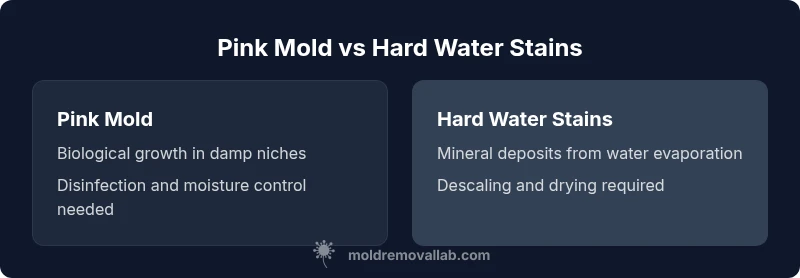
| Causes | Biological growth in damp niches | Mineral deposition from hard water |
| Common Locations | Grout, caulk, drains, shower corners | Faucets, glass, tiles, toilets |
| Health Risk | Can indicate biohazard and moisture problems | Usually cosmetic; minimal direct health risk |
| Cleaning Approach | Disinfection and moisture control; biofilm cleaners | Descaling agents and mechanical scrubbing |
| Materials Compatibility | Porous materials may require sealing after cleaning | Non-porous surfaces typically tolerate descalers |
| Recurrence | Depends on moisture control and biofilm management | Depends on water hardness and ongoing mineral exposure |
Upsides
- Helps homeowners identify health vs cosmetic issues
- Guides targeted cleaning to avoid surface damage
- Encourages moisture control to prevent recurrence
- Improves indoor air quality and aesthetics
The Bad
- Diagnosis may require testing or professional input
- Some cleaners may damage delicate finishes
- Persistent cases may need professional remediation
Accurate identification is essential for safe, effective cleaning
Differentiating pink mold from hard water stains guides appropriate remediation and reduces the risk of damage or recurring issues; moisture control is critical for long-term success.
FAQ
What is the key difference between pink mold and hard water stains?
Pink mold is a biological growth that can harbor bacteria in moist areas, while hard water stains are mineral deposits left by water evaporation. Their cleanup requires different products and approaches.
Pink mold is biological; hard water stains are mineral deposits. They require different cleaners and steps to prevent recurrence.
Is pink mold dangerous?
Pink mold can indicate ongoing moisture problems and potential health risks for sensitive individuals. Proper cleaning, ventilation, and moisture control are important.
Yes, it can pose health risks for some people, so safe cleaning and ventilation are important.
Can hard water stains be completely removed?
Most mineral deposits can be significantly reduced with descalers and regular cleaning; some stubborn stains may require repeated treatments.
You can usually remove most mineral stains with descalers and careful scrubbing.
How can I test whether a pink spot is mold?
Visual inspection plus odor can help; for certainty, use a professional test kit or consult a remediation expert.
If unsure, testing can confirm whether mold is present.
What surfaces are more prone to pink mold or hard water stains?
Pink mold commonly appears on grout and caulk in moist areas; hard water stains usually appear on glass, metal fixtures, and tiles.
Mold likes grout; mineral stains show up on metal and glass.
When should I call a professional?
If growth recurs after cleaning, you suspect hidden moisture, or you’re unsure of the diagnosis, a licensed professional is recommended.
Call a pro if it keeps coming back or you’re unsure about what you’re dealing with.
The Essentials
- Identify pink mold vs hard water stains before cleaning
- Prioritize moisture control to prevent mold recurrence
- Use disinfectants for mold, descalers for mineral deposits
- Dry surfaces thoroughly after cleaning to discourage regrowth
- Consult a professional if patches persist after remediation