Mildew vs Mold in Bathroom: Practical Guide for Homeowners
Compare mildew and mold in the bathroom, covering growth cues, health risks, remediation steps, and prevention tips for homeowners.


In bathroom terms, mildew vs mold in bathroom refers to two common moisture-related issues that require different remediation approaches. This comparison highlights where mildew and mold differ in appearance, growth conditions, health implications, and practical steps you can take to address each effectively. Mold Removal Lab's analysis helps readers know when to call a pro and how to prevent recurrence.
What mildew is in bathrooms
Mildew is a type of fungus that grows on surfaces exposed to moisture, especially in bathrooms where humidity spikes after showers. In most cases it appears as a thin, powdery, white or gray film on tile grout, silicone caulk, shower curtains, or wallpaper. Mildew tends to remain on the surface and does not deeply penetrate porous materials. When people compare mildew vs mold in bathroom, this first distinction is essential: mildew is a surface-dwelling growth rather than a deeper intrusion. According to Mold Removal Lab, mildew in bathrooms is usually an early warning sign of excessive humidity and inadequate ventilation, signaling a need to act before the problem escalates. If you can scrub it away with a cleaner and a brush, you’re likely dealing with mildew rather than mold that has taken root in porous substrates. Addressing the moisture source promptly is essential to prevent recurrence and maintain a healthier bathroom environment.
In many cases, simple cleaning and moisture control can resolve mildew without invasive remediation. Regular checks around shower doors, grout lines, and caulk seams help catch it early. By tracking humidity, you can keep mildew from becoming a larger mold issue. This block sets the stage for understanding the different remediation paths required for mildew versus mold in typical bathroom scenarios.
What mildew is in bathrooms
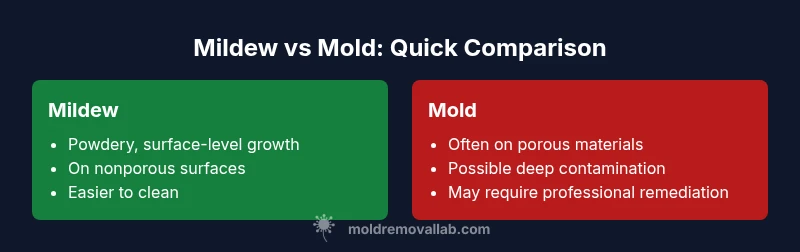
Mildew describes surface-level, powdery growth that often appears on tile grout, caulk, and shower curtains. It generally stays on nonporous surfaces and is easier to remove with standard cleaners. By contrast, mold covers a broader spectrum of growth, including on porous materials like drywall, wood, and insulation. Recognizing mildew as a surface problem motivates a moisture-control plan without immediate structural work. Mold, meanwhile, signals deeper moisture problems that may require professional intervention. This distinction is central to any bathroom remediation strategy, especially in spaces with persistent humidity or recurring leaks.
How humidity and surfaces drive growth
Bathroom moisture is the primary driver of both mildew and mold growth. When humidity remains high after showers, baths, or long periods of steam, surfaces stay damp, creating ideal conditions for fungal colonies to emerge. Nonporous surfaces such as ceramic tile and glass are more prone to mildew, while porous substrates like drywall, wallpaper, and wood can harbor mold that penetrates below the surface. Surfaces near sinks, shower stalls, and behind toilet bases often stay damp due to leaks or poor venting, making these areas hotspots. The Mold Removal Lab Team emphasizes that addressing moisture sources—ventilation, dehumidification, and timely repairs—is the most effective long-term strategy against both issues. A proactive moisture plan reduces reoccurrence and keeps bathroom air safer to breathe.
Visual cues: telling mildew from mold
Mildew typically appears as a light-colored, powdery film on surfaces such as grout lines, caulk, and shower curtains. Mold is usually fuzzy or slimy, and it can come in colors ranging from black to green to gray, often forming patches that feel slightly textured to the touch. When you see multicolored growth on porous materials like drywall or wood, you’re more likely dealing with mold. For homeowners, a quick visual check can guide next steps: mildew is common on nonporous surfaces and responds well to scrubbing, while mold on porous materials may require removal or professional assessment. Remember to wear gloves and a mask when inspecting or cleaning and to ventilate the area well.
Health considerations you should know
Both mildew and mold can affect air quality and trigger allergic reactions or respiratory symptoms in sensitive individuals. Mildew exposure typically causes milder effects, such as sneezing or runny nose, especially in people with existing allergies. Mold exposure can provoke more pronounced reactions, including coughing, throat irritation, and, in some cases, asthma exacerbations. The risk increases with prolonged exposure, large mold colonies, and growth behind walls or under flooring where people spend time. The Mold Removal Lab Team notes that protecting vulnerable household members—children, the elderly, and those with compromised immune systems—is a priority when addressing bathroom mold or mildew. If you notice persistent symptoms after cleaning, seek medical advice and consider a professional mold assessment.
DIY vs professional remediation: decision guide
Small, easily accessible mildew on nonporous surfaces is often manageable with routine cleaning and moisture-control measures. However, when mold grows on porous materials, spreads to hidden areas, or recurs after cleaning, professional remediation is advised to address underlying moisture sources and prevent re-growth. Before deciding, assess the extent of growth, the materials involved, and whether moisture issues persist. If in doubt, a professional assessment can save time, reduce health risks, and ensure proper remediation. The Mold Removal Lab Team recommends erring on the side of caution when mold is suspected in hidden spaces or if there is ongoing dampness.
A structured approach helps homeowners decide: 1) confirm moisture sources, 2) determine whether surfaces are porous, 3) evaluate the severity of growth, and 4) choose appropriate cleaning or remediation steps. This framework aligns with professional guidelines and supports safer, more effective bathroom management.
Cleaning strategies: mildew-focused methods
Cleaning mildew focuses on surface scrubbing, disinfection, and moisture control. Start by wearing protective gloves and a mask, and ensure good ventilation. Use a bathroom cleaner, or a solution like white vinegar diluted with water (equal parts) for a gentler option. Scrub grout lines, caulking, and nonporous surfaces with a brush or sponge, then rinse and dry thoroughly. After cleaning, apply a moisture barrier and improve ventilation to prevent recurrence. If stubborn mildew persists, repeat cleaning and consider replacing silicone sealant where mold growth tends to occur. Regular, short cleaning sessions are more effective than infrequent deep cleans for keeping mildew at bay.
Cleaning strategies: mold on porous materials
Mold on porous materials requires more aggressive measures. First, identify affected areas behind walls, under sinks, or in insulation; these may require professional assessment. If the affected area is small and the material is nonstructural, surface cleaning with detergent and water followed by thorough drying can help, but porous materials often need removal and replacement to prevent regrowth. Disinfectants can be used carefully on nonporous components, but porous materials should be replaced if mold penetrates deeply. The goal is to eliminate moisture sources, remove contaminated materials, and ensure the space dries properly. In many cases, professional remediation provides a safer and more reliable outcome, especially for hidden mold.
Prevention: moisture control and routine maintenance
Preventing mildew and mold starts with moisture control. Use exhaust fans during and after showers, keep bathroom doors and windows open when feasible to improve air flow, and consider a dehumidifier in particularly damp spaces. Repair leaks promptly, seal gaps around plumbing, and replace damaged caulk and grout to reduce moisture-trapping areas. Establish a regular cleaning routine that targets high-humidity sites such as shower grout and under-sink cabinets. Routine inspections help catch early signs of growth and stop problems from escalating.
Real-world scenarios and quick decision trees
In common bathroom scenarios, quick decisions can prevent growth from spiraling: 1) If you see surface mildew on nonporous areas, clean and dry promptly and improve ventilation. 2) If you notice fuzzy patches on walls or behind fixtures, stop and inspect for moisture sources; consider calling a pro. 3) If growth returns after cleaning, suspect hidden moisture or porous materials and seek professional remediation. A simple decision tree can guide homeowners toward practical actions without guesswork, reducing health risks and property damage.
Documentation, testing, and monitoring
Keep notes of where growth appears, the dates of cleaning, and any changes in humidity. A moisture meter can help quantify ambient conditions and identify persistent moisture. For many homeowners, routine visual checks are enough, but professional testing may be warranted if you suspect vapor migration, hidden leaks, or recurring growth despite cleaning. Documentation supports timely interventions and helps track the effectiveness of remediation over time.
Tools, PPE, and safety reminders
Always wear gloves, eye protection, and a mask when dealing with mold or mildew. Work in a well-ventilated area, and never mix cleaners with ammonia or bleach as dangerous fumes can form. Use nonporous cleaning tools on mildew, and consider replacing porous materials after mold growth. For persistent problems, contact a licensed professional who can assess structural moisture and perform appropriate remediation. Safety and moisture management are the cornerstones of lasting bathroom health.
Final considerations and practical takeaways
Mildew and mold in bathrooms often indicate moisture control problems. Act quickly with thorough cleaning for mildew and professional remediation for mold on porous materials. Prioritize ventilation, leak repairs, and regular cleaning to prevent reoccurrence. By understanding the differences between mildew and mold, homeowners can make informed decisions, choose appropriate products, and maintain a healthier bathroom environment.
Comparison
| Feature | Mildew | Mold |
|---|---|---|
| Appearance | Powdery, chalky film (white/gray) | Fuzzy or slimy patches, various colors |
| Growth substrate | Typically on nonporous surfaces | Can colonize porous materials (drywall, wood) |
| Growth conditions | High humidity; surface-level growth | Moisture on porous substrates; deeper intrusion possible |
| Health implications | Often mild allergic symptoms | Can trigger more significant respiratory issues in sensitive individuals |
| Removal difficulty | Usually easier to scrub from nonporous surfaces | More challenging on porous materials; may require replacement |
| Typical locations in bathroom | Grout lines, caulk, shower curtains | Behind walls, under sinks, near leaks |
| Prevention focus | Moisture control and surface cleaning | Moisture source repair; potential professional remediation |
Upsides
- Helps homeowners identify the issue quickly
- Reduces health risks through proper remediation
- Prevents structural damage by timely action
- Guides appropriate cleaning methods and products
- Supports cost-effective decision-making
The Bad
- Misinformation risk if misidentified
- DIY remediation may be insufficient for mold on porous structures
- Overreliance on DIY can miss hidden moisture sources
- Professional remediation may be costly
Mildew is easier to address on its own, but mold signals deeper moisture issues that may need professional remediation.
If the problem is surface-level mildew on tiled areas, DIY cleaning plus moisture control suffices. If mold appears on porous materials or recurs after cleaning, hire a pro to assess moisture sources and perform proper remediation.
FAQ
What is the difference between mildew and mold in a bathroom?
Mildew is a surface-level, powdery growth on nonporous surfaces, while mold can penetrate porous materials and grow deeper. Understanding this distinction helps determine whether cleaning or professional remediation is needed.
Mildew sits on the surface; mold can go deeper. Knowing this helps you choose cleaning versus professional help.
Can I remove mildew myself?
Yes, for mildew on nonporous surfaces you can often clean with standard bathroom cleaners or vinegar and improve ventilation to prevent recurrence. Wear protective gear and ensure the area dries thoroughly afterward.
You can usually clean mildew yourself on nonporous surfaces, with good ventilation.
Should I treat all bathroom mold as dangerous?
Not all mold is dangerous, but some species can affect health, especially with prolonged exposure. Use PPE, ensure good ventilation, and consider professional testing if growth is extensive or persistent.
Some mold can affect health; take safety steps and seek help if it keeps coming back.
When is professional remediation required?
Professional remediation is advisable when mold appears on porous materials, spreads to hidden areas, or recurs after cleaning. A pro can identify moisture sources and perform proper remediation.
Call a professional if mold is on porous materials or keeps returning.
What cleaners are safe for mildew vs mold?
Mildew on nonporous surfaces responds well to cleaners or distilled white vinegar. For mold on porous materials, avoid overuse of harsh chemicals and consider professional products or replacement of affected materials.
Use surface cleaners or vinegar for mildew; for mold on porous stuff, consider professional help.
How can I prevent bathroom mold and mildew?
Improve ventilation, fix leaks promptly, monitor humidity, and clean regularly. Sealing grout and caulk and using a dehumidifier in damp spaces reduces the risk of both mildew and mold.
Ventilate, fix leaks, and clean regularly to prevent growth.
The Essentials
- Identify whether you’re dealing with mildew or mold to choose the right approach.
- Check for moisture sources before cleaning to prevent recurrence.
- Prioritize moisture control to prevent re-growth.
- Use appropriate cleaning methods: vinegar/detergent for mildew; professional remediation for mold on porous materials.
- Document progress and recheck after remediation.