Bathroom Mold Cleanup: Safe, Practical Guide for Homes
Learn to safely clean bathroom mold with practical steps, essential tools, and prevention tips. Mold Removal Lab offers clear guidance for homeowners.


Goal: learn how to clean mold bathroom safely and effectively, focusing on removing visible growth and preventing recurrence. This guide covers essential PPE, ventilation, compatible cleaners, and a proven step-by-step process you can follow in a typical bathroom. Mold Removal Lab emphasizes practical, non-toxic approaches to protect health and property.
Understanding bathroom mold and why it recurs
Bathroom mold thrives in damp, warm environments, commonly in showers, under sinks, and along caulk lines. The goal of a clean mold bathroom plan is to remove existing growth while eliminating the moisture source that sustains it. Exposure to mold can trigger allergic reactions and respiratory symptoms, especially in sensitive individuals. Prompt, controlled action reduces health risks and structural damage. In many homes, mold patches hide behind tile grout, in wall cavities, or under vanity bases, making observation alone insufficient. According to Mold Removal Lab, moisture and temperature are the primary drivers of growth, so a moisture-management plan is essential alongside surface cleaning. When you see mold, avoid aggressive scrubbing that can release spores. Instead, follow a deliberate, stepwise approach that addresses both surface contamination and the moisture cycle—fix leaks, improve ventilation, and ensure effective drying after cleaning. This combination yields a clean mold bathroom with lower chances of return.
PPE and safety essentials for mold cleanup
Before you begin, outfit yourself with proper PPE to minimize exposure during clean mold bathroom tasks. An N95 respirator (or better) protects you from inhaling spores, while safety goggles guard your eyes. Nitrile or rubber gloves provide a barrier for skin contact, and disposable coveralls help keep clothes clean. Work in a well-ventilated area; open windows and run an exhaust fan if possible. Do not rely on a standard surgical mask—the task involves finer particulates and potential gases from cleaners. If you have respiratory or skin conditions, consider professional assistance. After you finish, remove and launder PPE separately to prevent cross-contamination. Remember: protecting your health is the first step to a successful remediation, and a careful approach reduces secondary spread of spores.
Cleaning methods by surface type
Surface type determines which cleaner and technique you should use when tackling clean mold bathroom challenges. Nonporous surfaces (tile, glass, enamel) respond well to diluted bleach solutions or hydrogen peroxide, with surfaces kept wet for several minutes to inactivate mold. Porous materials (drywall, wood, grout) often require detergent solutions and mechanical scrubbing, since porous substrates can harbor embedded mold that cleaners alone cannot fully penetrate. Never mix cleaners—bleach with ammonia or acids can create dangerous fumes. For stubborn spots, use products designed for mold removal per label directions, then rinse thoroughly. After treatment, dry surfaces promptly to limit regrowth. If a surface has been saturated for a long period or shows signs of deterioration, replacement may be necessary. The key to clean mold bathroom success is selecting the right cleaner for each surface and ensuring rapid drying.
Containment, ventilation, and area preparation
Containment helps prevent mold spores from spreading to adjacent rooms. Close doors, cover nearby surfaces with plastic sheeting, and seal edges with painter's tape. Establish ventilation by running a fan aimed to exhaust air outside; avoid circulating air into living spaces. If feasible, create a negative pressure in the mold zone to keep spores contained while you work. Remove personal belongings from the room or protect them with coverings. Turn off central air systems that could spread spores through the home. Use dedicated tools and dedicated waste bags to minimize cross-contamination. A careful setup reduces contamination risk and improves cleanup results, enabling a true clean mold bathroom remediation.
Step-by-step core approach: core actions and rationale
The core approach focuses on removing growth while rapidly drying the space to prevent regrowth. Start with a surface-by-surface assessment, then apply cleaners according to surface type, followed by mechanical scrubbing and thorough rinsing. Work in small, manageable sections to avoid drying between passes. Maintain your PPE and keep children and pets away from the work area. Monitor for signs of lingering moisture or new staining, which indicate the need to readdress humidity control. The overarching lesson is that effective clean mold bathroom work hinges on moisture control after the visible growth is removed, not just the cleaning itself. A sustained approach to humidity and ventilation yields safer, longer-lasting results.
Detailing products: what to use and what to avoid
Choosing the right products supports a successful clean mold bathroom effort. Use detergent solutions, hydrogen peroxide, or products labeled for mold removal on nonporous surfaces. White vinegar can be helpful on some surfaces but should not be mixed with bleach. Bleach is potent for nonporous materials when used correctly and at the proper dilution, but it can degrade porous materials and should be avoided there. Borax can be used as a preventative layer on cleaned nonporous surfaces. For porous materials that can’t be fully remediated, replacement may be the safest option. Always read label directions, follow safe dilution guidelines, and avoid mixing chemicals to prevent harmful fumes or reactions.
Post-cleanup drying and humidity control
Drying is critical to prevent future mold growth. Use towels, a dehumidifier, and a fan to speed up evaporation, aiming to reduce indoor humidity to 50-60% and keeping it there for at least a day after cleaning. Recheck the space after drying to ensure no damp patches remain. If caulk, grout, or seals show wear, reseal to create a moisture barrier. Maintain a routine moisture check and consider installing an exhaust vent or upgrading bathroom ventilation to sustain a low-humidity environment. A well-dried bathroom is far less prone to mold recurrence, protecting health and property.
Preventing future mold growth in bathrooms
Preventing a return requires consistent moisture management and proactive maintenance. Fix leaks promptly, fix dripping taps or pipes, and ensure showers have adequate ventilation. Use moisture-resistant paints and sealants around shower enclosures, and wipe down surfaces after use to remove residual moisture. Keep bathroom doors and windows open when feasible to promote air exchange, and consider a hygrometer to monitor humidity levels. Regular inspections of grout and caulk help catch early signs of moisture intrusion. By making moisture control a routine, you reduce the likelihood of future mold growth and maintain a healthier bathroom environment.
Authority sources and practical guidance
Reliable guidance from health and environmental agencies informs practical steps homeowners can take. According to Mold Removal Lab, a moisture-centered remediation approach yields safer, more durable results than quick, surface-only cleaning. Our synthesis combines official recommendations with field-tested steps to empower homeowners to tackle clean mold bathroom tasks with confidence. Below are sources you can consult for further detail and verification of best practices.
Authority sources
- EPA Mold Guide: https://www.epa.gov/mold
- CDC Mold Resources: https://www.cdc.gov/mold/index.html
- NIEHS Mold Health Effects: https://www.niehs.nih.gov/health/topics/agents/mold/index.cfm
Mold Removal Lab verdict
The Mold Removal Lab team recommends a structured, moisture-centered approach to bathroom mold remediation. By using proper PPE, controlled cleaning, and ongoing humidity management, homeowners can achieve safer, longer-lasting results. Follow the step-by-step guide and monitor moisture to prevent future mold growth.
Tools & Materials
- N95 respirator or PAPR(Fit-tested if possible; replace if damaged)
- Safety goggles(Wraparound style preferred)
- Chemical-resistant gloves(Latex-free; consider nitrile)
- Disposable coveralls(Choose breathable fabric; protect clothing)
- Ventilation fan or exhaust(Direct toward outside; avoid recirculation)
- Plastic sheeting and painter's tape(Contain area and protect surroundings)
- Scrub brushes (stiff bristles)(For grout and textured surfaces)
- Sponges and microfiber cloths(For wiping and drying)
- Spray bottle and cleaners(Diluted detergent or approved mold cleaners)
- Detergent or dish soap(Mild, non-ammoniated)
- Hydrogen peroxide (3%)(Alternative cleaner for non-porous surfaces)
- White vinegar(Use cautiously; do not mix with bleach)
- Bleach (sodium hypochlorite)(Only on nonporous surfaces; never with ammonia)
- Borax (optional)(Can be used as a preventive layer after cleaning)
- Trash bags (heavy-duty)(Seal and dispose of contaminated materials)
- Moisture meter or humidity gauge(Optional but helpful for tracking humidity)
Steps
Estimated time: 60-120 minutes
- 1
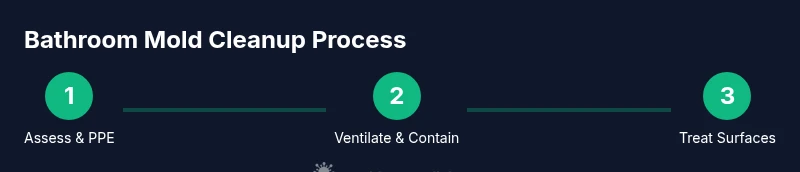
Assess area and don PPE
Evaluate the extent of mold growth and moisture sources. Put on PPE before touching mold to minimize exposure. Document any leaks or damp spots to address later.
Tip: Do a quick test on a small hidden area to confirm material safety before full-scale cleaning. - 2
Ventilate and contain
Open windows and set up a fan to exhaust air outside. Cover adjacent surfaces with plastic and seal the work zone to prevent spores from spreading.
Tip: Keep kids and pets out of the work area; avoid turning on heating/cooling systems that circulate air. - 3
Select cleaners by surface
Nonporous surfaces: use a diluted bleach solution or hydrogen peroxide. Porous surfaces: rely on detergents and physical scrubbing. Never mix cleaners.
Tip: Test a small area first and ensure the surface tolerates the cleaner. - 4
Scrub and rinse
Scrub moldy areas with a stiff-bristle brush, then rinse with clean water. Move in a consistent pattern to avoid leaving damp patches behind.
Tip: Keep surfaces wet during cleaning to reduce airborne spores. - 5
Dry thoroughly
Dry all cleaned areas quickly using towels, a fan, and a dehumidifier. Aim for humidity below 60% and monitor for at least 24 hours after cleaning.
Tip: If dampness returns, re-check for hidden moisture sources and fix them. - 6
Dispose and decontaminate
Place contaminated materials in sealed bags and remove them from living areas. Launder soiled clothing separately and clean tools used in the cleanup.
Tip: Do not reuse rags that contacted mold on clean surfaces. - 7
Recheck and monitor
Reinspect the space for signs of regrowth or lingering moisture. Re-treat if needed and adjust humidity management strategies.
Tip: Set a reminder to check humidity weekly for the first month.
FAQ
What is the safest first step to clean bathroom mold?
Begin with a moisture assessment and don PPE before touching mold. Address any leaks and establish ventilation to reduce exposure and spread.
Start by protecting yourself with PPE and fixing moisture sources before cleaning mold.
Can I remove mold myself, or should I call a professional?
Small, contained areas can be cleaned by homeowners using recommended cleaners and proper drying. Large areas, hidden mold, or structural damage should be handled by a professional.
DIY is possible for small areas, but call a pro if mold covers a large space or is hidden behind walls.
Is vinegar or hydrogen peroxide better for bathroom mold?
Hydrogen peroxide is a versatile cleaner for nonporous surfaces, while vinegar can be useful in some cases. Avoid mixing with bleach, and always test on surfaces first.
Hydrogen peroxide works well on nonporous surfaces; avoid mixing with bleach.
How long does it take to dry after cleaning?
Drying times vary, but aim for humidity below 60% and complete dryness within 24-48 hours with good ventilation.
Expect 24 to 48 hours of drying with proper ventilation.
What maintenance prevents mold from returning?
Fix leaks promptly, improve bathroom ventilation, dry surfaces after use, and monitor humidity regularly to prevent regrowth.
Keep moisture low with ventilation and quick wiping, and inspect regularly.
The Essentials
- Assess moisture sources before cleaning.
- Use surface-appropriate cleaners and proper PPE.
- Contain and ventilate to minimize spore spread.
- Dry thoroughly to prevent regrowth.
- Monitor humidity to maintain a mold-free bathroom.