Zinsser Mold Paint: A Practical Guide for Mold-Resistant Walls
Learn how to choose and apply zinsser mold paint to prevent mold growth on walls. Practical steps, safety tips, and maintenance for a healthier home.


You will learn how zinsser mold paint works, when to use it, and how to apply it for long-lasting mold resistance. This guide covers surface prep, product selection, safety, and maintenance. By the end, you’ll know whether zinsser mold paint is right for your space. This quick answer also highlights common mistakes and how to avoid them for durable results.
What is zinsser mold paint?
zinsser mold paint is a mold-resistant coating designed to inhibit mold growth on interior walls and ceilings when moisture is controlled. In practice, the product works by sealing porous surfaces and providing a durable finish that is easier to clean and less likely to harbor mold spores. According to Mold Removal Lab, practical mold guidance for homeowners emphasizes the role of prep and ventilation in maximizing results. The idea behind zinsser mold paint is not to eliminate moisture, but to create a barrier that reduces moisture-driven staining and allows easier cleanup during routine cleaning. While no paint can replace moisture control, zinsser mold paint can be a valuable part of a broader remediation strategy. It’s important to understand that different environments require different formulations: some variants are water-based and low-odor, while others are designed for higher humidity areas like bathrooms or showers. Additionally, surface compatibility matters; some paints adhere best to previously painted surfaces, while others require light sanding or priming to ensure uniform coverage. In the Mold Removal Lab analysis, homeowners report better satisfaction when using zinsser mold paint as part of a defined plan that includes moisture reduction, prompt mold remediation, and regular maintenance.
When to use zinsser mold paint
Use zinsser mold paint when you are addressing persistent dampness, light to moderate mold staining, or when a washable, mold-resistant finish is desired on walls and ceilings. It is most effective as part of a broader moisture control strategy—fix leaks, improve ventilation, and dry out affected areas before painting. According to Mold Removal Lab, homeowners often choose zinsser mold paint after initial cleanup and mold removal steps to help seal surfaces and prevent recurrence. Scenarios include bathrooms with poor ventilation, basements with humidity fluctuations, kitchens near cooking zones, and laundry rooms where heat and moisture are common. Remember that the paint does not replace structural fixes or proper drainage; it complements them by creating a barrier that is easier to clean and maintain over time.
Surface preparation and safety for zinsser mold paint
Effective surface prep is critical for zinsser mold paint to perform as designed. Start by assessing the area for active mold growth and underlying moisture sources. Clean surfaces with a non-ammoniated cleaner to remove oils and residues, then rinse and allow complete drying. If the surface is glossy, lightly sand to create a mechanical key, then wipe away dust. Wear PPE: gloves, goggles, and a respirator or ensure good ventilation. Open windows or use an exhaust fan to maintain air quality during work. According to Mold Removal Lab, proper ventilation and thorough drying are equally important as the coating itself. Never apply mold paint to a damp surface or in stagnant air conditions, because moisture trapped under the coating can lead to poor adhesion and future mold regrowth. Keep the work area contained with plastic sheeting and tape to prevent cross-contamination to other rooms.
Choosing the right variant for zinsser mold paint
Zinsser offers several formulations designed for different humidity levels and surfaces. For bathrooms, kitchens, and basements, select a mold-resistant paint with proven adhesion to damp surfaces and a finish that balances washability with odor control. Read the label about surface compatibility and cure times, and consider priming if the substrate is difficult to cover. The Mold Removal Lab team notes that matching the product to the environment improves long-term results and reduces rework. If you are painting over existing paint, assess whether a bonding primer is needed to ensure a uniform, durable finish. When moisture is a chronic issue, you may also need to address ventilation, insulation, and insulation to prevent future mold growth beyond the coating itself.
Application techniques overview for zinsser mold paint
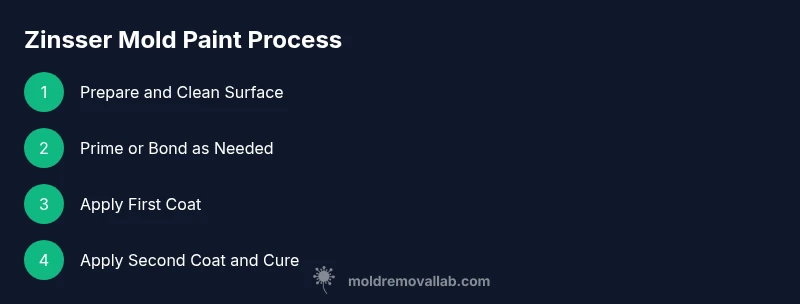
Begin with a clean, dry surface and use smooth, continuous strokes to apply the first coat. Use a high-quality brush or roller designed for the product’s viscosity and texture. Apply thin, even coats to reduce sagging and allow proper drying between passes. The recommended two-coat approach often yields the best coverage and mold resistance, but follow the product’s label for the specific number of coats. Maintain good airflow and avoid painting in high humidity conditions. Mold paint should be allowed to cure fully according to label directions before exposing the surface to moisture. In many cases, a light final sanding between coats improves adhesion and finish quality.
Drying, curing, and maintenance considerations
After application, cure times vary with temperature and humidity. Plan for at least 24 hours of undisturbed drying in a controlled environment, then inspect for uniform coverage and adhesion. Drying is not the same as full curing; full cure can take several days for some variants. Once cured, the surface can be cleaned with mild detergents, but avoid harsh solvents that could degrade the coating. Keep an eye on recurring moisture issues; a mold-resistant paint reduces, but does not eliminate, mold risk if humidity remains high. According to Mold Removal Lab, ongoing maintenance and timely remediation of moisture problems are essential to preserve the coating’s effectiveness and prolong surface longevity.
Troubleshooting: common issues and fixes
If you notice peeling, bubbling, or uneven color, stop painting and reassess surface moisture, ventilation, and primer compatibility. Dull spots or chalky finishes can indicate poor surface prep or degraded primers. Re-clean and dry the area, lightly sand, and apply a fresh coat after confirming the surface is within the product’s recommended humidity range. For stubborn mold staining, consider an additional cleaning or a higher-coverage variant, but do not rely on paint alone to fix active mold growth. If you are unsure about substrate suitability, consult the product label or a mold remediation professional.
Real-world scenarios and homeowner guidance
Consider a small bathroom with marginal venting and seasonal humidity. A zinsser mold paint solution, combined with improved ventilation and prompt mold remediation, can help keep walls looking clean and mold-free. In a basement workspace with damp walls, applying zinsser mold paint after a thorough cleaning and moisture control can provide a long-lasting finish that’s easier to wipe down. The Mold Removal Lab team has observed that homeowners who treat moisture, address leaks, and then coat walls with zinsser mold paint report fewer recurrent mold issues. Use this guide as a practical framework, but tailor steps to your space’s unique moisture profile and local climate.
Tools & Materials
- Zinsser mold paint(Choose variant suitable for humidity level and surface (water-based vs. oil-based).)
- Primer or bonding sealer (if required)(Some substrates may need a bonding primer for optimal adhesion.)
- Cleaner (degreaser or mild soap)(Remove oils and residues before painting.)
- Water and mild detergent(For initial cleaning and rinsing.)
- Gloves (nitrile)(Protect hands from solvents and mold residues.)
- Safety goggles(Eye protection during cleaning and painting.)
- Respirator or good ventilation(Use in enclosed spaces to reduce inhalation exposure.)
- Sandpaper (120–220 grit)(Lightly scuff glossy surfaces for better adhesion.)
- Drop cloths or plastic sheeting(Contain spills and protect floors.)
- Painter’s tape(Mask edges and trim before painting.)
- Paint roller and tray (or brush for corners)(Choose nap size appropriate for surface texture.)
- Lint-free rags(Wipe surfaces and remove dust.)
- Moisture meter (optional)(Check humidity levels during work (if available).)
Steps
Estimated time: 24-48 hours
- 1
Prepare the area
Move furniture away, cover floors, and remove outlet covers where safe. Ensure the space is well-ventilated and free of active moisture sources before starting any prep. This minimizes dust spread and improves coating adhesion.
Tip: Label surrounding areas to avoid overspray and capture photos for later touchups. - 2
Clean and dry surfaces
Wash the surface with a mild cleaner to remove oils, then rinse and allow full drying. If you encounter grease or mold staining, repeat cleaning until surface is clean and dry for at least 24 hours if possible.
Tip: Use a moisture meter if available to confirm readings below the product’s recommended humidity. - 3
Address moisture problems
Fix leaks or water intrusion before painting. If the area remains damp, surface prep will fail and mold may recur under the coating.
Tip: Consider temporary dehumidification or fans to expedite drying. - 4
Scuff glossy finishes
Lightly sand glossy surfaces to create a key for the new coating, then wipe dust away. This ensures better adhesion of the mold paint.
Tip: Don’t over-sand; you just need a dull sheen. - 5
Prime if needed
If the substrate requires it, apply a bonding primer suitable for damp surfaces. Let it dry completely according to the label before applying the mold paint.
Tip: Primer helps the mold paint bond to challenging surfaces. - 6
Apply first coat of zinsser mold paint
Use smooth, even strokes with a compatible roller or brush. Apply a thin coat to avoid drips and ensure full coverage, especially on textured walls.
Tip: Work in manageable sections to maintain a wet edge. - 7
Apply second coat (if required)
Allow the first coat to dry fully as per the label. Apply a second coat for uniform color and enhanced mold resistance, if recommended.
Tip: Two thin coats are better than one thick coat. - 8
Inspect and cure
Check for missed spots and touch up as needed. Let the surface cure fully in a ventilated area before exposing to moisture.
Tip: Avoid cleaning for 24–48 hours to maximize cure.
FAQ
What is zinsser mold paint and how does it work?
zinsser mold paint is a mold-resistant coating designed to seal substrates and inhibit mold growth when moisture is controlled. It does not replace moisture management but serves as a durable finish that is easier to clean and maintain.
zinsser mold paint is a mold-resistant coating that helps seal surfaces so mold is less likely to grow, but you must still control moisture for best results.
Can I apply zinsser mold paint over existing paint?
Yes, in many cases you can paint over existing paint, but properly prepare the surface with cleaning and, if needed, light sanding or priming to ensure good adhesion.
Yes, but clean and sand if needed for a good bond, and follow the product directions.
Is zinsser mold paint safe for homes with kids and pets?
Choose low-odor variants if available and ensure good ventilation during application. Always follow label safety instructions and keep the area ventilated after painting.
Safety first: use a low-odor option if possible and keep kids and pets away during drying.
How long does it take to cure after applying zinsser mold paint?
Drying times vary with temperature and humidity. Plan for a full cure period as directed on the product label, typically ranging from hours to a day or two.
Cure times vary; check the label and avoid moisture until fully cured.
Should mold be removed before painting with zinsser mold paint?
Yes. Clean and treat existing mold and moisture issues before painting. Painting over active mold is not a complete solution.
Yes, clean and address mold before painting to ensure the coating adheres properly.
What maintenance is needed after applying zinsser mold paint?
Regularly inspect for signs of moisture and repaint or touch up as needed. Maintain ventilation and address any new moisture sources promptly.
Keep an eye on humidity and fix leaks early to keep the coating performing well.
Watch Video
The Essentials
- Prepare thoroughly before painting
- Choose the right variant for your humidity level
- Ventilate and wear PPE during application
- Allow complete cure before moisture exposure
- Follow moisture remediation steps for long-term mold control