What to Spray on Mold: A Practical Guide for Homeowners
Practical, evidence-based guidance on choosing and using sprays to control mold growth at home, with surface-specific tips, safety notes, and when to call a professional.


To tackle mold safely, spray only on non-porous surfaces and use EPA-registered cleaners or a 1:10 bleach solution where appropriate. Always protect yourself, ventilate the area, and address the moisture problem first. For porous materials, removal may be required rather than spraying to prevent recurrence. Avoid mixing cleaners with ammonia or vinegar, and don’t over-wet areas.
What to spray on mold: core considerations
According to Mold Removal Lab, the best spray depends on surface type and moisture context. Small, surface-level mold on non-porous surfaces like tile, glass, or sealed countertops can often be managed with EPA-registered cleaners or a mild detergent solution. The Mold Removal Lab team emphasizes that moisture control drives long-term success; without fixing the water source, mold returns even after spraying. In this section, we cover which products are appropriate for different surfaces, common pitfalls, and how to plan a safe remediation approach for homeowners and renters. The goal is to choose products that kill surface spores while avoiding damage to the substrate. Many household mold issues arise from hidden moisture—fix the leak, dry the area, and then treat the visible growth with a product suited to the surface.
- Surface type matters: non-porous vs porous surfaces respond very differently to sprays.
- MOISTURE first: all spray strategies should start with moisture mitigation (leaks, humidity, ventilation).
- Safety matters: use proper PPE and ventilate well during treatment.
- Product choice: use EPA-registered cleaners for safe and effective results; reserve harsher options for appropriate cases only.
Chemical options: cleaners vs sanitizers
Choosing the right chemical agent depends on the surface and the mold situation. EPA-registered mold cleaners are designed to kill mold and often leave residue that helps prevent immediate regrowth. For non-porous surfaces, a thorough wipe with a detergent solution followed by a mold cleaner is common practice. Sanitizers can help reduce surface contamination but they may not penetrate into porous materials where mold roots (mycelia) can hide. In general, avoid diluting cleaners with incompatible substances and never mix bleach with ammonia or vinegar, as dangerous gases can form. The Mold Removal Lab recommends testing a small area first to ensure the product does not damage the surface and to observe colorfastness. Always follow label directions for contact time and ventilation.
Common agents: bleach, hydrogen peroxide, ammonia, enzyme cleaners
Bleach (sodium hypochlorite) can be effective on non-porous surfaces in a well-ventilated area when used correctly, but it is not suitable for porous materials like drywall because it cannot reach unseen mold roots inside the material. Hydrogen peroxide is a milder oxidizer that can work on some surfaces and is less harsh than bleach, but it can discolor or weaken certain materials. Ammonia should never be mixed with bleach because it can produce toxic chloramines; however, using ammonia alone on non-porous surfaces with proper ventilation is sometimes considered for stubborn stains. Enzyme-based cleaners work by breaking down organic material and can be gentler on fabrics and wood surfaces but may require longer dwell times. Always choose products labeled for mold and follow directions precisely; for porous substrates, consider material removal instead of spray treatment.
Commercial mold cleaners: what to look for
When selecting a commercial mold cleaner, check the active ingredients, surface compatibility, and required dwell time. Look for EPA-registered products that specify mold remediation use and ensure the product is appropriate for the surface you are treating. Read the safety data sheet (SDS) to understand any hazards and ventilation needs. For households with children or pets, prioritize low-toxicity formulations and avoid harsh solvents on finished wood, fabrics, or porous drywall. Remember that cleaners are most effective when combined with moisture control and thorough drying after treatment.
Non-toxic alternatives and DIY natural options
Some homeowners prefer non-toxic or natural options for light mold on non-porous surfaces. White vinegar (acetic acid) is mildly antimicrobial and can be used for light cleaning; however, it should not be relied on for heavy or widespread mold growth. Baking soda can help with deodorization and light surface cleaning when dissolved in water; it is not a mold killer by itself, but it can support cleaning. For more robust results, consider quiet, professionally formulated cleaners that are designed to be safe for indoor use while delivering mold-killing efficacy. Always test on a hidden area first and ensure thorough drying. These options work best when used as part of a moisture-control strategy and not as a substitute for significant remediation.
Surface-specific guidance: wood, drywall, fabric, tile
Mold on non-porous tile or glass can often be treated effectively with a detergent solution followed by a mold cleaner. For painted or sealed wood, test a small area first and avoid saturating the surface to prevent warping or finish damage. Mold on drywall or porous materials often requires removal and replacement; spraying alone is unlikely to prevent recurrence if the substrate is contaminated. Fabric and upholstery should be treated with fabric-safe cleaners or professional upholstery cleaners and air-dried in a well-ventilated space. After treatment, ensure surfaces are completely dry; lingering moisture is a leading cause of regrowth.
Moisture control and moisture sources: the hidden driver
Mold thrives where moisture remains. The most important step in any mold spray plan is to identify and fix moisture sources—leaks, high humidity, condensation, and improper ventilation. Use dehumidifiers or fans as needed, especially in basements, bathrooms, and laundry areas. Regular inspections of windows, pipes, and roofs can catch new moisture quickly. By combining moisture control with surface cleaning, you dramatically reduce the chance of mold returning after spraying.
When to call a professional: pro remediation vs DIY
For small, contained mold growth on non-porous surfaces, DIY cleaning with appropriate sprays and moisture control can be effective. If mold covers more than 10 square feet, or if it has penetrated porous building materials like drywall, wood, or insulation, professional remediation is advised. A Pro inspector can assess hidden moisture problems and determine whether structural material must be removed. In areas with chronic moisture issues (bathrooms, basements, crawl spaces), routine professional assessments may be a wise long-term investment. Mold Removal Lab suggests weighing the risks and choosing a path that prioritizes safety and long-term health.
Prevention and ongoing maintenance
After any mold treatment, maintain low humidity levels (ideally between 30-50%), ensure adequate ventilation, and promptly address leaks and spills. Regular cleaning routines, moisture monitoring, and early remediation of damp areas will help keep mold at bay. Keep a simple log of moisture events and cleaning actions to spot patterns that could indicate lingering issues. Prevention is often more cost-effective and health-protective than repeated remediation.
Tools & Materials
- Nitrile gloves (long cuffs)(Protect hands from cleaners and mold spores)
- Safety goggles(Prevent splashes to eyes)
- N95 respirator or P100 mask(Filter airborne spores during spraying)
- Detergent or dish soap(Initial cleaning and grime removal)
- EPA-registered mold cleaner(Follow label directions for surface and contact time)
- Bleach (sodium hypochlorite) 5-6%(Use only on non-porous surfaces; never mix with ammonia)
- Hydrogen peroxide (3%)(Alternative oxidizer for some surfaces)
- Spray bottle(For applying cleaners and solutions)
- Scrub brush(For scrubbing textured surfaces)
- Clean rags or microfiber towels(Wipe and dry surfaces)
- Plastic sheeting or painter's tape(Containment for larger areas)
- Dehumidifier or fans(Aid drying and airflow)
Steps
Estimated time: 60-150 minutes
- 1
Identify and contain the area
Locate all visible mold and any moisture sources. Close off the room to prevent spores from spreading to other areas. Use plastic sheeting if needed to contain debris, and ensure proper ventilation in the workspace.
Tip: Containment reduces cross-contamination; seal doors with tape and use a negative air approach if available. - 2
Ventilate and protect yourself
Open windows and run a fan to create airflow while wearing PPE. Remove residents, especially children and pets, from the area during cleaning to reduce exposure.
Tip: A well-ventilated space lowers inhalation risk and helps the drying process after cleaning. - 3
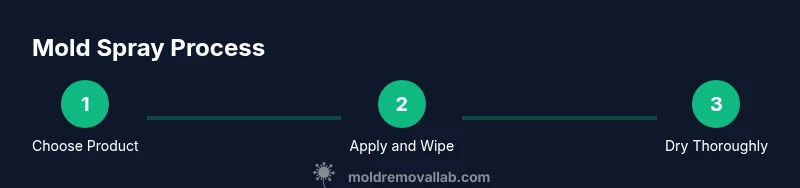
Choose the right spray and test a patch
Select an EPA-registered cleaner for non-porous surfaces or a product recommended for the substrate. Test on a hidden area first to check for discoloration or finish damage.
Tip: Always follow the product label's dwell time and ventilation requirements. - 4
Clean and wipe the surface
Apply cleaner to the moldy area, scrub as needed, and wipe away residue with clean fabric. Do not over-wet porous materials; dampness encourages regrowth.
Tip: Use a fresh microfiber cloth for each pass to avoid spreading spores. - 5
Rinse and dry thoroughly
Rinse surfaces if the product requires it, then dry completely. Use fans or a dehumidifier to reach low humidity levels.
Tip: Mold cannot thrive in dry environments; ensure adequate air movement during the entire drying phase. - 6
Assess the need for material removal
If mold penetrates porous materials (drywall, insulation, wood with rot), consider removal and replacement rather than spraying alone.
Tip: Removal reduces hidden mold sources and lowers recurrence risk.
FAQ
Is bleach always the best option for mold cleaning?
Bleach can be effective on non-porous surfaces but is not suitable for porous materials like drywall. For many home situations, EPA-registered cleaners provide safer, surface-appropriate mold control. Always test a small area first and follow the label.
Bleach can work on hard, non-porous surfaces, but for porous materials you should consider other cleaners and proper removal; test a small area first.
Can I spray hydrogen peroxide on all surfaces?
Hydrogen peroxide is a versatile mold cleaner for some surfaces, but it may discolor fabrics or wood finishes. It’s best to use it where the surface is compatible and follow the product label for dwell time and safety.
Hydrogen peroxide can help on certain surfaces; check compatibility and follow the label.
What if mold keeps returning after cleaning?
Recurring mold usually means an ongoing moisture problem. Address leaks, humidity, and ventilation first, then re-clean using an appropriate product. If the issue persists, consider professional remediation.
If mold keeps coming back, fix the moisture and then re-clean; call a pro if it reappears after basic steps.
Should I remove moldy drywall or other porous materials?
Yes. Porous materials with mold growth are often best removed and replaced, since mold can penetrate deeply. Spray cleaning alone is rarely sufficient for these substrates.
Yes—porous materials usually need removal and replacement for lasting results.
What are the signs I should call a professional?
Call a professional if mold covers more than 10 square feet, penetrates porous materials, or if moisture problems are not solved after basic cleaning. A pro can assess hidden sources and perform proper remediation.
Call a pro if it’s large or behind walls, or if moisture isn’t controlled after cleaning.
Is vinegar a reliable mold killer?
Vinegar has some antimicrobial properties but is not a proven mold killer in all scenarios. It can be used as a mild cleaner for light staining but should not be your sole solution for active mold.
Vinegar can help lightly, but it’s not a reliable stand-alone mold solution for active growth.
Watch Video
The Essentials
- Start with moisture control to prevent recurrence.
- Choose surface-appropriate sprays and follow label directions.
- Do not rely on sprays for porous materials—remove and replace when needed.
- Protect yourself with PPE and ensure proper ventilation.
- Dry surfaces completely after treatment to minimize regrowth.