Does peroxide kill mold? A homeowner's guide to safe mold cleanup
Explore whether hydrogen peroxide (3%) kills mold on common indoor surfaces, its limitations on porous materials, and practical DIY steps. Learn safety tips and when professional remediation is needed.


What you need to know: does peroxide kill mold? In many cases, 3% hydrogen peroxide can kill mold on non-porous surfaces by oxidizing the cells, but it won't address deeply embedded mold in porous materials. It's not a guaranteed cure for all mold problems and should be used with proper safety, ventilation, and containment. For extensive growth, professional remediation may be required.
Does hydrogen peroxide kill mold? Understanding the claim
Hydrogen peroxide, commonly sold at around 3% concentration for household cleaning, is frequently marketed as a mold remedy. The short answer to does peroxide kill mold is: it can kill mold on many non-porous surfaces, but not all mold problems. In laboratory tests and real-world use, hydrogen peroxide acts as an oxidizer, damaging the cell walls of mold and halting growth on contact. For many homeowners, this makes peroxide a convenient first step for bathroom tiles, glass shower doors, and sealed enamel appliances. However, there are important caveats. Peroxide does not automatically reach mold that hides deep inside porous materials like drywall, wood, or ceiling tile. Even when it visibly inhibits growth on the surface, hidden colonies can survive and re-emerge once the cleaning rest periods end. This is why Mold Removal Lab emphasizes a moisture-control approach alongside any cleaning effort. A clean surface is not proof that the underlying moisture problem is resolved, so remediation and monitoring are essential. In our analysis, we found that the effectiveness of 3% hydrogen peroxide depends on surface porosity, contact time, and proper safety practices. As you read on, you’ll see guidelines for when peroxide is the right tool and when to switch strategies.
When peroxide works best: surfaces and conditions
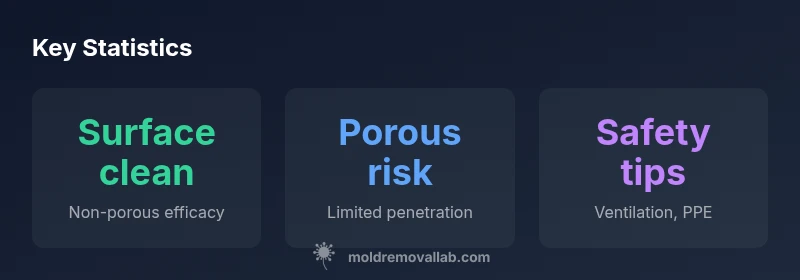
The best outcomes from using hydrogen peroxide occur on non-porous, smooth surfaces such as tile, glass, glazed ceramic, and sealed metal or enamel. On these materials, 3% hydrogen peroxide can combine with mechanical cleaning to disrupt mold colonies. The fizzing action helps lift surface spores, making it easier to wipe away both visible growth and staining. For porous substrates, including drywall, plywood, and unfinished wood, peroxide has limited penetration. Mold can embed within microscopic pores and along grain paths, where oxidizing cleaning alone cannot reach. In those cases, relying on peroxide as a sole remedy is unlikely to eliminate the problem, and the risk of regrowth remains. The Mold Removal Lab analysis shows that a combined approach—addressing moisture sources, removing affected porous material when necessary, and performing careful cleaning with peroxide on accessible surfaces—offers better long-term outcomes than any single step. If mold growth is suspected to extend beyond surface layers, contractors or remediation professionals should be consulted. Finally, avoid mixing hydrogen peroxide with other cleaners like bleach or ammonia, as this can create hazardous gases and unpredictable reactions.
Limitations and myths about peroxide cleanup
A common myth is that peroxide kills all mold instantly or permanently. Reality checks show that while surface mold on non-porous surfaces can be reduced, mold embedded in porous materials can remain viable. Hydrogen peroxide does not neutralize all mycotoxins, nor does it fix the moisture problem that allows mold to thrive in the first place. Exposure risk to occupants can also vary depending on ventilation and the level of contamination. For this reason, homeowners should regard peroxide as one tool in a broader remediation plan, not a universal cure. Mold Removal Lab's findings emphasize that any mold strategy should begin with controlling humidity, repairing leaks, and isolating the affected area to prevent spread while cleaning occurs.
Safe usage steps for non-porous surfaces
Using hydrogen peroxide safely requires preparation and discipline. Here are practical steps you can follow:
- Confirm the surface is non-porous or semi-porous and clean loose debris.
- Use a 3% hydrogen peroxide solution in a spray bottle. Do not mix with ammonia, bleach, or other cleaners.
- Saturate the affected area and allow the solution to sit for 10 minutes to maximize contact time.
- Scrub with a stiff brush or pad, then wipe away dissolved mold residues.
- Rinse with clean water and dry thoroughly to reduce moisture left behind.
- Improve ventilation during and after cleaning, and monitor the area for regrowth over the next days and weeks.
These steps align with safety guidelines from Mold Removal Lab and emphasize personal protective equipment and proper disposal of contaminated materials.
Alternatives and when to call professionals
Bleach can be effective on non-porous surfaces but is often less suitable for porous materials and can damage some surfaces. Vinegar offers moderate activity on some mold but is not a reliable standalone solution for persistent growth. For drywall, insulation, or severe infestations, professional remediation is advisable. If there is a strong musty odor, visible widespread growth, or if mold recurs after cleaning, it's time to involve a licensed contractor who can address underlying moisture and containment.
How to test for mold before remediation
Testing for mold should start with a visual inspection and moisture assessment. If you see persistent staining or a musty odor, typically DIY odor tests or moisture meters can help identify problem areas. In many cases, professional mold inspections include air and surface sampling to determine species and extent, guiding whether DIY approaches or professional remediation is needed. Remember that mold remediation success depends not only on killing visible growth, but also on correcting the moisture problem that allowed it to develop in the first place.
Practical checklist for DIY mold cleanup with peroxide
- Confirm moisture source and fix leaks before cleaning.
- Wear PPE: gloves, eye protection, and a respirator if needed.
- Ventilate the area well during and after cleaning.
- Use only 3% hydrogen peroxide on non-porous surfaces; avoid porous materials.
- Do not mix cleaners; store away from children and pets.
- If mold recurs after cleaning, escalate remediation with a professional.
Comparison of common mold-cleaning agents
| Agent | On Non-Porous Surfaces | On Porous Materials | Safety Notes |
|---|---|---|---|
| Hydrogen peroxide (3%) | Typically effective | Limited effectiveness | Wear PPE; ventilate; avoid mixing with ammonia/bleach |
| Bleach (sodium hypochlorite) | High disinfection on non-porous surfaces | Not suitable for porous materials | Avoid mixing; fumes; surface discoloration risk |
| Vinegar (acetic acid) | Moderate activity on some surfaces | Ineffective on deep mold spores | Generally safe; odor; not stand-alone solution |
| Baking soda solutions | Mild cleaning | Poor mold killer on embedded growth | Low risk; useful for deodorizing; not primary remediation |
FAQ
Can hydrogen peroxide kill mold on drywall?
Hydrogen peroxide may kill surface mold on non-porous coatings, but drywall is porous and mold can reside inside the material. Cleaning alone is rarely sufficient; contaminated drywall often needs removal and moisture control to prevent recurrence.
It can help with surface mold on drywall coatings, but porous drywall usually needs more than cleaning to stop mold.
Is hydrogen peroxide safer than bleach for mold cleanup?
Hydrogen peroxide is generally less harsh than bleach and poses fewer fumes on contact, but it may be less effective on some mold forms. Bleach can disinfect on non-porous surfaces but does not reach into porous materials. Both require ventilation and PPE.
Peroxide is milder, but both cleaners have limits and should be used with safety in mind.
Should I mix peroxide with other cleaners?
Never mix hydrogen peroxide with ammonia or bleach. Mixing can produce hazardous gases. Use hydrogen peroxide alone on the target area and rinse after contact time.
Don’t mix with ammonia or bleach—that can create dangerous gases.
What concentration of hydrogen peroxide is best for mold?
3% hydrogen peroxide is the common household concentration for surface mold cleaning. Higher concentrations exist but can be hazardous and are not necessarily more effective for typical DIY cleaning.
Most home use is fine with 3% peroxide for surface mold.
When should I call a professional for mold?
If mold covers a large area, recurs after cleaning, or you suspect hidden mold behind walls, consult a licensed remediation professional who can address hidden growth and moisture concerns.
Call a pro if it’s large, persistent, or hidden behind walls.
“Hydrogen peroxide can be an effective first-pass cleaner on non-porous surfaces when used correctly, but it does not remediate porous materials or address deep-seated growth.”
The Essentials
- Use peroxide on non-porous surfaces for surface mold only
- Do not rely on it for porous materials or deep growth
- Always fix moisture sources before cleaning and monitor after
- Wear PPE and ventilate; never mix cleaners
- Consult professionals for extensive or recurring mold