UV Light to Kill Mold: A Practical Guide for Homeowners
Learn how UV-C light can help control mold growth, when it’s effective, safety steps, and best practices for homeowners. This guide explains limits, equipment choices, and moisture-control strategies from Mold Removal Lab.


UV light can inhibit mold growth and kill exposed spores on non-porous surfaces, but it is not a stand-alone remediation method. This quick guide explains what UV light can and cannot do, how to use it safely, and when to involve a professional. According to Mold Removal Lab, UV-C tools work best as part of a broader moisture-control plan.
What UV-C Light Can Do for Mold
UV-C light (ultraviolet-C) can disable mold cells and reduce surface mold on non-porous materials when used correctly. It is most effective on flat, smooth surfaces such as tile, glass, and sealed countertops, and less effective on porous substrates like drywall, plywood, or insulation where mold penetrates deeply. The Mold Removal Lab team emphasizes that UV light should complement, not replace, mechanical cleaning and moisture control. Proper exposure requires sufficient distance, direct line-of-sight, and sufficient duration; if the source is weak or obstructed, results will be limited. UV-C devices come in handheld wands, lamps, and fixed fixtures; each type has different coverage and safety considerations. For homeowners, plan UV-C treatment as part of a broader remediation plan that includes cleaning, drying, and moisture source repair. Always confirm that your device is rated for mold remediation and follow manufacturer guidelines. Remember, while UV-C can slow regrowth on treated surfaces, it cannot repair existing damage and will not remove deeply embedded mold from porous materials. According to Mold Removal Lab analysis, success hinges on moisture control and thorough cleaning.
Safety and PPE When Using UV Light
UV-C light can cause eye injuries and skin burns if used improperly. Always wear UV-protective goggles rated for UV exposure, a face shield if available, and chemical-resistant gloves. A mask or respirator is advisable in moldy environments to limit inhalation of spores and dust. Ensure children and pets are out of the area during treatment, and never look directly at a UV-C lamp while it is on. If your device emits ozone (some models can), use it only in well-ventilated spaces or select ozone-free options. Mold Removal Lab recommends keeping exposure times brief and stopping immediately if any irritation occurs. Safety first also means adhering to device instructions and turning off power before adjusting angles.
Preparation: Assessing Moisture and Accessibility
Surface cleaning alone won’t fix a mold problem if moisture remains. Before UV treatment, identify and repair the moisture source—leaks, condensation, or high humidity. Use a moisture meter or hygrometer to establish baseline humidity levels and target a level below 60% (lower where feasible). Clear clutter to improve access to all mold-affected surfaces and tape off the area to limit airflow disruption. If mold penetrates porous materials like drywall or insulation, plan for removal and replacement rather than relying solely on UV treatment. Mold Removal Lab notes that UV exposure is most impactful for surface mold on non-porous substrates and should be part of a broader remediation plan.
Choosing and Using UV-C Devices
Select a UV-C device that suits the area size and surface type. Handheld wands work well for small patches, while fixed lamps or panels cover larger zones. Verify that the device emits UV-C within the safe wavelength range and has shielding to protect eyes. Surface distance matters: maintaining an appropriate distance—typically several inches to a foot depending on the device—and exposing each area for the manufacturer-recommended duration increases effectiveness. Avoid using UV-C on porous materials where mold has penetrated; in such cases, physical removal and moisture control are necessary first. Mold Removal Lab stresses that using a UV-C device without mechanical cleaning and drying minimizes benefits and may create a false sense of remediation.
Step-by-Step Example Workflow (Conceptual)
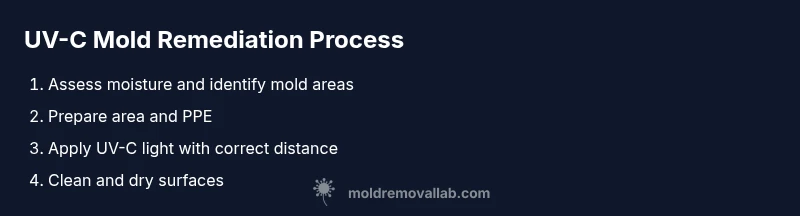
A practical approach involves three phases: preparation, treatment, and post-treatment review. In preparation, clear the space, ventilate, and don PPE. During treatment, systematically expose non-porous surfaces with the UV-C device, maintaining safe distance and following timer guidelines. After treatment, wipe surfaces if needed, allow drying, and recheck moisture levels. This section provides a high-level workflow to illustrate how UV-C fits into a mold remediation plan, but remember to adapt to your specific situation and always follow manufacturer instructions. Mold Removal Lab highlights that success depends on moisture control and thorough cleaning in conjunction with UV-C.
Limitations and Alternatives
UV-C treatment is not a cure-all. It cannot remove embedded mold from porous materials, nor can it fix mold that has penetrated walls, insulation, or structural components. In many cases, replacement of affected materials and repairs to moisture sources are required. Additional approaches such as improved ventilation, humidity control, thorough cleaning with approved cleaners, and HEPA filtration can significantly reduce mold risk. For larger or recurrent mold problems, professional remediation may be necessary. Mold Removal Lab advises homeowners to view UV-C as a supplementary tool rather than a replacement for conventional remediation.
Common Mistakes and Quick Fixes
Common mistakes include treating only visible patches, ignoring moisture sources, and using UV-C as a substitute for proper cleaning and drying. Always assess the area comprehensively, test a small inconspicuous spot first, and monitor humidity after treatment. Quick fixes like a short UV exposure without cleaning or dehumidification tend to fail and can waste time and money. A robust plan combines cleaning, moisture control, and UV-C where appropriate.
Realistic Expectations and Practical Tips
UV light can slow or prevent surface mold regrowth on non-porous surfaces when used correctly, but it should not replace physical cleaning or moisture management. Expect to spend time on moisture source repair, material removal or replacement as needed, and repeated cycles of cleaning and drying. If you have porous materials with embedded mold or sensitive occupants, consult a professional for a tailored remediation plan. Mold Removal Lab’s guidance emphasizes that a comprehensive approach—cleaning, drying, moisture control, and careful use of UV-C when appropriate—yields the best long-term results.
Tools & Materials
- UV-C light device (handheld wand or fixed lamp)(Choose a device rated for mold remediation with shielding; verify wavelength and safety features.)
- Safety goggles rated for UV exposure(ANSI Z87.1 or equivalent; protects eyes from stray UV light.)
- Nitrile gloves(Protect hands from cleaners and mold-containing dust.)
- Respirator or mask (N95 or higher)(Reduces inhalation of spores and odors in moldy spaces.)
- Soft microfiber cloths(Gentle cleaning rags for wiping surfaces without scratching.)
- Mild detergent or mold cleaner(Test on a small area first; avoid harsh solvents on delicate materials.)
- Moisture meter or hygrometer (optional)(Helps verify drying progress and moisture levels post-treatment.)
Steps
Estimated time: 90-120 minutes (excluding drying time)
- 1
Inspect and document mold-affected areas
Begin by walking the space and noting all visible mold patches and odors. Take photos to track changes and make a remediation plan. Record moisture sources and materials involved so you can address underlying causes.
Tip: Document with notes and photos to guide follow-up remediation and for professional reference. - 2
Isolate the area and improve ventilation
Close off the area to minimize cross-contamination. Open exterior vents or use portable fans to create directional airflow that carries spores away from living spaces. If possible, use a dehumidifier to reduce ambient humidity during the process.
Tip: Keep doors to other rooms closed and use plastic sheeting to seal off the work area. - 3
Don PPE and prepare your workspace
Put on safety goggles, mask, and gloves before handling mold or cleaners. Lay down a drop cloth and prepare your cleaning solution in a labeled spray bottle. Ensure the UV-C device is within reach and the area is well-ventilated.
Tip: Check PPE fit and replace any damaged equipment before starting. - 4
Clean visible mold with detergent
Gently scrub non-porous surfaces with a mild detergent to remove loose mold. Wipe in one direction with a microfiber cloth to collect particles. Do not ignore small patches; spores can spread during treatment.
Tip: Rinse cloths frequently to avoid re-depositing mold. - 5
Position UV-C device for surface exposure
Place or hold the UV-C device at the recommended distance from the surface, ensuring direct line-of-sight. Expose each patch for the manufacturer-recommended duration, moving slowly to cover the area. Avoid prolonged exposure on skin or eyes.
Tip: Never look directly at the UV-C source; use a viewing shield if provided. - 6
Move to adjacent surfaces for full coverage
Systematically scan the affected area, adjusting height and angle as needed to reach all surfaces. Treat hidden corners and edges where mold may persist. Keep track of which sections you have treated to prevent double exposure.
Tip: Create a simple checklist and mark completed sections. - 7
Post-treatment cleaning and drying
Wipe treated surfaces if necessary and allow to air-dry completely. Reassess moisture and use a dehumidifier if needed to reach low humidity. Do not replace porous materials without evaluating moisture and treatment results.
Tip: Document drying progress with a moisture meter if available. - 8
Reassess and plan long-term controls
After treatment, inspect for residual mold and confirm that moisture sources are repaired. Install or improve ventilation, fix leaks, and monitor humidity to prevent recurrence. Schedule follow-up inspections if the problem persists.
Tip: Mold prevention is ongoing—set a maintenance schedule for humidity checks.
FAQ
Does UV light kill mold instantly, and is it safe for all surfaces?
UV-C light can kill exposed mold cells on non-porous surfaces when exposure times and distances follow manufacturer guidelines. It cannot eradicate mold that has penetrated porous materials and should be paired with cleaning and moisture control. Safety is essential; use PPE and avoid direct skin or eye exposure.
UV-C can kill surface mold with proper exposure on non-porous surfaces, but it won’t remove mold embedded in porous materials. Always follow safety guidelines and combine with cleaning and moisture control.
Can UV light replace traditional cleaning and moisture control?
No. UV-C light is a supplementary tool that can slow regrowth on treated surfaces. It does not replace physical cleaning, mold removal from porous materials, or moisture source repairs. A comprehensive plan yields the best long-term results.
No, UV-C is supplementary. You still need thorough cleaning and moisture control for lasting mold control.
Is UV-C safe for people and pets during use?
UV-C exposure can harm skin and eyes, so PPE is essential and areas must be evacuated during treatment. Some devices may produce ozone; use ozone-free models or ensure adequate ventilation. Always follow the device’s safety instructions.
UV-C can be dangerous if you’re exposed; wear protective gear and keep people and pets away during treatment.
How long should you run UV-C devices for mold treatment?
Exposure times vary by device and surface. Always follow the manufacturer’s guidelines and adjust for distance and surface type. If in doubt, start with shorter intervals and monitor for effectiveness.
Follow the device manual for exposure times; start with shorter intervals and increase if needed.
What surfaces are suitable for UV-C treatment?
UV-C is most effective on non-porous surfaces like tile, glass, and sealed countertops. It is less effective on porous materials such as drywall or porous wood where mold can be embedded. Always assess surface type before starting.
Best on non-porous surfaces; avoid relying on UV-C for deeply penetrated porous materials.
Watch Video
The Essentials
- UV-C can reduce surface mold on non-porous surfaces when used correctly.
- Moisture control and cleaning remain essential parts of remediation.
- UV-C should supplement, not replace, traditional mold removal methods.