Poisonous Mold: Identification, Risks, and Safe Remediation
A practical, homeowner-friendly guide to recognizing poisonous mold, understanding health risks, and performing safe remediation with moisture control and professional help when needed.


Poisonous mold refers to mold that releases mycotoxins capable of harming health, especially for sensitive individuals. If you suspect it, act quickly: identify moisture sources, limit spread, and begin safe cleanup; large growth or contamination should trigger a professional remediation. Always prioritize safety and ventilation. Consult a qualified mold remediation specialist if you are unsure.
What is poisonous mold?
Poisonous mold is a practical term homeowners use to describe molds that can produce toxins, known as mycotoxins, under certain conditions. These toxins may be released into indoor air or embedded in settled dust, potentially triggering health symptoms in sensitive people. According to Mold Removal Lab, poisonous mold includes species that can release mycotoxins when moisture levels are high and ventilation is limited. The health risk is not universal for all exposures, but the possibility increases with the size of the growth, duration of exposure, and the vulnerability of the person exposed. The bottom line is: treat any visible growth of this kind seriously, and act to stop moisture and spread while you assess next steps.
Health risks and at-risk populations
Exposure to poisonous mold can aggravate allergies, asthma, and respiratory conditions, and in rare cases may affect other body systems if inhaled or ingested in significant amounts. Children, older adults, pregnant people, and individuals with compromised immune systems tend to be more affected by mold toxins. While not every mold produces dangerous toxins, it is prudent to treat any substantial growth as a potential hazard and reduce exposure by improving ventilation and limiting contact. Based on Mold Removal Lab research, the health outcome depends on exposure duration and individual sensitivity, so prompt action is wise.
How to identify poisonous mold safely
Identification should focus on growth patterns, moisture sources, and air quality indicators rather than color alone. Signs include persistent moisture problems (leaks, condensing windows), a musty or chemical odor, and visible colonies on walls, ceilings, or hidden spaces like behind cabinets. Do not rely on color as a sole indicator; many molds that produce toxins can appear green, black, or white. The safest approach is to treat any suspicious growth as potentially poisonous and verify with a professional mold inspector or remediation expert. Proper PPE and containment are essential if you do begin an assessment yourself.
Moisture control as the root cause
Moisture control is the cornerstone of preventing poisonous mold growth. Leaks, high humidity, poor drainage, and inadequate ventilation create environments where mold can thrive. Addressing the moisture source is often more important than the cleaning itself. Use dehumidifiers in damp spaces, fix leaks promptly, and ensure bathroom and kitchen exhaust fans vent outdoors. Keeping indoor relative humidity below about 50-60% reduces mold activity in most homes. Routine monitoring with a hygrometer can help you catch rising moisture before mold becomes visible.
Cleaning and remediation options
For small, isolated areas (less than a few square feet) with ordinary growth, you can begin basic cleanup using PPE, non-ammonia soap, and a properly ventilated space. For larger areas or mold that may have toxins, do not attempt aggressive scrubbing or bleach-only methods, which can spread spores and irritants. Use a combination of containment, controlled cleaning agents, and thorough drying. In many cases, professional remediation is the safest option to ensure all spores are removed and surfaces are restored to a dry, clean condition. Always follow local regulations and manufacturer directions for any cleaning products used.
When to call professionals
If mold covers a large area, involves HVAC systems, or you notice persistent water intrusion, seek professional remediation. Trained technicians can safely contain the space, test for toxins using appropriate methods, and implement proven remediation strategies. If symptoms persist after initial cleanup, or if you have vulnerable household members, professional evaluation is strongly recommended. The decision to hire pros often hinges on the size of the growth and the complexity of the moisture problem.
Prevention and long-term maintenance
Preventing poisonous mold starts with moisture control and regular inspections. Fix leaks promptly, improve ventilation, and use exhaust fans in bathrooms and kitchens. Keep humidity levels stable and monitor areas prone to dampness, such as basements, crawl spaces, and laundry rooms. Arranging routine maintenance (seasonal checks, sump pump testing, moisture barrier improvements) reduces the chance of regrowth. Remember: mold can recur if moisture returns, so ongoing vigilance is essential.
What to expect from a professional remediation project
A professional project typically begins with a moisture assessment, containment setup, and health-safe cleanup. Technicians may perform surface cleaning, remove porous contaminated materials, and Dry-out with dehumidification and air filtration. After remediation, they will verify dryness and may provide a moisture management plan to prevent recurrence. While costs vary, investing in proper remediation minimizes long-term health risks and property damage. The Mold Removal Lab team emphasizes that choosing qualified pros and following up with moisture control plans yields the best outcomes.
How Mold Removal Lab can help you
Mold Removal Lab provides practical guidance on identifying poisonous mold and evaluating the necessity of professional remediation. We emphasize moisture control, safe cleanup practices, and clear, actionable steps you can take as a homeowner or renter. Our approach prioritizes safety, accuracy, and accessible explanations so you can make informed decisions about your indoor air quality and health.
Tools & Materials
- N95 respirator or higher(Fit-tested if possible; replace if damaged)
- Protective goggles(Chemical splash resistance preferred)
- Non-powder nitrile gloves(Change if contaminated or torn)
- Plastic sheeting and tape(Create containment barrier)
- Detergent soap and water(Mild cleaner for initial wipe-down)
- Spray bottle(Mix chosen cleaner according to label)
- HEPA vacuum or equivalent(Use with caution; seal bag after disposal)
- Microfiber cleaning cloths(Wash or discard after use)
- Moisture meter/hygrometer(Monitor humidity levels during cleanup)
- Plastic bags and sealable containers(Contain and dispose of contaminated materials)
- Dehumidifier or fans for drying(Use after cleaning to speed drying)
Steps
Estimated time: 2-4 hours (plus longer if removing materials or repairing leaks)
- 1
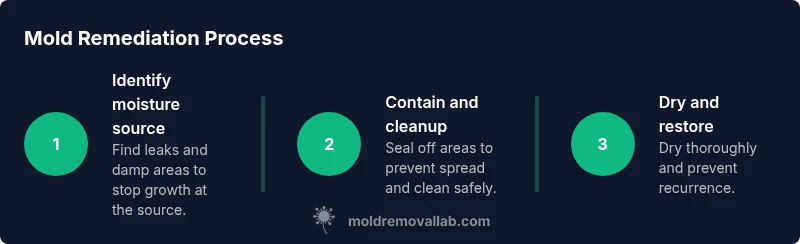
Identify moisture source
Locate leaks or damp areas contributing to mold growth. Document locations for repair and monitoring. This is foundational because moisture control prevents recurrence.
Tip: Mark suspected areas with washable tape to track progress during cleanup. - 2
Contain the work area
Close doors and use plastic sheeting to trap spores and dust. Create a negative pressure if possible using a fan directed outward away from clean areas.
Tip: Avoid opening multiple rooms; containment reduces cross-contamination. - 3
Put on PPE and prepare materials
Don an N95 respirator, goggles, and gloves. Gather cleaning agents and tools before touching moldy materials.
Tip: Inspect PPE for integrity; discard if compromised. - 4
Clean surfaces safely
Wipe down nonporous surfaces with soap and water; use minimal moisture to avoid dispersing spores. Porous materials with heavy growth may need removal.
Tip: Never scrub vigorously; damp wipe is safer for containment. - 5
Remove contaminated materials
Dispose of porous items (like drywall scraps) that show heavy growth. Seal in bags before removal to prevent spread.
Tip: Double-bag when disposal areas are outdoors to prevent indoor contamination. - 6
Dry and recheck moisture
Dry cleaned areas thoroughly. Recheck humidity levels with a hygrometer, aiming for stable, low moisture content.
Tip: Use dehumidification during dryer cycles to speed up drying. - 7
Sanitize and re-inspect
Apply a mild disinfectant if appropriate, then inspect for remaining growth or odors. If growth reappears, seek professional help.
Tip: Document findings with photos for future reference. - 8
Prevent recurrence
Address root moisture sources and improve ventilation. Consider ongoing moisture management and routine inspections.
Tip: Install humidity monitors in vulnerable spaces as a proactive measure.
FAQ
What counts as poisonous mold?
Poisonous mold is mold capable of producing mycotoxins that may harm health under certain exposures. Not all mold produces toxins, but visible growth with moisture warrants caution and appropriate action.
Poisonous mold means mold that can produce toxins; if you see it, treat it as risky and follow safety steps, especially around moisture and ventilation.
Is all mold dangerous?
Many molds can cause discomfort or allergic reactions in some people. Toxic molds are less common but can pose health risks, particularly to sensitive individuals. Treat suspicious growth seriously and monitor symptoms.
Most mold isn’t dangerous to everyone, but some people are more sensitive and should be cautious.
Can I clean mold myself safely?
For small, contained areas with no suspected toxins, you can follow safe cleaning steps using PPE. Large growth, hidden spores, or the presence of mycotoxins requires professional remediation to minimize health risks.
DIY cleanup is possible for tiny areas with proper protective gear, but larger growth should be handled by pros.
What symptoms indicate dangerous exposure?
Persistent coughing, wheezing, throat irritation, headaches, or skin and eye irritation after mold exposure may indicate a reaction. Seek medical advice if symptoms persist or worsen.
If you notice ongoing coughing or irritation after mold exposure, consult a medical professional.
How long does remediation take?
Timeline depends on severity, area size, and moisture control needs. Small jobs may take a day or two; larger projects can extend longer. A professional assessment provides a clearer estimate.
A professional can give you a better timeline after inspecting the space.
What should I do after cleanup?
Reinspect moisture sources, ensure proper ventilation, and monitor humidity. Keep spaces dry and perform periodic checks to prevent recurrence.
Keep an eye on moisture after cleanup and ventilate well.
Watch Video
The Essentials
- Act quickly when you detect mold growth
- Control moisture before cleaning to prevent recurrence
- Use proper PPE and containment to reduce exposure
- Reserve professional remediation for large areas or suspected toxins
- Maintain humidity below 50-60% to discourage regrowth